






Definition and Purpose of a Webmaster Contract Template
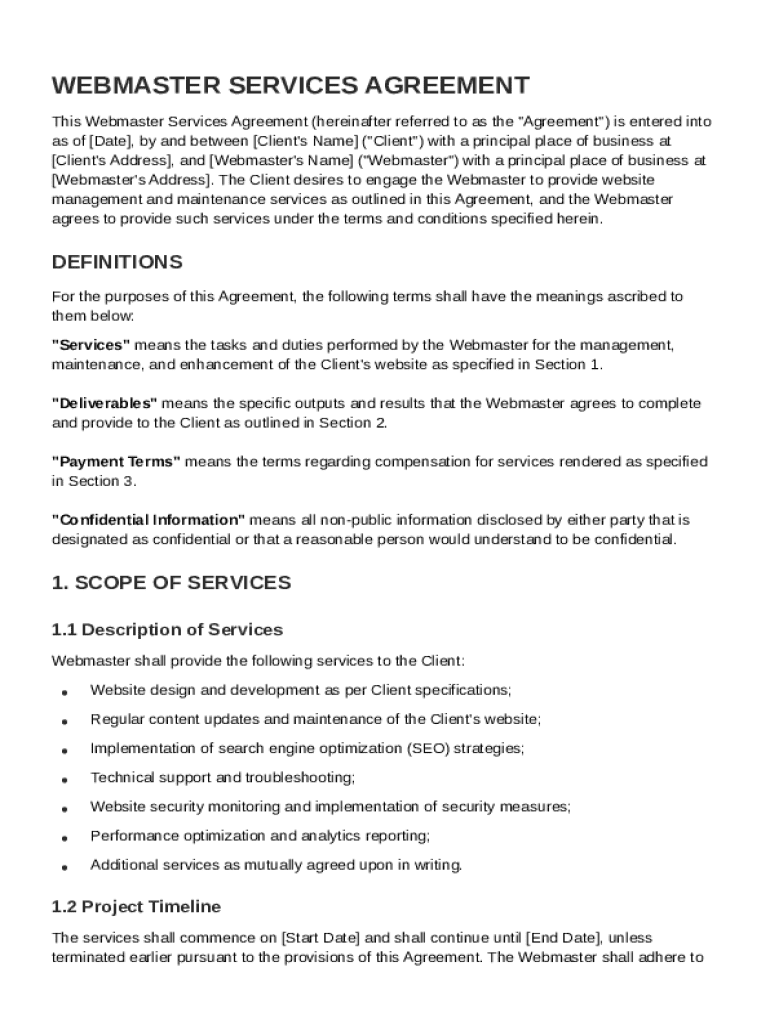
A Webmaster Contract Template serves as a pivotal document, delineating the service agreement between a client and a webmaster. This template is fundamental for outlining the terms and conditions related to website management and maintenance services. It includes various crucial elements like the scope of services, deliverables, payment terms, confidentiality, intellectual property rights, and termination conditions. The structured nature of this template ensures clarity and mutual understanding between both parties, minimizing potential conflicts.
Examples of Use:
- A business hiring a webmaster for regular website updates and maintenance.
- An individual engaging a webmaster for one-time website creation or enhancement projects.
- Organizations requiring ongoing support for content management and technical support.
This template ensures that the roles and responsibilities are clearly defined, protecting both the client's interest and the webmaster's professional liabilities.
Key Elements of the Webmaster Contract Template
Scope of Services
The scope of services within a Webmaster Contract Template should be comprehensive, specifying the exact tasks the webmaster will undertake. This can range from basic website maintenance, updates, and security enhancements to more advanced services like SEO optimization and content management system (CMS) updates.
- Maintenance: Routine updates, bug fixes, and functionality checks.
- Design and Development: New layout implementations, user interface adjustments, and software integration.
- Technical Support: Handling technical queries and solving user-experience issues.
Payment Terms
Clear payment terms help prevent misunderstandings and disputes. Typically, this section stipulates the financial arrangements, including the payment schedule, method, and any contingencies for additional work.
- Retainer Fees: Monthly or annual payments for ongoing services.
- One-time Fees: Fixed price for specific projects or tasks.
- Hourly Rates: For tasks that are less predictable or require variable input.
Legal Use and Considerations
Confidentiality Obligations
Confidentiality agreements protect sensitive information shared during the webmaster-client relationship. This section should outline what constitutes confidential information and specify the obligations of both parties regarding non-disclosure.
- Data Protection: Webmaster's responsibilities in handling user data and proprietary information.
- Non-Disclosure Agreements (NDAs): Ensuring confidentiality is maintained even after the contract ends.
Intellectual Property Rights
This clarifies the ownership of content and digital assets created or maintained by the webmaster. Stipulating whether the client or the webmaster holds the rights ensures there is no ambiguity over content ownership.
- License Grants: Conditions under which the client can use and modify web assets.
- Work For Hire Clauses: Ensuring the transfer of ownership rights from the webmaster to the client upon project completion.
Steps to Complete the Webmaster Contract Template
Following a structured approach to fill out the Webmaster Contract Template increases accuracy and completeness.
- Identify Parties and Contact Information: Clearly state the names and contact details of all involved parties.
- Define Project and Scope: Articulate the nature and extent of webmaster services required.
- Set Terms and Conditions: Outline terms for deliverables, payment schedules, and termination clauses.
- Include Legal Provisions: Add clauses for confidentiality and intellectual property rights.
- Review and Sign: Ensure both parties thoroughly review and sign the document to make it legally binding.
Properly completing each section ensures the contract serves its intended purpose effectively.
Who Typically Uses the Webmaster Contract Template


Businesses and Organizations
Various businesses, from startups to large corporations, use website contract templates to establish and maintain their online presence. The template helps these entities engage professional webmasters to ensure their digital platforms are robust, secure, and user-friendly.
- E-commerce Sites: Require regular updates for product listings and secure payment processing.
- Consultancy Firms: Need a reliable online portal to engage with clients and showcase expertise.
- Media and Publishing Companies: Demand continuous content updates and security checks.
Independent Contractors and Freelancers
Freelance webmasters leverage contract templates to formalize their service offerings, setting clear expectations with clients about deliverables, pricing, and project timelines. This formality not only protects their interests but also enhances professionalism.
Importance of the Webmaster Contract Template
Having a Webmaster Contract Template in place prevents misunderstandings and lays a foundation for a successful business relationship. The template serves as an essential tool for:
- Risk Mitigation: Clearly defined obligations prevent scope creep and ensure agreed standards are met.
- Legal Protection: Offers recourse if one party fails to meet their contractual obligations.
- Professionalism and Trust: Establishes trust and professionalism, encouraging long-term collaboration.