




01. Edit your form online
Type text, add images, blackout confidential details, add comments, highlights and more.

Type text, add images, blackout confidential details, add comments, highlights and more.

Draw your signature, type it, upload its image, or use your mobile device as a signature pad.

Send it via email, link, or fax. You can also download it, export it or print it out.
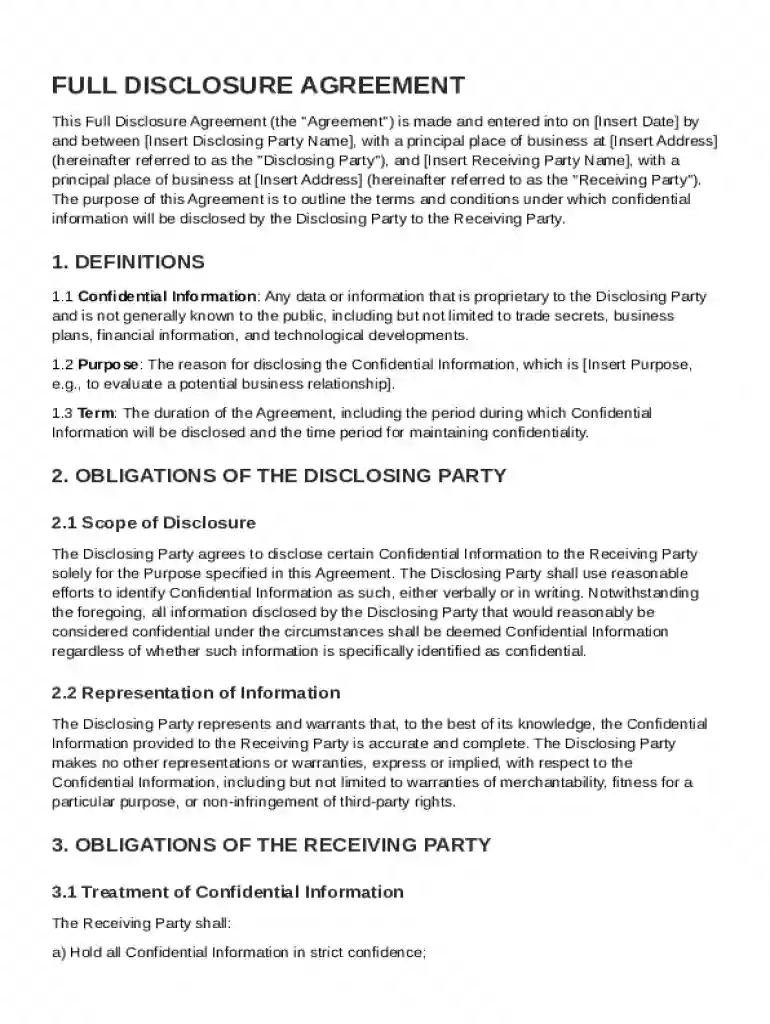
The Full Disclosure Agreement (FDA) Template is a crucial document utilized in safeguarding confidential information shared between a Disclosing Party and a Receiving Party. It clearly outlines the terms and conditions under which sensitive information is exchanged. The primary purpose is to define what constitutes "Confidential Information," and establish obligations for both parties in handling and protecting such data. The agreement typically includes guidelines for the return or destruction of the confidential information upon termination of the agreement. It also delineates any limitations on confidentiality and identifies legal obligations for disclosure, ensuring all parties are aware of their rights and duties.
When utilizing a Full Disclosure Agreement Template, it is essential to understand its components and application. The first step involves identifying the parties involved and specifying the confidential information being protected. This often includes trade secrets, client lists, and proprietary data. Next, clearly outline the obligations each party has concerning the handling and protection of the information. This may involve specifying how the information can be used and setting terms for secondary disclosure. Furthermore, it should determine the duration of the agreement and actions to be taken upon termination, such as the return or destruction of information. Finally, ensure both parties understand the consequences of non-compliance to foster responsible behavior.
A central component of the FDA Template is the confidentiality clause, which explicitly defines what information is considered confidential. This section establishes the boundaries for the information’s usage and transfer. It usually includes a clear list of data or resources considered sensitive and outlines any circumstances under which the information can be disclosed.
This section describes the responsibilities of both the Disclosing and Receiving Parties. It emphasizes the importance of protecting the confidential information and mandates that reasonable measures must be taken to prevent unauthorized access or leaks.
The agreement details the protocols for returning or destroying the confidential information once the agreement comes to an end. This ensures that the Receiving Party does not retain any sensitive information without consent.
The FDA is legally binding and ensures that confidential information is shared securely, promoting trust and collaboration between parties. The agreement should comply with applicable federal and state laws, and it's advisable for parties to seek legal counsel to adapt the template to their specific needs. Legal use also requires clear consent from all parties involved, which is evidenced through signatures. It aligns with U.S. legal standards to provide reassurance of compliance and enforceability.
The FDA Template is widely used across various sectors. Common users include corporations looking to protect their proprietary information during joint ventures, manufacturers sharing production techniques, and tech companies safeguarding software development processes. Additionally, startups often rely on these agreements when discussing product innovations with potential investors or partners. Legal professionals might also recommend it to individual clients who need to secure sensitive data when seeking business collaborations.


Since laws governing NDAs and FDAs can vary by state, it is important to accommodate specific state requirements within the agreement. For example, California has robust protections against non-compete clauses and certain confidentiality agreements post-employment. Participants should assess state laws to ensure compliance and adapt provisions accordingly. Consulting with legal professionals familiar with state regulations is beneficial for tailoring the template to fit regional legal frameworks.
Consider a scenario where a software startup is sharing its prototype with a potential development partner. An FDA Template helps protect their innovation by legally binding the partner to confidentiality terms. Another instance involves a pharmaceutical company negotiating a research collaboration, where the agreement prevents unauthorized dissemination of their proprietary formulas. Through concise and applicable terms, the FDA ensures that sensitive business information remains secure in diverse professional interactions.
At DocHub, your data security is our priority. We follow HIPAA, SOC2, GDPR, and other standards, so you can work on your documents with confidence.


This Agreement is the complete and exclusive statement of the agreement between the parties and supersedes all prior written and oral communications and
Confidential Information developed or disclosed by either party under this Agreement shall be clearly labeled and identified as Confidential Information by the


