
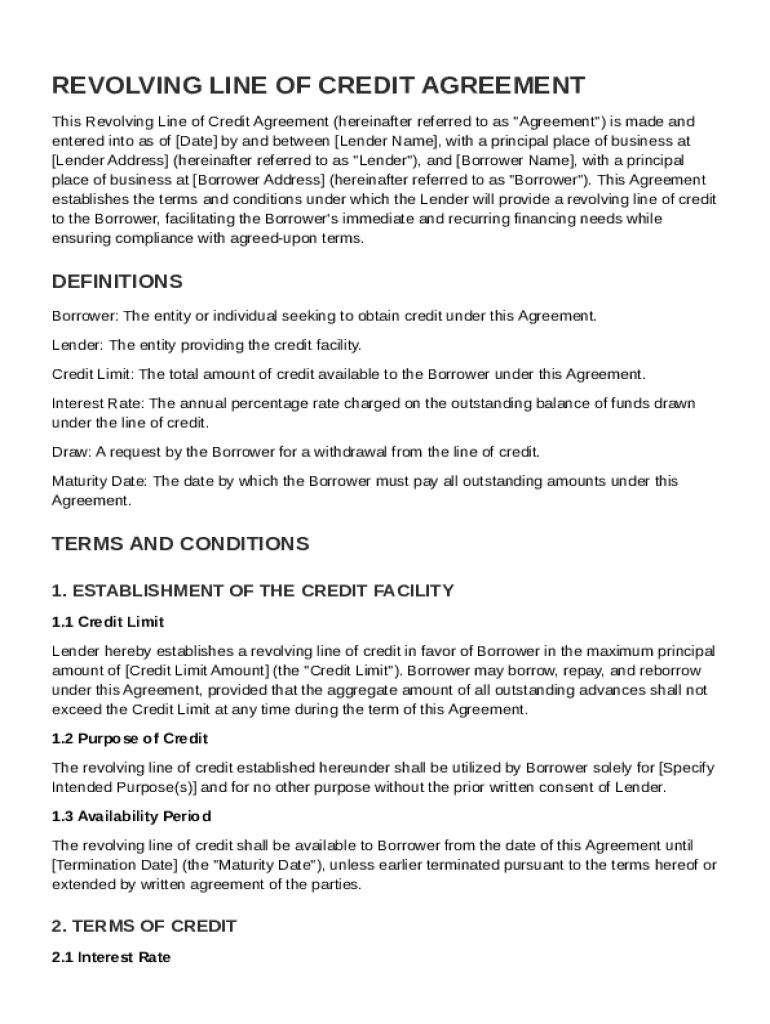







Definition and Purpose of the Revolving Line of Credit Agreement Template
A Revolving Line of Credit Agreement Template is a formal document outlining the terms and conditions under which a lender provides a revolving line of credit to a borrower. This agreement is designed to facilitate the borrower's financing needs while ensuring both parties adhere to specified terms. Key elements often included are credit limits, interest rates, repayment conditions, borrowing procedures, and lender remedies in case of borrower default. This template serves as a crucial tool for businesses and individuals managing ongoing financing arrangements.
How to Use the Revolving Line of Credit Agreement Template
To effectively utilize the Revolving Line of Credit Agreement Template, begin by reviewing all sections of the template to understand each clause's implications. Generally, the following steps are involved:
- Customization: Adapt the template to fit the specific needs of the borrower and lender. This includes amending default terms, interest rates, and conditions precedent for funding to match the agreed terms.
- Review and Negotiation: Both parties should review the document thoroughly, negotiating terms that may require adjustments.
- Legal Consultation: Consult with legal professionals to ensure compliance with relevant laws and regulations, minimizing potential legal disputes.
- Finalization and Signing: Once finalized, all involved parties sign the document, securing a binding contract.
Important Terms Related to the Revolving Line of Credit Agreement Template
Understanding the terminology within the Revolving Line of Credit Agreement Template is crucial:
- Credit Limit: Maximum amount a borrower can draw at any given time.
- Interest Rate: The percentage charged on borrowed funds.
- Repayment Terms: Conditions under which the borrower must return borrowed funds.
- Borrowing Base: The collateral value that limits the amount available for borrowing.
- Default Conditions: Specific scenarios in which the borrower fails to meet obligations.
- Covenants: Promises made by the borrower covering financial performance or prohibitions against specific activities.
Key Elements of the Revolving Line of Credit Agreement Template
The Revolving Line of Credit Agreement Template encompasses several critical elements:
- Definitions: Clarity on specific terms used throughout the agreement.
- Procedures for Draws and Repayments: Detailed steps for borrowing and returning funds.
- Conditions Precedent: Requirements that must be fulfilled before funds are disbursed.
- Rights and Obligations: Responsibilities of both the lender and borrower.
- Event of Default and Remedies: Actions a lender may take should the borrower default.
Legal Use of the Revolving Line of Credit Agreement Template
The legal application of this agreement ensures both parties adhere to predefined terms. Compliance with legal standards such as the ESIGN Act for electronic signatures is crucial, ensuring the agreement's enforceability in court. It's essential to align the document with state-specific laws and financial regulations to prevent disputes.
Steps to Complete the Revolving Line of Credit Agreement Template
Completing the template involves the following steps:
- Pre-Fill Basic Information: Include borrower and lender details along with transaction-specific data.
- Define Credit Terms: Clearly state the credit limit, interest rate, and repayment schedule.
- Outline Covenants: Detail any performance indicators or restrictions for the borrower.
- Specify Default Scenarios: Cover possible defaults and remedies.
- Legal Review: Have the document vetted by legal counsel before proceeding.
Examples of Using the Revolving Line of Credit Agreement Template
The template has diverse applications; for instance, a small business may use it to secure funds for inventory purchases, stabilizing cash flows. Conversely, large corporations might use this agreement as a part of their financial strategy to manage liquidity during expansion.
Who Typically Uses the Revolving Line of Credit Agreement Template
Typically, the template is utilized by:
- Small Business Owners: Managing short-term cash needs without constraints of limited credit lines.
- Corporations: Financing large-scale projects or ongoing operational expenses.
- Financial Institutions: Providing flexible credit options to various clients, ensuring comprehensive legal coverage.


State-Specific Rules for the Revolving Line of Credit Agreement Template
State laws can affect certain elements, such as maximum allowable interest rates and specific default provisions. Users must align the template with regional legislative frameworks to avoid compliance issues, adapting content to abide by state mandates, which can vary significantly.
Business Types that Benefit Most from the Revolving Line of Credit Agreement Template
Entities varying from sole proprietorships to corporations can benefit:
- Retailers: For managing fluctuating inventory costs.
- Manufacturers: Funding raw materials purchases.
- Seasonal Businesses: Addressing cash flow inconsistencies during off-peak times.
- Service Providers: Ensuring funds are available for unforeseen operational demands.
These blocks create a structured overview of the Revolving Line of Credit Agreement Template, offering comprehensive insights to interested users.




