







Understanding the Definition and Purpose
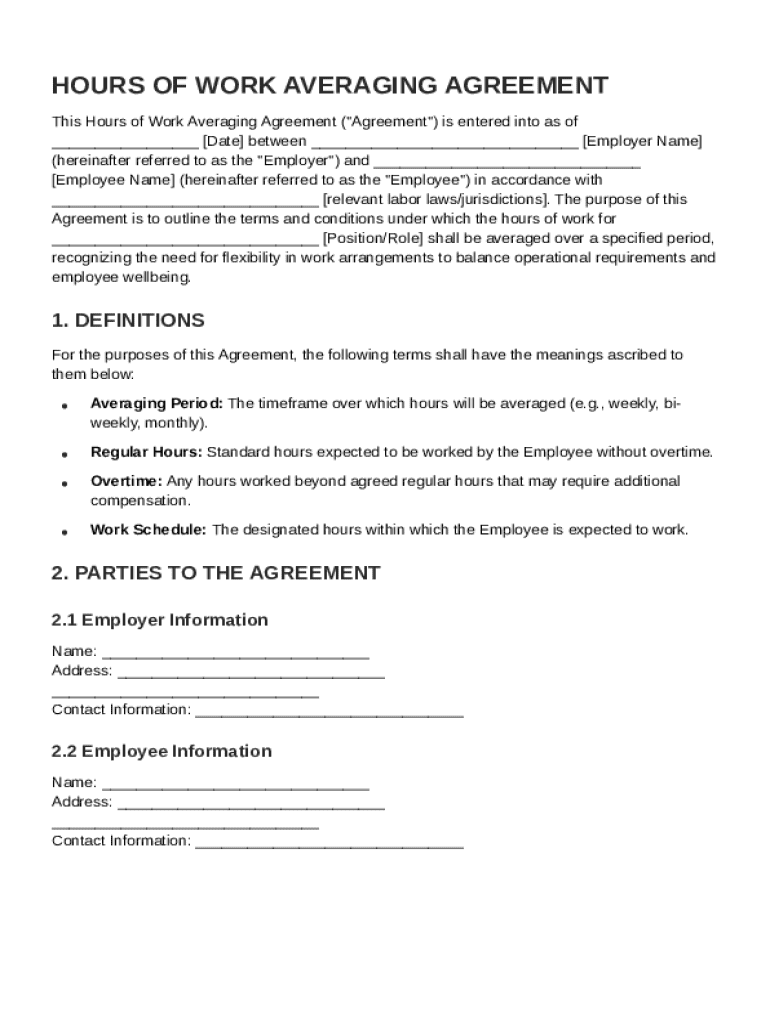
The "Hours of Work Averaging Agreement Template" is a legal form used to detail the specific requirements for averaging an employee's work hours over a set period. This agreement allows for flexibility in scheduling to better align with operational needs while ensuring employees' rights are protected. The template includes critical sections such as definitions of terms used, the parties involved, the duration of the agreement, and the methodology used for averaging hours. It is vital for aligning company policies with labor regulations, thus safeguarding both employer and employee interests.
Instructions for Utilizing the Template
To effectively use the Hours of Work Averaging Agreement Template, you'll need to follow specific steps to ensure all necessary information is captured:
- Identify the parties: Clearly state the employer and employee details.
- Define terms: Use precise language for commonly used terms within the agreement.
- Set the duration: Specify the period for which the agreement will be active.
- Describe the methodology: Clearly outline how work hours will be averaged.
- Detail the work schedule: Provide flexibility clauses as necessary.
After filling in the relevant sections, review the document with all parties involved to ensure accuracy and agreement on all terms.
Obtaining the Template
You can obtain the Hours of Work Averaging Agreement Template from various online sources specializing in employment contracts or directly from a service like DocHub, where templates are easily customizable to fit specific organizational needs. Importing documents from your cloud storage or starting from a blank document is simple with platforms like DocHub, offering you the flexibility to handle documents in various formats without conversion hassles.
Steps to Complete the Template
Completing the Hours of Work Averaging Agreement involves a series of steps to ensure all relevant details are captured accurately. Here’s a systematic approach:
- Review initial requirements: Make sure you understand what information is needed.
- Fill in the basic information: Include details such as company name, employee details, and contact information.
- Detail work schedules: Outline the specifics of how hours will be distributed over weekdays or select time periods.
- Calculate and enter averaging details: Insert the calculation methods for averaging work hours, ensuring compliance with labor laws.
- Provide compensation terms: Specify paid time and other compensation-related details.
- Acknowledge both parties: Ensure the document includes space for signatures to signify agreement by both employer and employee.
Verify all sections are filled accurately before considering the document final.
Typical Users of the Template
This template is often employed by human resources professionals, corporate managers, and employers within industries that require non-standard work schedules, such as retail, healthcare, and manufacturing. It's useful for organizations needing to balance fluctuating work demands while adhering to legal requirements. Employees subject to varying shifts also benefit from the clarity provided by these agreements.
Critical Terms Explained
Several important terms are used within the Hours of Work Averaging Agreement Template that users need to understand:
- Averaging Period: The timeframe over which work hours are averaged.
- Work Schedule: The planned hours and days an employee is expected to work.
- Compensation Details: Includes base pay, overtime compensation, and any other pay considerations.
- Flexible Work Arrangements: Any clauses allowing variations in schedule based on mutual agreement.
Understanding these terms is essential for accurate completion and implementation of the agreement.
Legal Compliance and Use
The agreement must comply with applicable labor laws, which may vary by state. It is crucial to ensure the document reflects the legal standards required by both federal and state regulations to avoid potential disputes. Employers should regularly revisit the terms of this agreement to remain compliant with any changes in labor law.
Key Elements of the Template
This template generally includes:
- An introduction with the purpose of the agreement
- A definitions section
- Participant roles and obligations
- Duration of the agreement
- Specific terms for averaging and scheduling
- Terms for compensation and flexibility
- Effective date and termination details
Each element plays a significant role in ensuring that the agreement is comprehensive and enforceable.
State-Specific Rules and Considerations
Different states have particular provisions and laws governing work hour averaging agreements. Employers should always refer to specific state labor departments or consult legal professionals to confirm that their templates align with both local and federal regulations. This knowledge ensures that the agreements hold up under legal scrutiny and provide the intended flexibility and protection.




