






Definition and Meaning
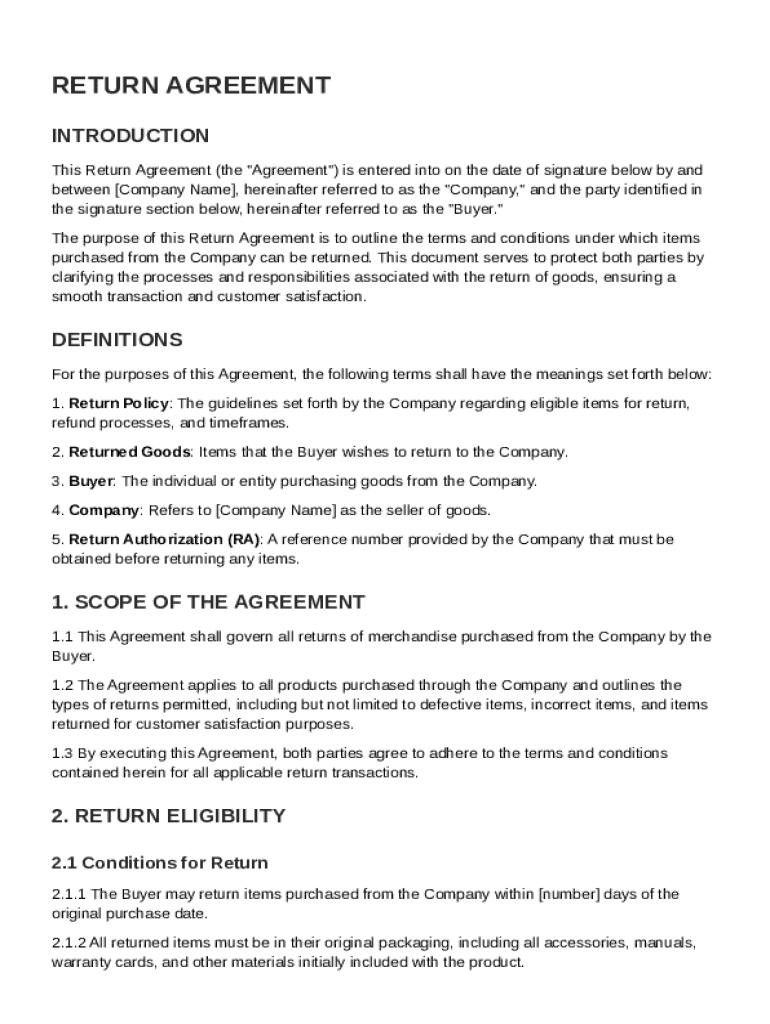
A Return Agreement Template is a document that outlines the terms and conditions related to the return of purchased items from a company. It acts as a formal agreement between the buyer and the company, detailing the processes, timelines, and requirements needed for a successful return. The primary aim of this template is to provide clarity and ensure both parties have a mutual understanding of the return process. It includes essential information such as eligibility criteria for returns, the process to obtain a Return Authorization (RA) number, and the conditions under which refunds are issued. This agreement helps in minimizing disputes and facilitates an efficient return process.
Key Elements of the Return Agreement Template
The Return Agreement Template comprises several critical elements that ensure a smooth transaction process. These elements serve as a guide for both the buyer and the company to follow during a return:
- Return Eligibility Criteria: Specifies the conditions under which items can be returned, such as a time frame post-purchase, the state of the product, and any proof of purchase needed.
- Return Authorization (RA) Number: Describes the process for obtaining an RA number, which is necessary before initiating a return.
- Refund Methods and Timelines: Outlines the methods by which refunds will be processed (credit card, store credit, etc.) and the anticipated time frame for receiving the refund.
- Modification and Termination Conditions: Provides information on how the agreement might be amended or terminated under specific conditions.
- Shipping Costs and Responsibilities: Details who bears the cost of shipping products back to the company and under what circumstances these costs might be waived.
Each of these elements plays a vital role in ensuring that the return process is both transparent and efficient for all parties involved.
Steps to Complete the Return Agreement Template
Completing the Return Agreement Template requires a clear understanding of the process and adherence to specified guidelines. Here’s a step-by-step approach:
- Review Return Policy: Understand the company’s return policy, which forms the basis for the agreement.
- Verify Product Eligibility: Confirm the item meets the eligibility criteria outlined in the agreement.
- Request Return Authorization Number: Contact the company to obtain a Return Authorization (RA) number if required.
- Fill Out Required Information: Complete the template with necessary details such as purchase date, product information, and reason for return.
- Submit the Document: Send the completed template along with the RA number to the company as specified in the form’s instructions.
- Follow-Up on Status: Keep track of the process and follow up with the company for any additional steps needed.
Adhering to these steps ensures a seamless and efficient completion process, minimizing potential errors and delays.
Important Terms Related to Return Agreement Template
Understanding the terminology related to a Return Agreement Template is essential for accurately interpreting and completing the document:
- Return Authorization (RA) Number: A unique identifier required to approve and track the return process.
- Eligibility Criteria: The set of requirements that must be met for an item to qualify for a return.
- Restocking Fee: A potential charge applied to the buyer for processing the return, usually a percentage of the purchase price.
- Defective Goods: Items that contain a flaw or fault, often subject to different return conditions.
- Non-Returnable Items: Products that are exempt from return, usually outlined in the agreement’s exceptions.
Familiarity with these terms facilitates a better understanding of the return process and helps ensure compliance with the agreement's conditions.
Legal Use of the Return Agreement Template
Return Agreements are legally binding documents that protect the interests of both the buyer and the seller. They ensure compliance with consumer protection laws and uphold the rights of both parties involved in a transaction. In the United States, these agreements must align with federal and state consumer laws, which mandate transparency in return policies. For example, the buyer must be informed of their right to return an item and the conditions under which this can occur. Misunderstanding or misrepresenting the return terms can lead to legal disputes, making it crucial for businesses and consumers to adhere to the template’s stipulations carefully.
Examples of Using the Return Agreement Template
Return Agreement Templates are utilized across various industries and scenarios. Here are some typical examples:
- Retail Industry: A clothing store utilizes the template to handle returns of online purchases, ensuring customers understand the eligibility conditions.
- Electronics Stores: Customers returning defective gadgets can use the agreement to initiate a return and process refunds or exchanges.
- Custom Products: Businesses dealing with personalized products outline specific return conditions tied to the uniqueness of items.
These examples highlight the versatility and necessity of return agreements in managing the return process effectively across different market sectors.
Software Compatibility and Integration
For businesses using tools like DocHub, compatibility with other software is crucial. DocHub supports integration with Google Workspace, simplifying the process of importing, editing, and storing Return Agreement Templates. Users can easily access agreements stored in Google Drive, modify them in DocHub, and return them without leaving the platform. This seamless compatibility ensures that templates are not only accessible but also easily editable, making it an ideal choice for businesses relying on cloud-based solutions for document management.
Versions or Alternatives to the Return Agreement Template
Return Agreement Templates may vary based on industry requirements or company policies. Various versions are available:
- Standard Return Agreement: A general template suitable for most retail transactions.
- Custom Product Return Agreement: Tailored for returns involving customized or special-order items with specific conditions.
- Warranty-Based Return Agreement: Specific to products covered under warranty; focuses on repair or replacement rather than a refund.
Understanding these alternatives allows companies to choose or adapt the most appropriate template for their needs, ensuring all specific contingencies are covered accurately.