






Definition of a Retirement Agreement Template
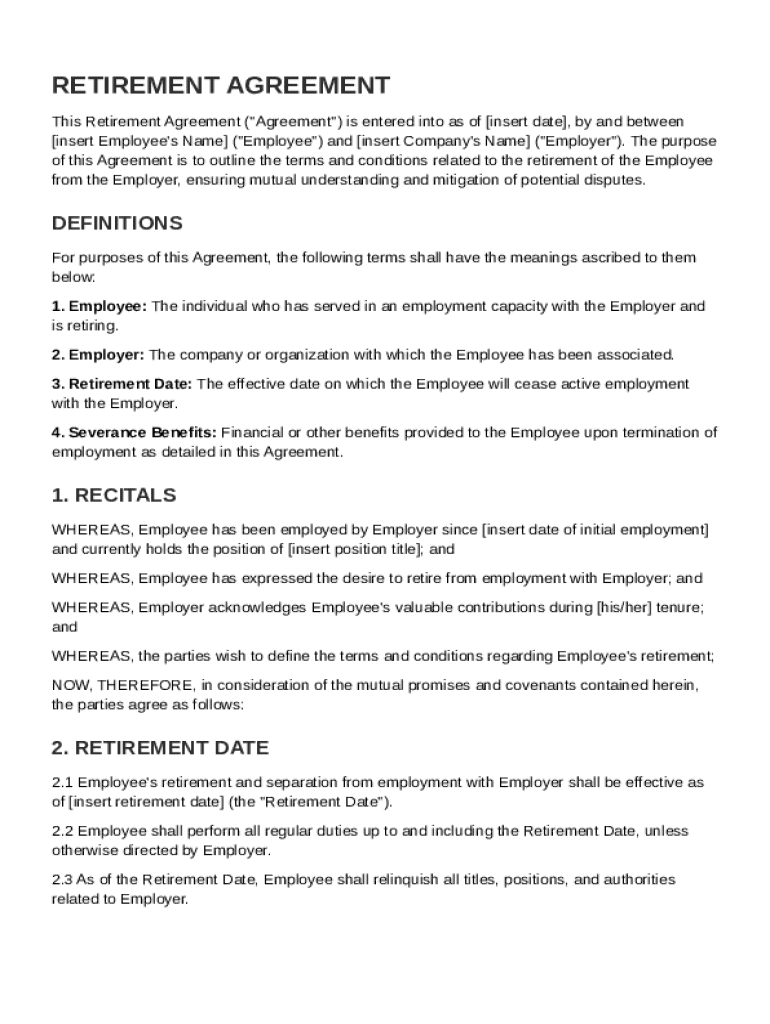
A Retirement Agreement Template is a structured document designed to outline the terms and conditions related to an employee's retirement from a company. This template serves as a blueprint for both employers and employees to ensure clarity and mutual understanding regarding retirement terms. It typically includes information about the retirement date, severance benefits such as pension and health insurance, and other essential components like confidentiality obligations and the return of company property. By standardizing these elements, the template reduces potential misunderstandings or disputes that could arise during the retirement process.
How to Use the Retirement Agreement Template
Using a Retirement Agreement Template involves several precise steps to ensure the document's effectiveness. First, the employer should fill in the template with specific details pertinent to the retiring employee, such as their name, position, and agreed-upon retirement date. Following this, the severance benefits should be clearly outlined, including any pension plans, health insurance continuation, and any other financial considerations. After drafting, both parties should review the document carefully to confirm all terms are understood and agreed upon. It is paramount that both the employee and employer sign the agreement to indicate their consent to the terms described.
Key Elements of the Retirement Agreement Template
The Retirement Agreement Template encompasses several critical components to cater to different scenarios in a retirement process. Each part should be customized to match the specific agreement between the employer and employee:
- Effective Retirement Date: The agreed date upon which the employee's retirement becomes official.
- Severance Benefits: Comprehensive detail of financial packages, such as lump-sum payments, ongoing pension schemes, or health insurance coverage.
- Confidentiality Clauses: Provisions to protect company information post-retirement.
- Return of Company Property: Lists of items or property that must be returned to the employer, such as laptops, phones, or identification badges.
- Release of Claims: A mutual agreement where the retiring employee agrees not to pursue future legal claims against the employer.
Steps to Complete the Retirement Agreement Template
Completing the Retirement Agreement Template effectively requires attention to detail. Here’s a step-by-step guide:
- Gather Information: Collect all relevant details about the retirement, including the retiree's personal information and employment history.
- Draft the Initial Agreement: Populate the template with specific data, starting with the retirement date and severance details.
- Review Severance Benefits: Clearly specify monetary compensation, including pension plans and healthcare access.
- Address Legal Obligations: Add necessary confidentiality clauses and terms regarding the return of company assets.
- Ensure Mutual Understanding: Review the document with the retiring employee to make sure both parties agree with the terms.
- Sign the Document: Obtain signatures from both the employer and the retiring employee to validate the agreement.
Legal Use of the Retirement Agreement Template
The legal application of a Retirement Agreement Template involves ensuring compliance with applicable employment laws and regulations. It must be tailored to meet federal and state legal requirements, which may vary. Employers should seek legal counsel to confirm the document meets standards for enforceability and fairness. The inclusion of spaces for both parties to sign is critical, as signatures corroborate the agreement's legitimacy. Additionally, thorough documentation can protect against future legal claims or disputes, ensuring both parties have met their obligations.
Important Terms Related to the Retirement Agreement Template
Understanding the terminology used in the Retirement Agreement Template is essential for clarity:
- Severance Pay: The amount of compensation given to an employee upon termination or retirement.
- Non-Disclosure Agreement (NDA): A clause to prevent the release of sensitive company information.
- Vesting: The process through which an employee earns rights to full retirement benefits over time.
- Non-Compete Clause: A stipulation that restricts the retiree from entering into competition with the former employer after retirement.
State-Specific Rules for the Retirement Agreement Template
Retirement Agreement Templates may need adjustments based on state-specific employment laws. Some states have unique regulations governing severance pay, non-compete clauses, and confidentiality agreements. For instance, the enforceability of non-compete clauses may vary significantly across states. Employers must ensure the template adheres to these laws to avoid potential legal pitfalls. Consulting with a legal expert familiar with state-specific employment statutes can facilitate compliance.
Examples of Using the Retirement Agreement Template
The Retirement Agreement Template serves a multitude of purposes across different scenarios:
- Corporate Retirement: An employee nearing the mandatory retirement age uses the template to formalize the retirement benefits and confidentiality agreements.
- Voluntary Early Retirement: An employee opting for early retirement uses the template to negotiate additional severance benefits.
- Negotiated Retirement: In cases of workforce reduction, companies use the template to offer voluntary retirement packages that include enhanced benefits in exchange for an accelerated departure.
In these examples, predefined templates streamline the process, ensuring all needed contingencies are covered comprehensively.