






Definition and Meaning
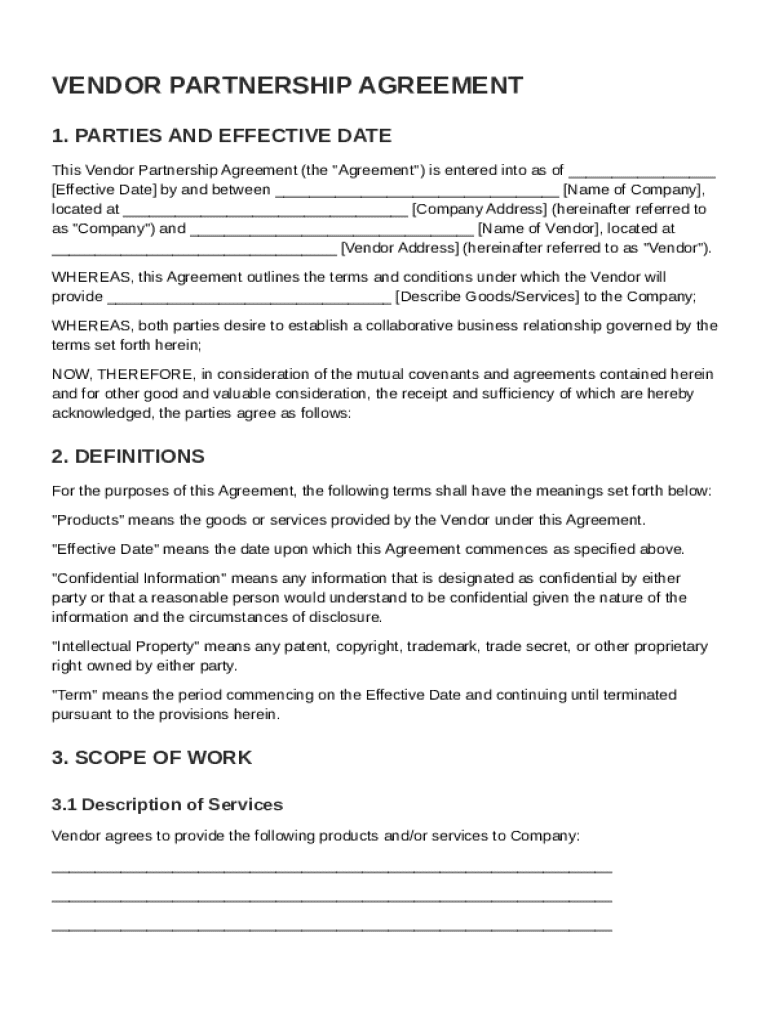
A Vendor Partnership Agreement Template serves as a foundational document that formalizes the relationship between a vendor and a company. It outlines the terms and conditions, including the scope of work, payment terms, and responsibilities, ensuring a clear understanding between both parties. This template acts as a blueprint for managing expectations and ensuring compliance with applicable laws, safeguarding both parties' interests throughout the partnership.
Key Components
- Scope of Work: Clearly defines the tasks and responsibilities expected from the vendor.
- Payment Terms: Details the compensation structure, including timelines and methods of payment.
- Responsibilities: Allocates duties and responsibilities to each party to avoid misunderstandings.
- Confidentiality: Protects sensitive business information shared during the partnership.
Key Elements of the Vendor Partnership Agreement Template
This template includes critical elements that must be addressed to establish a successful vendor partnership. Each section should be carefully considered and tailored to the specific relationship between the parties.
Important Sections
- Intellectual Property Rights: Clarifies ownership of any intellectual property developed during the partnership.
- Dispute Resolution: Provides mechanisms for resolving conflicts, often through mediation or arbitration.
- Termination Conditions: Sets forth the conditions under which the agreement can be terminated by either party.
- Compliance Requirements: Ensures adherence to laws and regulations applicable to the partnership.
Steps to Complete the Vendor Partnership Agreement Template
To utilize the Vendor Partnership Agreement Template effectively, both parties need to collaborate on the completion process, ensuring all aspects of the partnership are comprehensively documented.
Completion Process
- Initial Review: Both parties should review the template to ensure it aligns with their expectations and objectives.
- Customization: Tailor each section to reflect the particulars of the agreement, adjusting terms, and conditions as necessary.
- Legal Consultation: Seek advice from legal professionals to verify the agreement's compliance with applicable laws.
- Finalization: Make necessary revisions based on feedback, then agree on the finalized version of the document.
- Signing: Both parties sign the agreement, often using electronic signatures for convenience and legal validity.
Legal Use of the Vendor Partnership Agreement Template
The Vendor Partnership Agreement Template must adhere to legal standards to ensure enforceability. Understanding the legal implications is crucial to crafting a valid and binding document.
Legal Considerations
- ESIGN Act Compliance: Utilize electronic signatures to meet the requirements of the ESIGN Act for legal validity.
- Applicable Laws: Ensure the agreement complies with federal, state, and local laws relevant to the business context.
- Statutory Clauses: Include clauses required by law, such as non-discrimination and compliance declarations.
Who Typically Uses the Vendor Partnership Agreement Template
This agreement template is widely used across various industries where vendor relationships are integral to operations, helping to streamline processes and protect interests.


Primary Users
- Small to Medium Enterprises (SMEs): To formalize relationships with suppliers and outsource tasks efficiently.
- Corporations: To manage relationships with multiple vendors, ensuring standards are met consistently.
- Startups: To establish clear agreements with providers critical to initial business operations.
Why Use a Vendor Partnership Agreement Template
Utilizing a standardized agreement template offers numerous advantages, supporting both operational efficiency and legal security.
Benefits
- Clarity and Predictability: Creates a shared understanding that helps prevent disputes and provides guidelines for resolution.
- Efficiency: Streamlines the documentation process, allowing businesses to focus on strategic activities.
- Risk Mitigation: Protects businesses from potential legal and financial risks associated with vague or incomplete agreements.
State-Specific Rules for the Vendor Partnership Agreement Template
Understanding state-specific regulations is essential to ensure compliance and uphold the agreement's legality in various jurisdictions.
Variations
- Registration Requirements: Some states may require registration or notification when entering special types of vendor agreements.
- State-Specific Clauses: Additional clauses might be necessary to align with specific state commerce regulations.
- Enforcement Protocols: States may have varied procedures for enforcing or contesting violations of business agreements.
State-by-State Differences
Vendor partnership agreements can vary significantly depending on the state in which they are executed. It’s crucial to account for these distinctions to avoid legal complications.
Key Differences
- Contract Laws: Each state has its own set of laws governing contracts that may impact the enforceability and interpretation of terms.
- Tax Obligations: State taxes could influence the financial terms within the agreement, ensure compliance with applicable tax codes.
- Licensing Requirements: Different industries might have state-specific licensing requirements that must be incorporated into the agreement.
By comprehensively addressing these areas, the Vendor Partnership Agreement Template provides a robust framework for creating clear, enforceable vendor relationships, tailored to specific business needs and legal contexts.