







Definition & Meaning
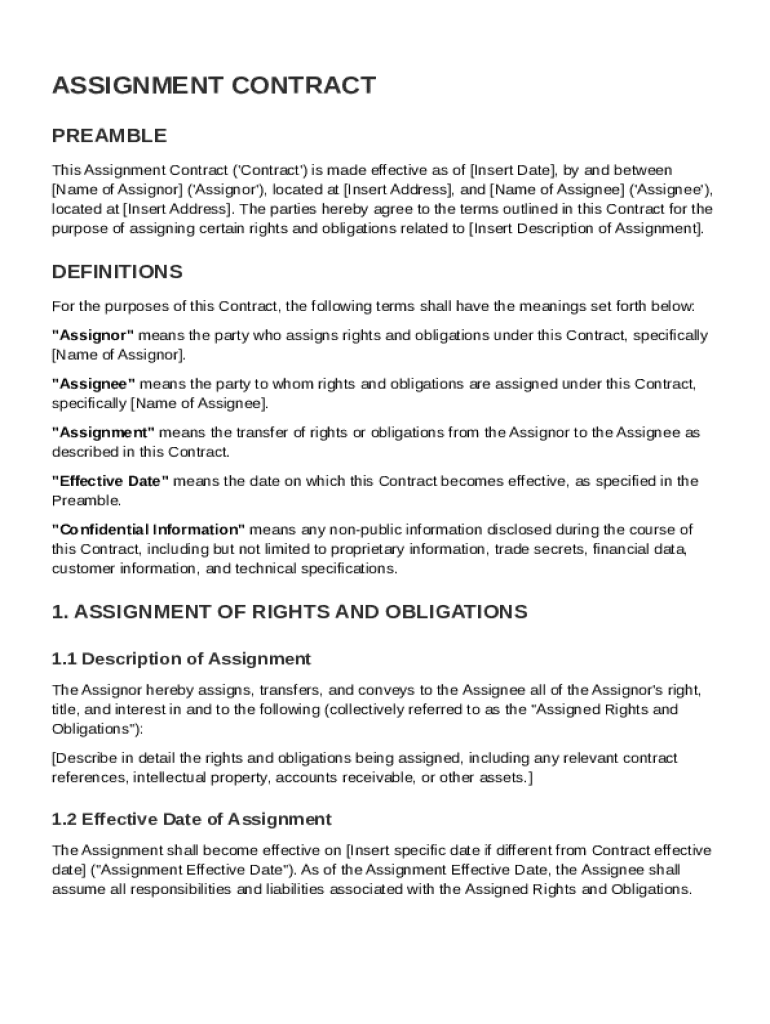
An Assignment Contract Template is a pre-drafted document used to formalize the transfer of rights and obligations from one party, known as the Assignor, to another, called the Assignee. This contract outlines various elements crucial for ensuring clear terms, mutual understanding, and adherence to legal and confidentiality standards. Typically used in business transactions, this template helps in detailing the exact terms under which assets, rights, or liabilities are assigned.
- Purpose: To legally bind both parties to the agreed-upon terms concerning the transfer of specified rights.
- Common Uses: Transfer of intellectual property, assignment of lease agreements, or transfer of contractual rights.
Practical Application
In practice, an Assignment Contract Template is used in scenarios where one party wishes to hand over their rights under an existing agreement to another party. For instance, a company outsourcing some of its operations may use this template to transfer contractual responsibilities to a service provider.
Key Elements of the Assignment Contract Template
An Assignment Contract typically comprises several critical components that ensure clarity and enforceability. These elements not only provide a framework for drafting the contract but also help the parties in understanding their rights and responsibilities.
Primary Components
- Parties Involved: Clearly identifies both the Assignor and the Assignee, sometimes including a third-party obligor.
- Assignment Clause: Details the rights, benefits, or obligations being assigned, often specified meticulously.
- Consideration and Payment Terms: Outlines any monetary or non-monetary exchange agreed upon by the parties.
- Representations and Warranties: Includes guarantees made by either party to validate the terms of the assignment.
- Confidentiality Agreement: Protects sensitive information from being disclosed to unauthorized parties.
- Indemnification Clauses: Specifies conditions under which one party will compensate the other for certain damages or losses.
Additional Provisions
- Governing Law: Determines which state or federal laws apply to the contract.
- Dispute Resolution: Details how any conflicts will be handled, including mediation or arbitration processes.
- Miscellaneous Provisions: Catch-all for other vital terms like amendments, notices, or severability.
Steps to Complete the Assignment Contract Template
Creating a valid and enforceable Assignment Contract involves several steps, each crucial for capturing the precise terms of the agreement. This process ensures thoroughness and compliance with applicable laws, minimizing the risk of disputes.
Step-by-Step Process
- Identify the Parties: Begin by accurately listing the Assignor and the Assignee, including any necessary identification numbers or contact details.
- Detail the Assignment: Clearly describe what is being assigned, including terms and conditions where applicable.
- Determine the Consideration: Specify any payments or considerations involved in the assignment and the deadlines for these transactions.
- Draft Representations and Warranties: Both parties should include statements that confirm their capacity and authority to enter into the agreement.
- Include Confidentiality Terms: Outline any obligations regarding the nondisclosure of sensitive information.
- Specify Governing Law and Jurisdiction: The agreement should note which legal standards will apply and where any legal proceedings should be filed.
- Finalize with Signatures: Ensure all parties sign the document, ideally in the presence of a notary public for added validity.
Checklist for Completion
- Verify all sections are accurately filled out.
- Review any legal terminology or complex clauses.
- Consult with legal counsel if necessary before finalizing the document.
Who Typically Uses the Assignment Contract Template
Understanding the common users of an Assignment Contract Template can shed light on its diverse applications across various sectors and situations.


Common Users
- Businesses: Often use these templates to manage contractual relationships, assign lease agreements, or transfer intellectual property.
- Individuals: May use it when transferring rights to another person, such as in estate planning or personal property matters.
- Legal Professionals: Utilize these templates when advising clients on contractual obligations or during negotiations.

Industry Examples
- Real Estate Agents: Frequently use assignment contracts to transfer property rights.
- Technology Firms: Use the templates to assign software licenses or IP rights as part of mergers and acquisitions.
- Consulting Firms: Use it during restructuring projects, transferring service contracts to different areas within the organization.
Legal Use of the Assignment Contract Template
An Assignment Contract Template is legally binding, provided it adheres to jurisdiction-specific legal standards and is properly executed by the involved parties.
Legal Requirements
- Capacity to Contract: Both parties must be legally capable of entering into a binding agreement (e.g., age and mental capacity).
- Consent: The assignment must be consensual, free from any form of duress or undue influence.
- Consideration: There must be a form of consideration exchanged, which could be monetary or something else of value.
- Legal Purpose: The assignment must not contravene any existing laws or public policy.
Compliance and Enforcement
A well-drafted assignment ensures compliance with both state and federal laws. If a dispute arises, courts will evaluate the contract based on these legal standards and the intentions of the parties at the time of signing.
Important Terms Related to Assignment Contract Template
Understanding specific vocabulary associated with Assignment Contracts enhances clarity and ensures accurate interpretation of terms.
Common Terms and Definitions
- Assignor: The party transferring their rights, interests, or obligations.
- Assignee: The recipient of the rights or obligations being transferred.
- Assignment: The act of transferring rights or benefits from one party to another.
- Indemnification: The obligation to compensate for loss or damage that occurs as a result of the contract's execution.
- Confidentiality: The requirement to keep certain information private and not to disclose it without permission.
Clarification of Key Concepts
- Difference Between Assignment and Subletting: While both involve transferring rights, assignment typically transfers full rights, whereas subletting might involve temporary or conditional use of rights.
State-Specific Rules for the Assignment Contract Template
The legality and enforceability of assignment contracts can vary significantly based on state laws. Understanding these variations is critical for crafting a compliant agreement.
State Variations
- California: Requires explicit consent from all involved parties for valid assignment of contracts, especially those involving personal services.
- New York: Often applies stricter standards regarding consideration and requires clarifying clauses in contracts involving high-value assignments.
Considerations for Compliance
- Research the state-specific statutes and regulations relevant to your contract.
- Adjust terms as needed to align with regional requirements; legal advice might be necessary for complex agreements.
Examples of Using the Assignment Contract Template
Practical examples illustrate the utility of an Assignment Contract Template across various scenarios, providing insights into its effectiveness and adaptability.
Real-World Scenarios
- Corporate Mergers: A tech company uses an assignment contract to transfer ongoing service agreements as part of a merger.
- Lease Transfers: A tenant moving to a new city uses the template to assign their lease to a new tenant, transferring all responsibilities.
- IP Rights: An independent author assigns publishing rights of their book to a publishing house, specifying royalties in the contract.
Lessons from Cases
- Ensure the details around payment and terms are clear to prevent disagreements during execution.
- Always check for state law compliance to avoid voiding the contract inadvertently.
With these sections and comprehensive content, the Assignment Contract Template can be fully understood, providing a solid base for drafting, evaluating, or consulting on such agreements.




