






Key Elements of the Artwork Art Contract Template
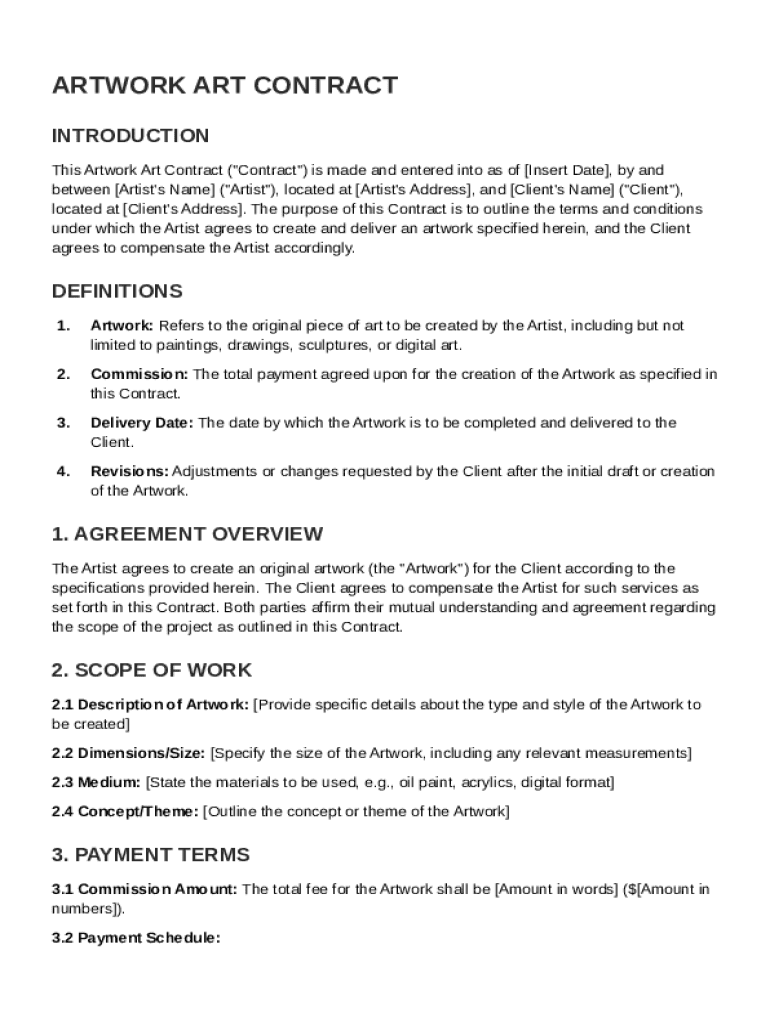
The Artwork Art Contract Template outlines essential components to ensure clarity and protection for both the artist and the client. These elements include:
-
Scope of Work: This section specifies the detailed description of the artwork to be created, including size, medium, and any specific instructions or themes requested by the client. It is crucial for minimizing misunderstandings about the delivered artwork.
-
Payment Terms: Here, the conditions under which the artist will be compensated are defined. This includes the total payment amount, installment plan if applicable, and due dates. Payment terms also cover acceptable payment methods and procedures for addressing late payments.
-
Timeline: Setting a clear timeline ensures both parties agree on the delivery schedule. This section includes key milestones such as completion dates for drafts and final artwork delivery, ensuring that the artist adheres to client expectations.
-
Revision Policies: This part of the contract outlines the process and limits for requesting changes to the artwork. It establishes the number of revisions included in the contract price and any additional fees for further alterations.
-
Ownership Rights: The document clarifies the intellectual property rights retained by the artist and the usage rights granted to the client. It typically distinguishes between commercial use and personal enjoyment to prevent unauthorized exploitation.
Steps to Complete the Artwork Art Contract Template
Filling out the Artwork Art Contract Template involves several key steps designed to tailor the agreement to specific project needs:
-
Identify the Parties: Enter the full names and contact information of both the artist and the client to define who is responsible for upholding the contract terms.
-
Define the Artwork: Provide a detailed description of the commissioned artwork, including dimensions, materials, and any particular aesthetic or conceptual guidelines.
-
Establish Payment Structure: Decide on the overall payment amount and outline any installment plans or deposits, noting specific dates for each payment.
-
Set Delivery Schedule: Include a timeline that specifies when draft and final versions of the artwork are expected. Deadlines for client feedback on revisions should also be defined.
-
Outline Revision Process: Specify the number of revisions included in the contract and detail any additional costs for revisions beyond the agreed-upon amount.
-
Determine Ownership and Usage Rights: Clearly establish the extent of the client’s rights to use the artwork commercially or otherwise, and the artist’s rights to retain and utilize their work.
Legal Use of the Artwork Art Contract Template
Legal compliance is critical in using the Artwork Art Contract Template effectively. These aspects ensure the contract's enforceability:
-
Compliance with Local Laws: The contract should adhere to local jurisdictional requirements, particularly concerning intellectual property rights and payment terms, which may vary between states.
-
Signatures and Witnessing: Both parties must provide signatures, and important legal documents like contracts can benefit from having a witness or notary public to enhance enforceability.
-
Inclusion of Termination Clauses: The contract should address scenarios where either party wishes to terminate the agreement and outline conditions under which this may occur.
Who Typically Uses the Artwork Art Contract Template
This template serves a variety of users who want to establish clear agreements in art commissions:
-
Freelance Artists: Individuals who frequently create custom artwork or commissions will find this template essential in defining expectations and securing their creative rights.
-
Art Collectors and Clients: Those commissioning art for private collections or business purposes use this form to ensure they understand the rights and obligations involved.
-
Art Galleries and Agencies: Businesses representing artists or purchasing artwork for exhibitions often use such contracts to formalize their agreements with artists.


Important Terms Related to the Artwork Art Contract Template
Understanding the terminology used in the Artwork Art Contract Template can be crucial for all parties:
-
Commissioned Artwork: Refers to art created according to the client's specific requirements, often under the guidance of a mutually agreed contract.
-
Non-Exclusive License: A term often mentioned in contracts allowing clients limited use of the artwork without transferring full ownership rights.
-
Force Majeure Clause: This legal provision frees a party from liability or obligation when an extraordinary event or circumstance beyond their control prevents the fulfillment of the contract.
State-Specific Rules for the Artwork Art Contract Template
While the template provides a general framework, artists and clients must consider:
-
Intellectual Property Laws: Vary by state, impacting what rights can be transferred and how they are protected.
-
Payment Regulations: Different states have specific regulations regarding payment timelines and requirements for freelancers.
-
Dispute Resolution Policies: Contracts should outline the methods for resolving disputes, which may need to align with state-specific guidelines.
Software Compatibility
When working with the Artwork Art Contract Template, consider the compatibility with various software platforms:
-
DocHub and Google Workspace: The DocHub platform allows users to edit, sign, and store the contract efficiently, with seamless integration with Google Drive and Gmail for easy access and sharing.
-
Adobe Acrobat: This software is widely used for PDF editing and can be useful for incorporating signatures and securing the document.
-
Microsoft Word: Often employed for initial drafting or modifications before converting the template to a more secure PDF format.
Business Types that Benefit Most from the Artwork Art Contract Template
Several business entities find this template particularly useful:
-
Small Art Studios: These entities often work on various projects and need clear agreements to manage client expectations and artist responsibilities effectively.
-
Creative Agencies: Those that orchestrate projects involving multiple artists and clients use such contracts to ensure coherence and legal security across projects.
-
Educational Institutions: Universities and schools commissioning works for campus installations often utilize these templates to formalize the arrangement with the artist.