01. Edit your form online
Type text, add images, blackout confidential details, add comments, highlights and more.

Type text, add images, blackout confidential details, add comments, highlights and more.

Draw your signature, type it, upload its image, or use your mobile device as a signature pad.

Send it via email, link, or fax. You can also download it, export it or print it out.
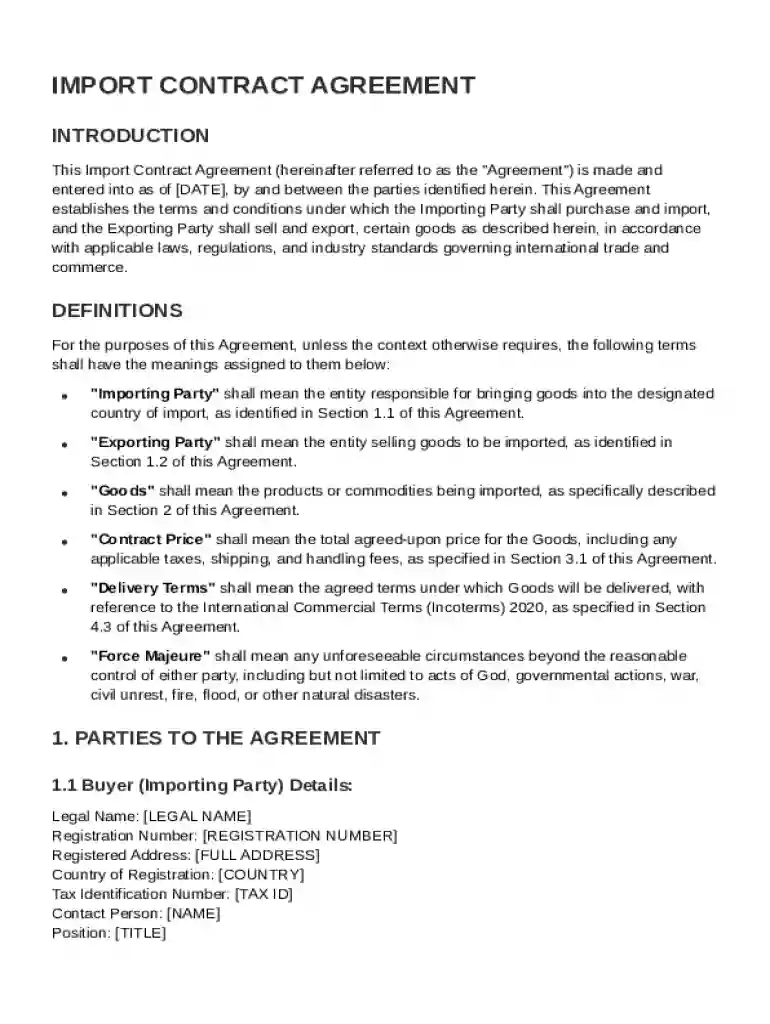
The Import Contract Template is a standardized document that outlines the terms and conditions related to the importation of goods. It serves as a legally binding agreement between the Importing Party and the Exporting Party. The template ensures clarity on multiple aspects of the transaction, including payment details, delivery arrangements, and responsibilities of each party. By employing this template, businesses can adhere to international trade regulations while safeguarding their interests.
The template includes several critical sections to ensure comprehensive coverage of the import transaction. These sections help delineate each party's expectations and responsibilities, reducing disputes and enhancing compliance.
An example might include importing electronic goods from Japan to the U.S. The contract would specify the brand, model, and specifications of the electronics, agreed pricing, delivery site in the U.S., and responsibilities of the importer for tariffs and duties.
Avoid ambiguous language in product descriptions and payment terms to prevent misunderstandings. Ensure all parties have reviewed the contract thoroughly.
These terms dictate cost responsibilities and at what point risks shift from the exporter to the importer. Selecting the correct term is crucial for clarity in cost-sharing and risk management.
The document adheres to the ESIGN Act, making any electronic signatures legally binding. Contracts should comply with international trade laws and U.S. Import regulations.
Utilize templates that are reviewed and updated according to the latest laws to maximize compliance and minimize risk.
Different states might have specific regulations governing trade and contract enforcement. Import contracts should be adapted to meet these distinct legal requirements.
Consult with legal experts who understand the local regulations to customize state-specific details effectively.
Businesses importing textiles from China to New York can use the template to ensure all legal and logistical details are addressed, especially regarding delivery schedules and quality inspections.
The Import Contract Template is compatible with document management and business tools such as DocHub, QuickBooks, and TurboTax.
Regular updates and backups of digital contracts ensure you have the most current versions available and protected against data loss.
The template is especially beneficial for small businesses, corporations, and partnerships involved in international trade.
These entities benefit from standardized templates as they streamline processes, reduce legal disputes, and provide protection against non-payment or delivery failures.
At DocHub, your data security is our priority. We follow HIPAA, SOC2, GDPR, and other standards, so you can work on your documents with confidence.