01. Edit your form online
Type text, add images, blackout confidential details, add comments, highlights and more.

Type text, add images, blackout confidential details, add comments, highlights and more.

Draw your signature, type it, upload its image, or use your mobile device as a signature pad.

Send it via email, link, or fax. You can also download it, export it or print it out.
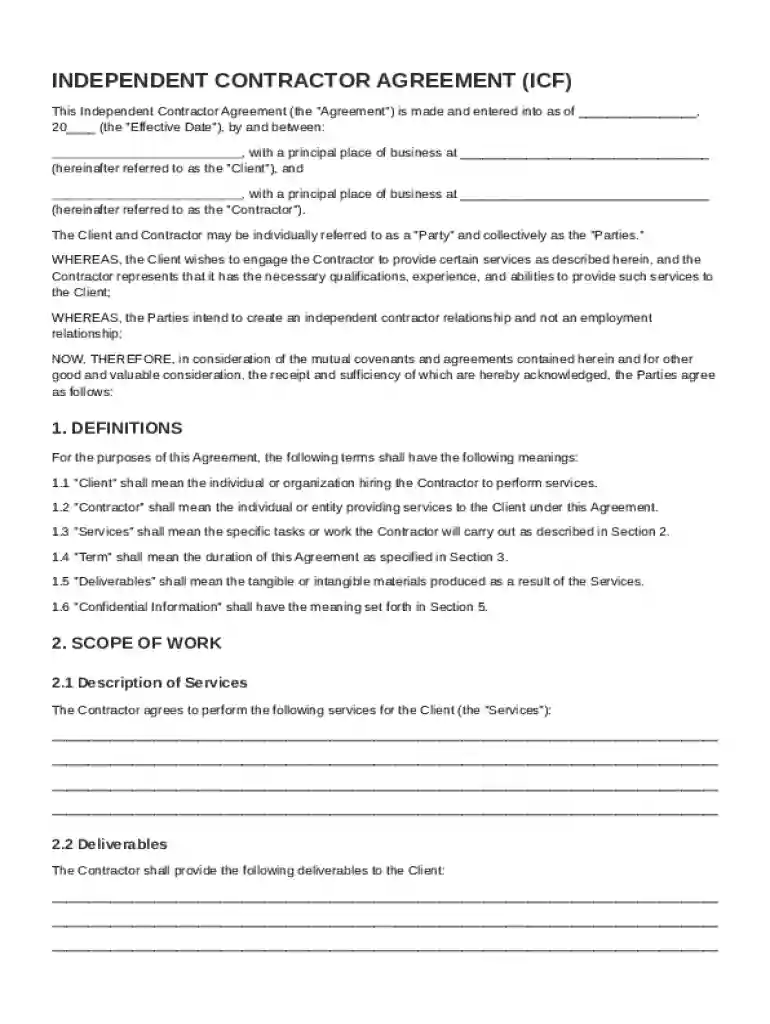
The ICF Contract Template, often referred to as the Independent Contractor Form, is an essential document that defines the working relationship between a client and an independent contractor. This template details the nature of the services to be provided, distinguishing the contractor as an independent entity rather than an employee. An ICF Contract Template is crucial as it outlines the expectations, responsibilities, and legal obligations of both parties, ensuring clarity and minimizing potential disputes.
An effective ICF Contract Template includes several critical components:
Scope of Work: Clearly defines the services the contractor will provide. This section specifies the tasks, milestones, and deliverables, allowing both parties to understand the project's breadth.
Compensation Structure: Details the payment terms, including the rate, schedule, and method of payment, ensuring the contractor is compensated appropriately for their work.
Confidentiality Clause: Protects sensitive information shared during the contract. This clause ensures that proprietary information is not disclosed without authorization.
Intellectual Property Rights: Outlines ownership of the work produced. Typically, the client retains rights to the deliverables, though variations can be negotiated.
Termination Conditions: Specifies conditions under which either party can terminate the agreement. This includes notice periods and potential penalties for breach of contract.
Review the Template: Begin by thoroughly reading the template to understand the general provisions and areas that require customization.
Customize the Scope of Work: Tailor this section to reflect the specific services and deliverables the contractor will provide.
Negotiate Compensation: Discuss and agree upon the payment terms, ensuring they align with industry standards and project requirements.
Address Confidentiality and IP Rights: Align these sections with the business's operational needs, ensuring all proprietary aspects are adequately safeguarded.
Define Termination Clauses: Mutually agree on the conditions that enable either party to terminate the contract, safeguarding both client and contractor interests.
Review and Sign: Ensure both parties comprehend and accept the terms before signing. It's advisable to consult a legal expert for additional assurance.
The ICF Contract Template is a legally binding document that must adhere to U.S. legal standards. Parties should ensure the contract:
Complies with federal, state, and local laws concerning independent contractor agreements.
Clearly designates the contractor's status, distinguishing them from an employee, which affects tax obligations and benefits.
Includes dispute resolution mechanisms, such as mediation or arbitration, to handle potential conflicts legally and efficiently.
This template is predominantly used by:
Freelancers and Consultants: Those who provide specialized services on a project basis often rely on this template to formalize their engagements.
Small and Medium Enterprises (SMEs): Businesses hiring external specialists for short-term projects to augment internal capabilities.
Start-ups: Companies that need flexible workforce solutions without the long-term commitment of hiring full-time staff.


Managing the financial aspects outlined in the ICF Contract Template can be streamlined with software integrations. Many accounting and tax software solutions, such as QuickBooks and TurboTax, offer features that:
Simplify expense tracking and invoicing for payments made under the contract.
Provide tools to calculate and file taxes applicable to independent contractors, ensuring compliance with IRS requirements.
Automate reminders for payment schedules and project milestones, contributing to efficient contract management.
State-specific regulations may influence the content and enforceability of the ICF Contract Template. Key considerations include:
Worker Classification: Criteria to assess whether a contractor is genuinely independent vary by state. Misclassifications can lead to legal and financial penalties.
Local Tax Obligations: Different states have unique tax requirements for independent contractors, impacting how they declare income and handle withholdings.
Employment Laws: Variations in labor laws, such as minimum wage and worker rights, may affect contract provisions regionally.
Failure to adhere to the stipulations within the ICF Contract Template can result in:
Financial Penalties: Contractors and clients may incur fines for misclassified worker statuses or omitted tax payments.
Legal Repercussions: Breach of contract terms can lead to lawsuits, requiring mediation or court intervention to resolve disputes.
Reputational Damage: Non-compliance can impact a business's reputation, affecting future engagements and partnerships.
This comprehensive approach ensures all aspects of the ICF Contract Template are explored, providing valuable insights into its usage, significance, and legal considerations.
At DocHub, your data security is our priority. We follow HIPAA, SOC2, GDPR, and other standards, so you can work on your documents with confidence.