Definition & Meaning
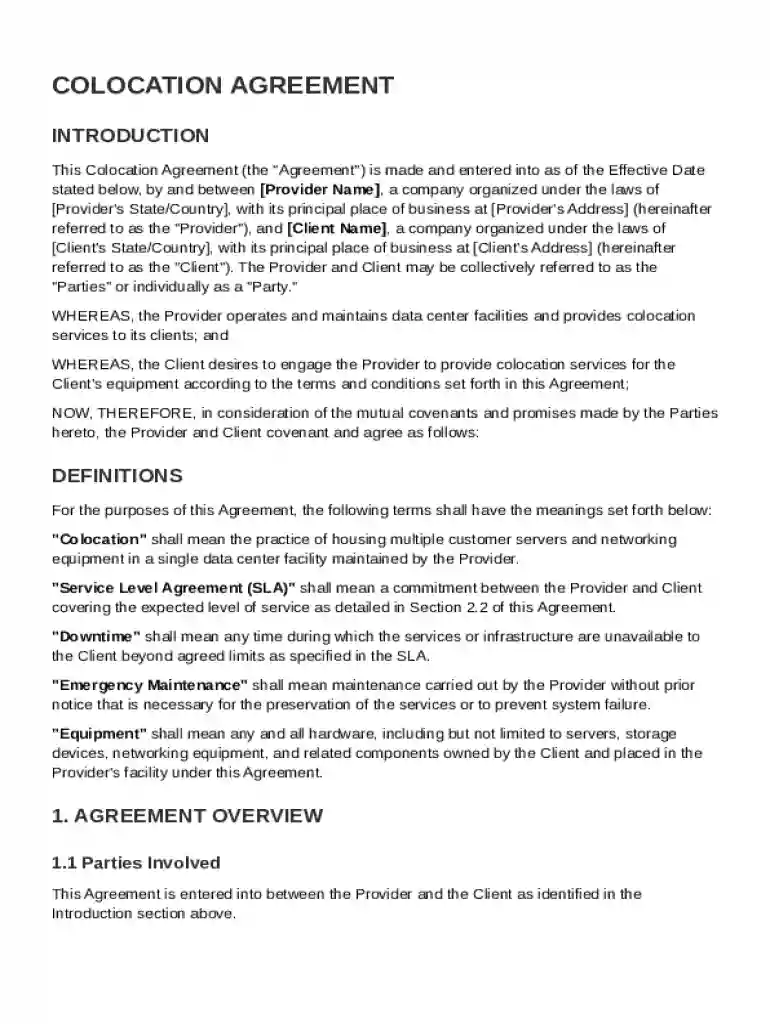
A Colocation Agreement is a formal contract that defines the relationship between a service provider offering colocation services and the client who seeks to utilize these services. This agreement typically includes an array of standard clauses tailored to ensure transparent governance of the relationship. The core aim is to establish clear operating parameters for locating a client's IT equipment within the provider's data center. Essential aspects such as service descriptions, responsibilities, legal obligations, financial commitments, and termination conditions are clearly articulated to safeguard both parties.
Components of a Colocation Agreement
- Service Descriptions: Outlining the nature of the colocation services provided, including data center specifications and any additional services.
- Financial Terms: Details on payment structures, billing cycles, and penalties for late payments.
- Responsibilities: The delineation of duties and obligations for both the service provider and the client.
- Termination Clauses: Procedures and consequences relating to the termination or breach of the contract.
- Confidentiality: Measures to protect sensitive information and data security protocols.
Key Elements of the Colocation Agreement Template
The Colocation Agreement Template includes foundational clauses tailored to delineate each party's rights and responsibilities. It encompasses several key sections that ensure comprehensive coverage of all pertinent operational and legal aspects. To facilitate clarity and avoid disputes, each component is clearly delineated.
Essential Sections Include:
- Definitions: A glossary of terms used throughout the agreement to ensure mutual understanding.
- Maintenance Provisions: Clauses that cover planned maintenance and emergency repair scenarios.
- Liability Limitations: Specifies limits on the service provider's liability for data loss or service interruptions.
- Governing Law: Identifies which legal jurisdiction applies in case of disputes.
How to Use the Colocation Agreement Template
Using a Colocation Agreement Template involves following a structured approach to customize the standard provisions to fit specific needs and circumstances.
- Review the Template: Begin by thoroughly reading the template to understand the standard clauses and structure.
- Customize for Specific Needs: Modify sections to align with the specific requirements of the business arrangement, including inserting the specifics of the services provided and client-specific needs.
- Legal Consultation: Engage with legal counsel to assess any additional clauses needed or modifications required to ensure compliance and adequate protection.
Customization Tips
- Service-Specific Adjustments: Tailor the service description and specifications section to detail any particular needs such as uptime requirements.
- Security Provisions: Incorporate company-specific data security measures and compliance regulations.
- Fee Structures: Modify financial terms to reflect the bespoke pricing arrangements.
Important Terms Related to the Colocation Agreement Template
Understanding the vocabulary used in colocation agreements is crucial. It helps parties to fully understand their rights and obligations.
Critical Vocabulary
- Client Equipment: Refers to the IT hardware owned by the client and housed within the service provider's data center.
- Data Center: The location where the client equipment is housed and managed by the service provider.
- Uptime: The agreed percentage of time the services are to be available to the client, critical to service level agreements (SLAs).
- Redundancy: The duplication of critical components and functions to ensure reliability and availability.
Steps to Complete the Colocation Agreement Template
Completing the Colocation Agreement Template necessitates a strategic approach to ensure all essential components are correctly captured.
- Gather Necessary Information: Collect all pertinent details about the client, service provider, and the nature of colocation services.
- Detail Service Specifications: Enumerate the specifics of data center facilities, including specifications related to power, cooling, and security.
- Define Financial Arrangements: Specify billing details, cost structures, and any additional charges or penalties.
- Assimilate Legal Clauses: Ensure all statutory and regulatory requirements are considered and incorporated.
- Review and Amend: Conduct a comprehensive review to identify any potential gaps or omissions and amend as required.
- Sign and Execute: Finalize the agreement with authorized signatures from both parties.
Typical Users
- Small to Medium Enterprises (SMEs): These businesses typically do not have the resources to build and maintain their data centers.
- Large Corporations: Companies with vast IT operations that need to offload some capacity to external facilities.
- IT Service Providers: Businesses offering managed IT services that require reliable data center facilities.
- Tech Startups: New enterprises leveraging external data centers to scale their technological capabilities without substantial initial investments.
Legal Use of the Colocation Agreement Template
To ensure legal compliance and enforceability, the Colocation Agreement Template needs to be drafted in accordance with applicable laws and industry standards.
Legal Compliance Considerations
- Data Protection Legislation: Ensure that the agreement complies with federal and state data protection laws such as the GDPR in applicable scenarios.
- Electronic Signature Validity: Make sure the electronic signatures used comply with the ESIGN Act.
- Dispute Resolution: Incorporate dispute resolution mechanisms like mediation or arbitration consistent with U.S. legal practices.
Industry Standards
- Service Level Agreements (SLAs): Ensure the SLAs embedded in the contract are clear and aligned with industry norms.
- Compliance with Industry Bodies: Reference standards set by bodies such as the Information Technology Infrastructure Library (ITIL), where relevant.