
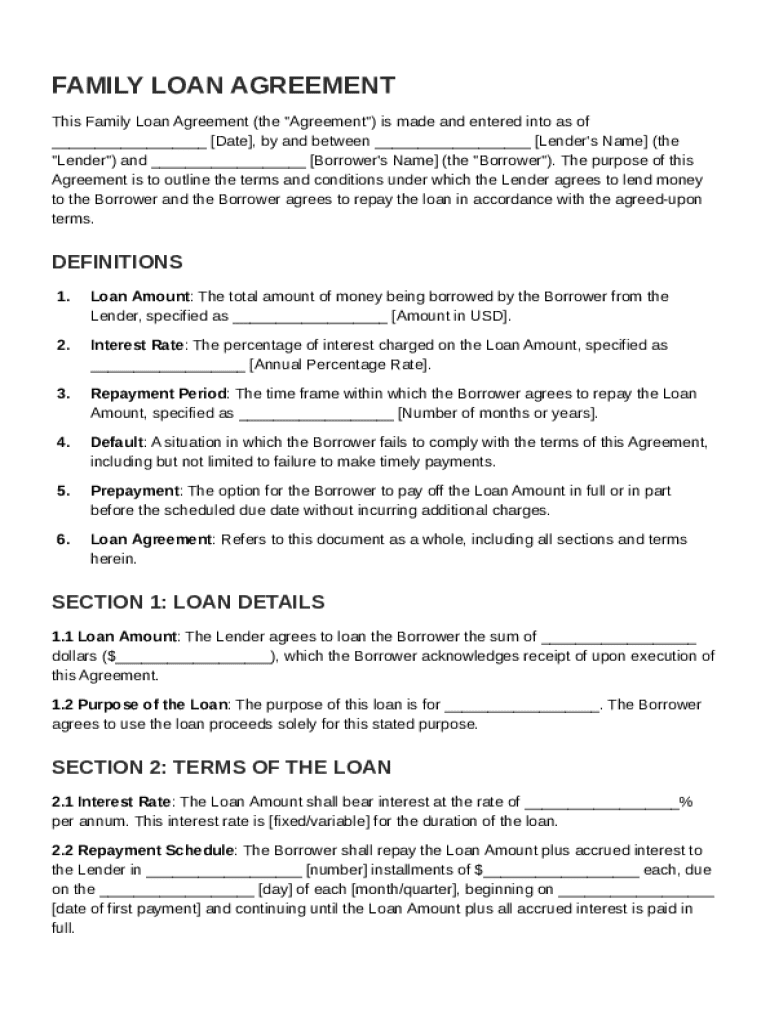







Key Elements of the Family Loans Agreement Template
The Family Loans Agreement Template is structured to formalize the lending process within a familial context. Key elements include:
- Loan Amount and Interest Rate: Clearly defines the amount borrowed and any interest to be applied. For instance, an agreed interest rate can help avoid tax complications related to family loans.
- Repayment Period: Specifies when repayments are expected. This can be monthly, quarterly, or annually, depending on mutual agreement.
- Payment Methods: Details how payments will be made, such as through bank transfer or checks. Setting clear methods helps streamline transactions.
- Default Definitions and Remedies: Outlines what constitutes a default and the actions either party can take in such situations. This includes late payment penalties or renegotiation of the loan terms.
These components ensure that both lender and borrower are on the same page, minimizing potential misunderstandings.
How to Use the Family Loans Agreement Template
Utilizing the Family Loans Agreement Template involves several straightforward steps to customize the document to fit specific needs:
- Download the Template: Access the template via the preferred online platform or service, such as Word or PDF formats available on document management platforms like DocHub.
- Fill Out Necessary Information: Include personal details of both lender and borrower, such as names and contact information. Ensure accuracy to prevent future disputes.
- Customize Loan Terms: Adjust the loan amount, interest rate, repayment schedule, and any special conditions as agreed upon by both parties.
- Review Legal Clauses: Carefully read through the legal terms included in the agreement, ensuring they align with family and local legal standards.
- Sign and Share: Utilize electronic signature tools to sign the document securely. Share a copy with the other party for their records.
Using these steps, families can efficiently manage loan agreements, providing a clear and concise framework for the transaction.
Legal Use of the Family Loans Agreement Template
Family loan agreements must adhere to legal standards to remain valid and enforceable:
- Compliance with State Laws: Depending on the jurisdiction, some states might require registration or specific format standards, ensuring legality.
- Federal Loan Documentation: Maintain records for IRS auditing purposes, particularly if the loan involves interest rates above the IRS's benchmark rates.
- Interest Rate Standards: Ensure that the interest rate chosen adheres to federal requirements to avoid labeling as a gift, which could incur tax implications.
- Enforceability: Proper documentation and signatures from all parties involved can make the agreement legally binding.
Failure to follow these could result in the loan being unenforceable, putting the lender at risk.
Steps to Complete the Family Loans Agreement Template
Completing the Family Loans Agreement Template involves a systematic process:
- Start with Personal Details: Enter the names, addresses, and contact information for both lender and borrower.
- Define Loan Specifics: Clearly state the loan amount, repayment duration, and interest rates.
- Specify Repayment Details: Outline repayment schedules, including frequency and methods, such as monthly bank transfers.
- Address Default Conditions: Detail any penalties for late payments and options available for adjusting the terms upon default.
- Finalize with Signatures: Both parties should sign, either physically or using digital signature tools for legal validity.
These steps help ensure a transparent, equitable agreement for all parties involved.
State-Specific Rules for the Family Loans Agreement Template
State-specific regulations can impact the terms and enforceability of family loan agreements:
- Interest Rate Limits: Some states set a maximum allowable interest rate, which might differ significantly from federal standards.
- Default and Collection Procedures: Vary by state, some may require specific wording in the contract to pursue legal action on defaults.
- Registration Requirements: Certain states may require the loan agreement to be registered with a government entity.
- Tax Implications: States with income tax may have specific rules concerning recorded loan interest and claims on personal tax returns.
Understanding these state-specific nuances is crucial to drafting legally compliant agreements.
Important Terms Related to the Family Loans Agreement Template
Within the context of a Family Loans Agreement, several terms are critical:
- Principal Amount: The original sum of money borrowed before interest.
- Amortization: The schedule of loan repayments that details the principal and interest portions of each payment.
- Default: Failure to meet the legal obligations of the loan, such as missing a payment.
- Accrued Interest: Interest that accumulates on the unpaid principal balance of the loan over time.
- Collateral: An asset pledged as security for the repayment of a loan, applicable in some family loans.
Understanding and clearly defining these terms in the agreement helps in maintaining clarity and avoiding future disputes.
Who Typically Uses the Family Loans Agreement Template
The Family Loans Agreement Template is essential for:
- Parents Providing Financial Assistance: To adult children for significant expenses like education or housing.
- Family-Owned Businesses: Seeking structured financial assistance from relatives to grow or manage businesses.
- Siblings Sharing Financial Resources: For significant purchases or investments where clarity in repayment is essential.
- Extended Family Members: Generations providing loans for personal projects with defined repayment terms.
These use cases demonstrate the template’s flexibility in various family financial interactions, ensuring mutual understanding and formalization of loans.


Examples of Using the Family Loans Agreement Template
Real-world scenarios highlight the diverse applications of the Family Loans Agreement Template:
- Home Purchase: A parent loans a down payment for a child's first home with a structured repayment schedule over ten years.
- Education Financing: An uncle provides an interest-free loan to a niece for college tuition, repayable upon graduation.
- Business Capital: Siblings jointly own a small business, where one lends funds to the company for expansion, with repayment from business profits.
These examples showcase the practicality of such agreements in streamlining and formalizing family financial transactions.




