Definition and Meaning
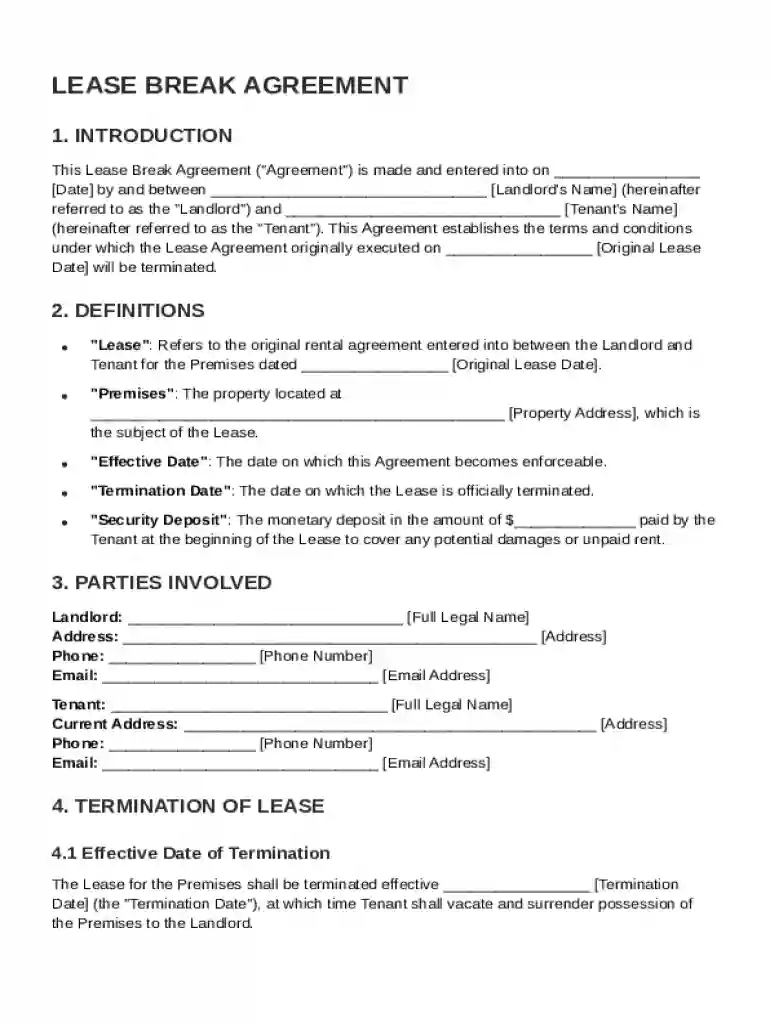
The "Lease Break Agreement Template" is a structured document used to outline the terms and conditions under which a rental lease can be terminated before its natural expiration. The primary aim is to provide a clear understanding between the landlord and the tenant regarding responsibilities and obligations, ensuring compliance with state laws. This agreement typically includes:
- Definitions of terms relevant to lease breaking.
- Obligations of both parties, especially the tenant’s responsibilities toward property restoration.
- Financial arrangements, such as outstanding rent and lease break fees.
- Mutual release of liability once the lease has been terminated.
The Lease Break Agreement is a legal tool employed to handle instances where a tenant needs to exit a lease prematurely without facing additional penalties or legal consequences, provided terms are agreed upon both parties.
Important Terms Related to Lease Break Agreement Template
Understanding the specific terminology within the lease break agreement template is crucial for all parties involved. Common terms include:
- Lease Break Fee: A predetermined amount the tenant might be required to pay for terminating the lease early.
- Property Restoration: Obligations of the tenant to restore the property to its original state before vacating.
- Security Deposit: Conditions under which the security deposit will be returned or forfeited.
- Severability: A clause ensuring that if part of the lease is invalid, other provisions remain in effect.
- Modifications and Amendments: The process to make changes to the original agreement.
Clarifying these terms ensures both parties have a shared understanding of their rights and obligations under the agreement.
How to Use the Lease Break Agreement Template
To efficiently use the template, follow these steps:
- Identify Necessary Information: Collect details including the names of both tenant and landlord, property address, and lease agreement dates.
- Customize Terms: Modify sections pertaining to fees and restoration obligations unique to the situation.
- Include Legal Provisions: Ensure all state-specific legalities are referenced accurately to maintain validity.
- Review with All Parties: Both tenant and landlord should collaboratively ensure mutual understanding.
- Sign and Authenticate: After agreeing on terms, both parties should sign. Consider having the agreement notarized for added legal weight.
Using the agreement template correctly minimizes potential conflicts and ensures all involved parties are aware of their responsibilities.
Key Elements of the Lease Break Agreement Template
A comprehensive lease break agreement template includes several key elements:
- Personal Information: Essential details of the tenant, the landlord, and the property involved.
- Termination Date: Clearly defined date on which the lease will be considered terminated.
- Reason for Termination: Common reasons include relocating for work, financial hardship, or health issues.
- Financial Settlement: Detailed breakdown of any fees or compensations owed.
- State Laws Compliance: Includes acknowledgment of specific regional laws affecting the lease’s termination.
These elements ensure the agreement is thorough, leaving no room for misinterpretation.
State-Specific Rules for the Lease Break Agreement Template
State laws vary regarding lease agreements, with each state potentially having unique regulations that impact a lease break:
- Notice Periods: Minimum notice periods before lease termination differ by state.
- Allowed Reasons: Some states allow breaking a lease for specific reasons, like health or safety hazards.
- Financial Penalties: State laws may cap penalties for early termination.
Example: In California, tenants must provide at least 30 days' notice and may need to justify lease termination under specific legal conditions.
Familiarizing oneself with state-specific rules helps ensure that the lease break procedure adheres to local laws, avoiding legal repercussions.
Steps to Complete the Lease Break Agreement Template
Completing the template involves several precise steps:
- Obtain the Document: Access the template through document management services like DocHub.
- Fill in Personal Details: Input tenant and landlord information accurately.
- Specify Lease Details: Include the lease start and intended end date.
- Draft Reasons and Responsibilities: Outline the reason for lease breaking and the tenant's obligations.
- Agree on Financial Terms: Both parties should agree on any financial compensation required.
- Review: Each party should thoroughly review filled sections for accuracy.
- Finalize and Sign: Both parties sign the document to make the agreement binding.
Each step focuses on ensuring an accurate and legally binding agreement is reached.
Examples of Using the Lease Break Agreement Template
Various scenarios necessitate a lease break agreement, demonstrating its practical use:
- Job Relocation: A tenant unexpectedly transferred out-of-state needs to terminate their lease prematurely.
- Health Issues: A tenant must leave the rental property due to medical conditions requiring relocation for treatment.
- Unsafe Living Conditions: Tenants facing unresolvable safety issues, such as mold or structural damage, use the agreement to exit safely.
These examples illustrate how different situations can necessitate a customized approach to using the lease break agreement template.
Legal Use of the Lease Break Agreement Template
Ensuring the legal use of the lease break agreement template:
- Compliance with Statutory Requirements: Adhering to state and federal laws affecting lease agreements.
- Inclusion of Fair Clauses: Prevents unfair surprise terms that could invalidate the agreement.
- Legal Counsel Consultation: Consider consulting with an attorney to ensure the document's completeness and compliance.
- Documentation of Circumstances: Maintain evidence of lease break reasons to support legal standing.
Understanding these legal aspects aids in crafting a valid, enforceable agreement that both respects tenant rights and protects landlord interests.