







Legal Definition and Meaning
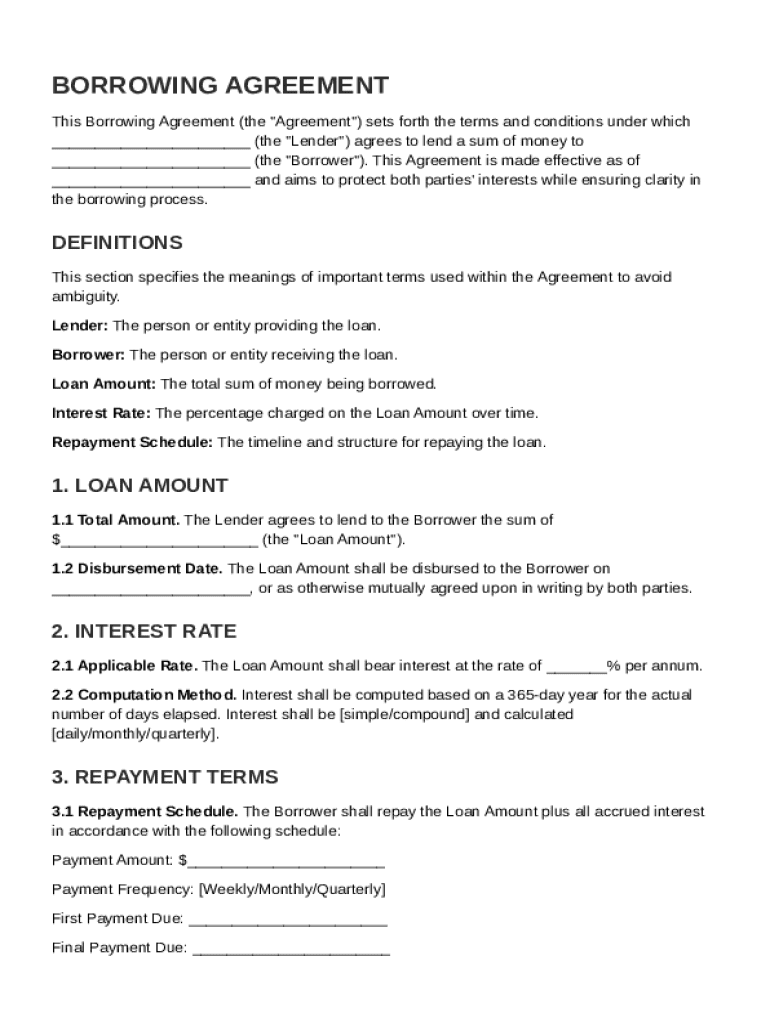
A "Legal for Borrow Money Contract Template" is a structured document designed to formalize a loan agreement between a lender and a borrower. It defines the terms under which the loan is extended, including the parties involved, the loan amount, interest rate, and repayment schedule. This template serves as a legal contract, ensuring both parties are bound to the agreed terms and helps prevent disputes by clarifying expectations upfront.
How to Use the Legal Borrowing Contract Template
To use the "Legal for Borrow Money Contract Template," start by identifying the relevant sections specific to your loan agreement. Here’s a step-by-step guide:
- Review all sections of the template to understand its structure.
- Enter details of both parties, including full names, addresses, and contact information.
- Specify the loan amount, interest rate, and repayment schedule.
- Include any conditions affecting the loan, such as collateral requirements or late payment penalties.
- Read through the template to ensure it reflects the intended agreement.
- Sign the document in the presence of a witness or notary to enhance its legal standing.
Key Elements of the Template
When drafting a loan agreement using the borrowing contract template, certain elements are crucial to include:
- Parties Involved: Full legal names and contact details of the lender and borrower.
- Loan Amount and Terms: Clearly state the amount borrowed and the terms of repayment.
- Interest Rate: Define the interest rate applicable, whether it’s fixed or variable.
- Repayment Schedule: Outline the payment intervals and due dates.
- Collateral: Specify any asset pledged as security for the loan.
- Governing Law: Indicate the legal jurisdiction governing the contract.
- Default Clauses: Define what constitutes a default and potential remedies.
Why Use a Borrow Money Contract Template
There are several reasons why utilizing a borrowing contract template is beneficial:
- Clarity: Clearly lays out the expectations and obligations of each party.
- Legal Protection: Provides a written record that can be used in legal proceedings if disputes arise.
- Streamlined Process: Simplifies the drafting process with pre-made sections and clauses.
- Customizability: Allows for modifications to cater to unique requirements of the loan.
Important Terms Related to the Template
Understanding the key terms within a borrowing contract can enhance clarity:
- Principal: The initial amount of money borrowed.
- Amortization: The process of repaying a loan through scheduled payments.
- Usury: Charging interest above the maximum legal rate.
- Promissory Note: A written promise to pay a specified sum of money at a future date.
Legal Use and Considerations
It's important to ensure that the borrowing contract is legally binding:
- Compliance: Must comply with federal and state lending laws.
- Signatures: All parties should sign the agreement for it to be enforceable.
- Recording: While not always necessary, recording the contract with a governmental body can add an extra layer of security.
Steps to Complete the Template
Completing the borrowing contract template involves several steps:
- Initial Draft: Fill in basic information about the lender and borrower.
- Financial Details: Specify the loan amount, interest rate, and repayment terms.
- Review Terms: Go over all terms with a legal advisor if necessary.
- Execution: Both parties sign the agreement in presence of a witness.
- Storage: Store the document securely for future reference.
State-Specific Rules and Differences
Borrowing contract templates may be subject to state-specific regulations:
- Interest Caps: Some states have usury laws capping the maximum interest rate.
- Lender Licensing: Certain states require lenders to have licenses for loan issuance.
- Contract Terminology: Different states might have variations in required legal language.
Examples of Using the Contract Template
Here are scenarios where a borrowing contract template is commonly used:
- Personal Loans: Agreements between family members or friends to formalize the transfer of money.
- Business Capital: Small businesses seeking additional funds from investors.
- Real Estate Transactions: Using loans for property purchases where formal agreements document the mortgage terms.
By understanding these aspects, users can effectively utilize the borrowing contract template to manage their loan agreements legally and efficiently.




