







Definition and Meaning
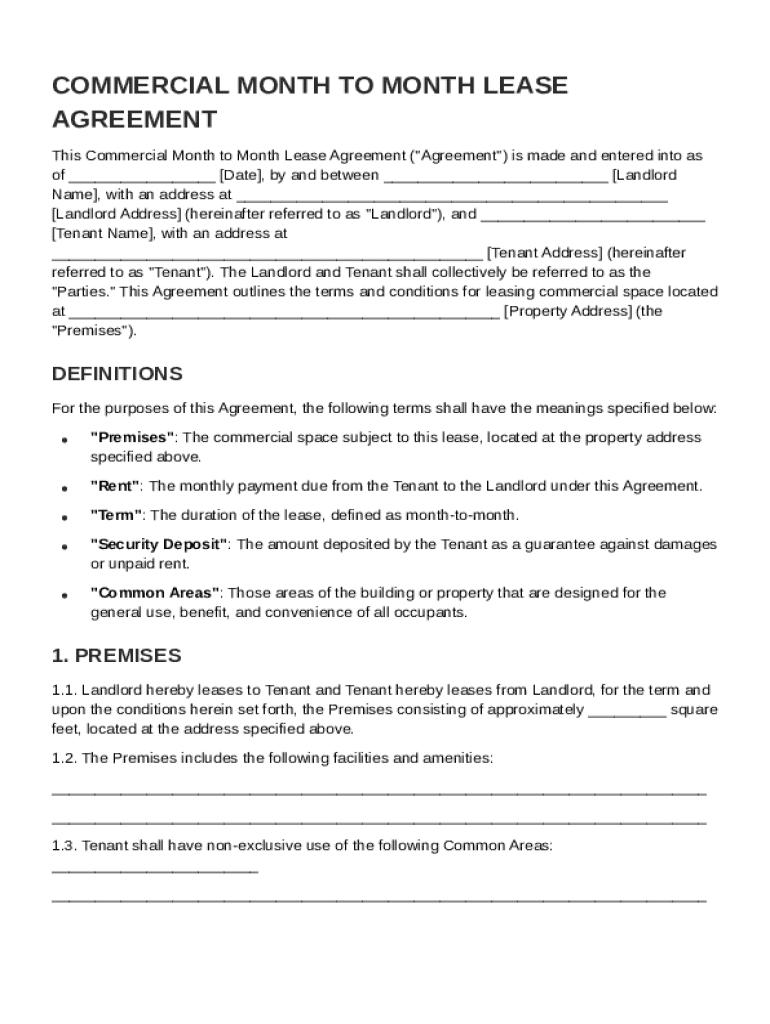
A Commercial Month to Month Lease Agreement Template outlines the temporary leasing arrangement between a landlord and a tenant for a commercial property. This type of agreement is characterized by its flexibility, allowing either party to terminate the lease with minimal notice, typically 30 days. This arrangement is ideal for businesses seeking short-term occupancy without long-term commitments. Key components include the description of premises, rental terms, permitted uses, and lease termination conditions. The document's structure and terms ensure that both parties have a clear understanding of their rights and responsibilities throughout the lease duration.
How to Use the Commercial Month to Month Lease Agreement Template
Utilizing the Commercial Month to Month Lease Agreement Template involves several steps to tailor the form to specific leasing needs. Start by reviewing the template to understand its components: premises description, rent payment details, tenant responsibilities, and landlord obligations. Customize these sections to reflect the specifics of your agreement. For instance, update the rental amount to match the agreed rent and adjust maintenance responsibilities based on negotiations. Always ensure that both parties agree on changes and that the final document accurately represents the lease's terms. This agreement is a living document, requiring adjustments and updates as the lease terms evolve.
Steps to Complete the Commercial Month to Month Lease Agreement Template
- Review the Template: Familiarize yourself with the entire document to understand its structure and content.
- Provide Property Details: Specify the commercial premises, including the address and any specific areas addressed by the lease.
- Define Rent Terms: Insert agreed-upon rent amounts, payment schedules, and methods of payment, ensuring clarity.
- Outline Responsibilities: Detail the maintenance responsibilities for both tenant and landlord, specifying who is responsible for utilities and repairs.
- State Terms and Conditions: Highlight the lease's monthly nature and define the termination process, if one party wishes to end the lease.
- Legal Provisions: Address insurance requirements, liabilities, and indemnification clauses to protect both parties legally.
- Final Review and Signatures: Both parties must review the document thoroughly before signing, confirming all terms are agreed upon.
Key Elements of the Commercial Month to Month Lease Agreement Template
- Party Identification: Clearly define both the landlord and tenant with full legal names and contact information.
- Premises Description: Provide a detailed description of the leased commercial space, including square footage and facilities.
- Term and Renewal Clause: Highlight the month-to-month lease term, including the option for renewal under agreed conditions.
- Rent and Payment Instructions: Specify the rent amount, due dates, acceptable payment methods, and late fees, if applicable.
- Security Deposit: Detail the amount, conditions for its use, and terms for its return after the lease ends.
- Use of Property: State the permissible activities within the leased property to prevent misuse.
- Termination Conditions: Include the notice period each party must give to end the lease, typically 30 days.
- Legal Compliance and Governing Law: Identify the legal jurisdiction governing the lease and ensure compliance with local laws.
Legal Use of the Commercial Month to Month Lease Agreement Template
The template serves as a legally binding document, ensuring the rights and responsibilities of both landlord and tenant are clearly defined and enforceable. It's compliant with federal and state leasing laws, offering protections against default. It should be adapted to fit specific state regulations, as legal requirements for leases can vary. For instance, some states require specific language regarding security deposits and tenant rights. Ensuring all legal provisions are accurately included can prevent potential disputes and provide legal recourse should disagreements arise.
Important Terms Related to Commercial Month to Month Lease Agreement Template
- Leasehold Improvements: Alterations made by the tenant to customize the rented space for specific business needs.
- Indemnification: A clause where one party agrees to protect the other from legal claims arising out of the lease's use or execution.
- Default: Conditions under which a landlord or tenant fails to fulfill their obligations, leading to potential lease termination.
- Force Majeure: Events such as natural disasters that may justify non-performance of lease obligations.
- Sublease/Assignment: Provisions allowing or prohibiting the tenant from transferring their lease obligations to a third party.
State-Specific Rules for the Commercial Month to Month Lease Agreement Template
- California: Requires specific language regarding tenant rights and procedures for handling security deposits.
- New York: Regulates commercial lease agreements substantially, especially regarding rent stabilization and tenant eviction processes.
- Texas: Encourages explicit detailing of property maintenance responsibilities to avoid disputes.
- Florida: Stipulates specific disclosures related to environmental hazards in commercial leases.
Who Typically Uses the Commercial Month to Month Lease Agreement Template
This template is predominantly used by small business owners, startups, and entrepreneurs needing flexible workspace solutions. It suits businesses in dynamic industries where growth may necessitate a rapid change in space requirements. Additionally, it benefits landlords with properties that may be subject to redevelopment or sale, giving them the agility to react to market conditions without long-term tenant commitments.


Business Types That Benefit Most From Commercial Month to Month Lease Agreement Template
- Startups: Agile businesses in rapid growth or transition phases.
- Pop-up Retailers: Temporary retail ventures needing flexible leasing.
- Freelancers and Consultants: Professionals requiring office space on short notice.
- Event Organizers: Groups needing venues for brief periods without long-term contracts.




