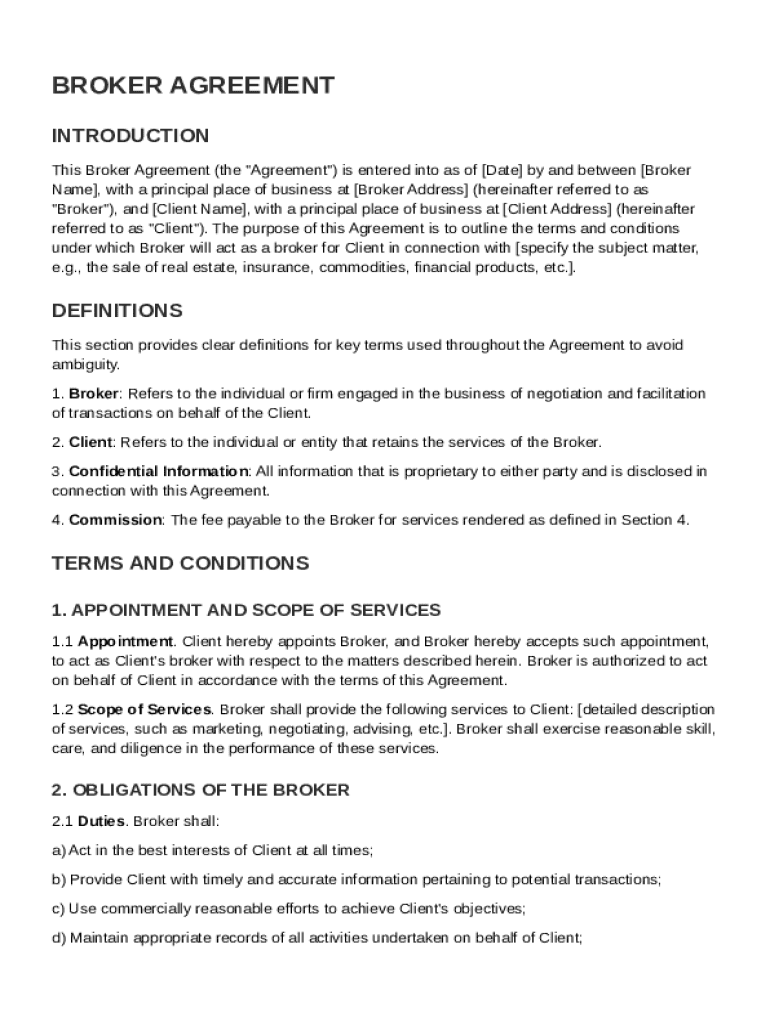







Definition & Meaning
A Broker Agreement Template is a pre-structured legal document that outlines the terms and conditions under which a broker operates on behalf of a client across various transactions. The agreement serves as a vital roadmap for defining the responsibilities, duties, and expectations between the broker and the client. Typically, it includes provisions for services to be rendered, compensation, confidentiality clauses, and the governance of the relationship as independent contractors. It ensures that both parties clearly understand their roles and the scope of their relationship, minimizing potential disputes.
Key Components
- Scope of Services: Details the specific services the broker will provide.
- Compensation Terms: Specifies how the broker will be paid, whether through commissions, flat fees, or other means.
- Confidentiality Requirements: Outlines the duty to keep client information private.
- Independent Contractor Status: Clarifies that the broker is not an employee but an independent contractor.
- Governing Law: Identifies the legal jurisdiction that will apply in case of disputes.
How to Use the Broker Agreement Template
Leveraging a Broker Agreement Template effectively involves several strategic steps. First, it is crucial to thoroughly review the template to understand all stipulations, ensuring alignment with both parties' objectives. Typically, the template can be customized to fit specific needs without changing its foundational legal language. This involves inserting specific details such as the parties' names, the scope of services, and any unique provisions required.
Personalization Steps
- Identify Parties: Accurately input the names and details of the client and broker.
- Define Services: Clearly outline the broker's responsibilities and the extent of their authority.
- Set Compensation: Specify method and timing of payments.
- Confidentiality Clauses: Customize clauses to include specific confidentiality needs particular to the business.
- Legal Review: Utilize a legal advisor to ensure all modifications meet necessary legal standards and compliance requirements.
Steps to Complete the Broker Agreement Template
Completing the Broker Agreement Template involves several methodical steps to ensure that every essential element of the agreement is filled out correctly.
- Download the Template: Access the template from a trusted source or create one using document creation software such as DocHub.
- Fill Out Essential Information: Provide comprehensive details of both parties, including addresses and contact information.
- Detail the Scope of Work: Describe in clear terms the services the broker is expected to perform.
- Include Compensation Details: Insert the mode, rate, and frequency of broker compensation.
- Add Specific Clauses: Integrate any additional clauses pertinent to the agreement.
- Review and Amend: Assess the entire form for accuracy and completeness, making necessary changes.
- Sign and Execute: Each party should sign the document to manifest their agreement to the terms stipulated.
Why You Should Use the Broker Agreement Template
Utilizing a Broker Agreement Template is advantageous for several reasons. Primarily, it secures a predefined scope of understanding, which helps minimize disputes related to service expectations and compensations. It also serves as a legal shield by documenting all relevant details about the broker-client relationship enhancing trust and clarity.
Benefits
- Legal Protection: Acts as a safeguard by providing a documented agreement that can be enforced legally.
- Clarity in Professional Engagements: Clearly defines the scope of work and expectations from each party, reducing misunderstandings.
- Efficiency and Time-Saving: Offers a ready-to-use framework that alleviates the time and effort needed to draft an agreement from scratch.
Important Terms Related to the Broker Agreement Template
Understanding the key terminology used in a Broker Agreement Template is crucial for both the broker and the client.
Common Terms
- Principal: The client for whom the broker is acting.
- Broker: The professional who facilitates transactions on behalf of the principal.
- Commission: Payment to the broker as a percentage of the transaction value.
- Indemnification: A clause that protects against claims or losses arising from the broker's actions.
- Term and Termination: The duration of the agreement and conditions for its termination.
Legal Use of the Broker Agreement Template
The legal framework for using the Broker Agreement Template ensures that it complies with applicable laws and commercial practices. It is important that both parties understand the implications before signing.
Legal Considerations
- Compliance: Must adhere to federal and state laws regulating brokerage services.
- Validity: The document should be legally enforceable when signed by both parties.
- Conflict Resolution: The template should include a process for resolving disputes.
Examples of Using the Broker Agreement Template
Using scenarios to highlight the application of a Broker Agreement Template can provide practical insight.
Practical Applications
- Real Estate Broker Agreements: Used to establish terms for selling or leasing properties on behalf of property owners.
- Business Brokers: Engage in buying or selling businesses where specific commissions and durations are critical.
- Finance Brokers: Typically involve financial products such as loans or insurance policies.
Key Elements of the Broker Agreement Template
A well-crafted Broker Agreement Template comprises several critical components that ensure clarity and contractual obligation between involved parties.
Core Elements
- Parties' Obligations: Clearly stipulates duties and expectations.
- Compensation and Expenses: Details regarding the broker’s fee structure and reimbursement.
- Confidentiality: Emphasizes information protection.
- Dispute Resolution: Offers methods for handling disagreements efficiently.
By understanding and incorporating these aspects, users of the Broker Agreement Template can foster successful and legally compliant broker-client relationships.