






Definition and Meaning
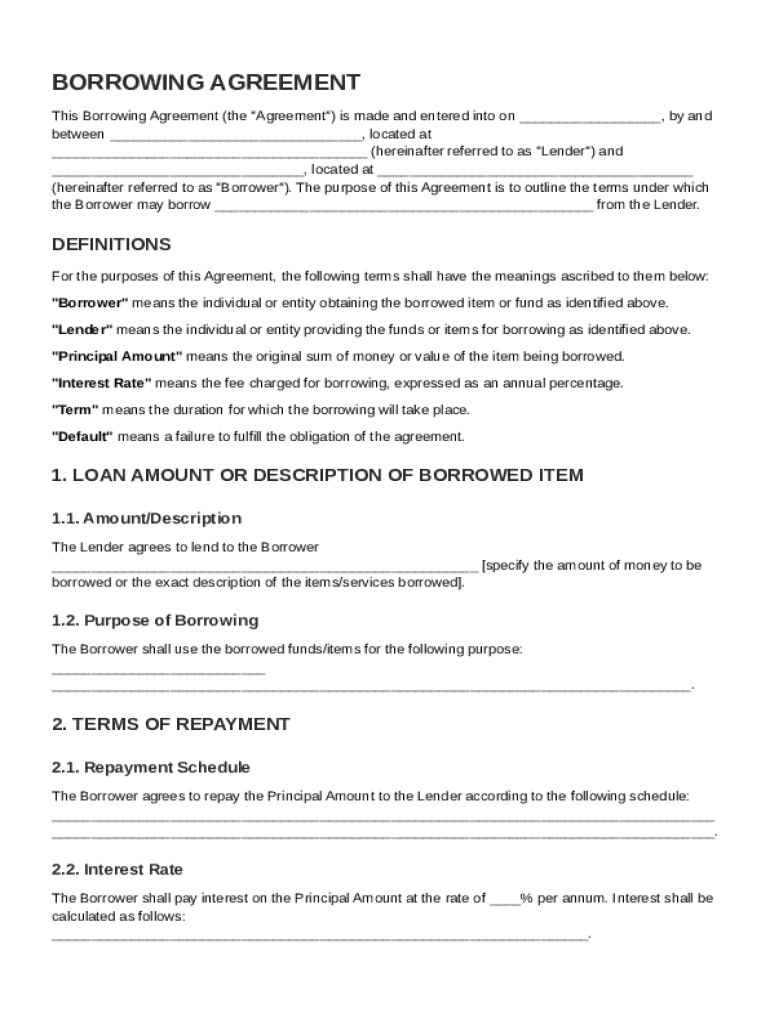
The Borrowing Agreement Template is a legal document utilized to formalize the terms and conditions under which a lender provides funds or items to a borrower. This agreement serves as a binding contract detailing the obligations of each party and includes vital elements that protect the interests of both the lender and borrower. By clearly defining the loan amount, repayment schedule, interest rate, and other critical terms, this template helps prevent misunderstandings and disputes.
The agreement also outlines key definitions pertinent to the loan, such as "Lender," "Borrower," "Default," and "Amendment." By including precise definitions, the document ensures that all parties have a clear understanding of their rights and responsibilities. This framework provides the necessary legal compliance, making the borrowing process transparent and structured.
Key Elements of the Borrowing Agreement Template
The template consists of several fundamental elements that encapsulate the essence of the borrowing arrangement. These may include:
-
Loan Amount and Purpose: A specification of the total funds or items to be lent and the designated purpose for borrowing. It ensures both parties agree on the necessity and intended use of the resources.
-
Repayment Schedule: Detailed timeline outlining when payments are due. It defines the frequency and amount of payments, fostering discipline and predictability in repayment.
-
Interest Rate and Calculation: Clears any ambiguity about the interest charged on the loan, including how it is calculated and applied over the borrowing term.
-
Obligations and Rights: Duties of the borrower in maintaining repayment and the lender's role in facilitating the loan.
-
Conditions of Default: Circumstances that constitute a borrower default and the remedial actions a lender can pursue, such as penalties, renegotiation, or legal action.
Steps to Complete the Borrowing Agreement Template
Completing a Borrowing Agreement Template involves several critical steps to ensure legal soundness and mutual understanding. Consider the following process:
-
Review Precedent Terms: Start by evaluating the default clauses and terms outlined in the template to ensure they fit the specific borrowing situation.
-
Input Custom Details: Fill in custom details such as borrower and lender names, specific loan amount, and purpose of the loan.
-
Tailor Repayment Terms: Customize the repayment schedule to align with both parties’ capacities and expectations.
-
Specify Interest Information: Include particulars regarding interest rate structure and frequency to avoid future conflicts.
-
Define Default Clauses: Clearly define defaults scenarios and remedies, ensuring mutual agreement and comprehension.
-
Legal Review: Have a legal professional review the completed template to confirm compliance with relevant state and federal laws.
Legal Use of the Borrowing Agreement Template
Legally, the Borrowing Agreement Template must comply with federal laws such as the Uniform Commercial Code and be compliant with state-specific contract laws. The agreement should also conform to regulations set by financial oversight entities, ensuring both borrower and lender rights are protected.
Binding Nature
The template is legally enforceable upon signing by both parties, granting them legal avenues for recourse in the event of discrepancies or defaults. It protects the lender's financial interest while ensuring that borrowers understand their obligation to repay.
Amendments and Termination
It is essential to include clauses regarding how the agreement can be amended or terminated. This flexibility helps accommodate any change in circumstances, providing a structured approach to renegotiating terms.
Who Typically Uses the Borrowing Agreement Template
Individuals and businesses across various sectors employ the Borrowing Agreement Template to manage financial relationships.

Common Users:
-
Small Business Owners: Protect their interests when acquiring capital to expand operations or cover operational costs.
-
Individuals: Secure personal loans for expenses such as home improvements or significant purchases.
-
Corporations: Utilize for inter-corporate loans or financial arrangements requiring formalized terms.
This diversity in use underscores the template's applicability across different scenarios involving lending and borrowing arrangements.

Important Terms Related to the Borrowing Agreement Template
Understanding the language used in the Borrowing Agreement Template is crucial for effective use:
-
Principal Amount: The original sum lent, excluding interest, which forms the basis for calculation of future payments.
-
Collateral: Assets pledged by the borrower to secure the loan, providing lenders with assurance against default.
-
Guarantor: A third party who agrees to fulfill the borrower’s obligations if they default.
These terms are central to forming a well-rounded agreement that clearly defines each aspect of the borrowing process.
State-Specific Rules for the Borrowing Agreement Template
Notably, borrowing agreements must comply with state laws and regulations, which can vary significantly from one state to another.
Variations:
-
Interest Rate Caps: Some states have usury laws limiting the maximum interest that can be charged, impacting how terms are drafted.
-
Enforcement Protocols: Differ in how default situations can be legally pursued, which can affect lender strategies.
These regional distinctions warrant careful consideration during the drafting and execution of borrowing agreements, with professional legal guidance strongly recommended.
Examples of Using the Borrowing Agreement Template
To illustrate its utility, consider these hypothetical applications:
-
Startup Capital Loans: A tech startup utilizes the agreement to secure a low-interest loan from an investor to develop a new app.
-
Personal Finance Management: An individual uses the agreement to formalize a loan from family, ensuring clear communication and repayment terms.
-
Corporate Expansion: A large corporation enters a borrowing agreement for funding overseas branch openings, specifying collateral and repayment terms tailored to market conditions.
These examples demonstrate the versatility and necessity of the Borrowing Agreement Template in enabling structured financial transactions.