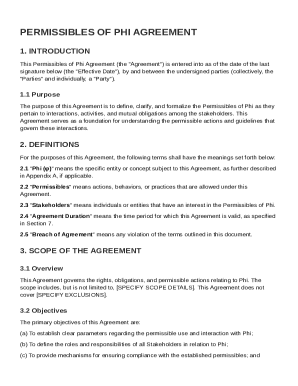
Definition and Meaning
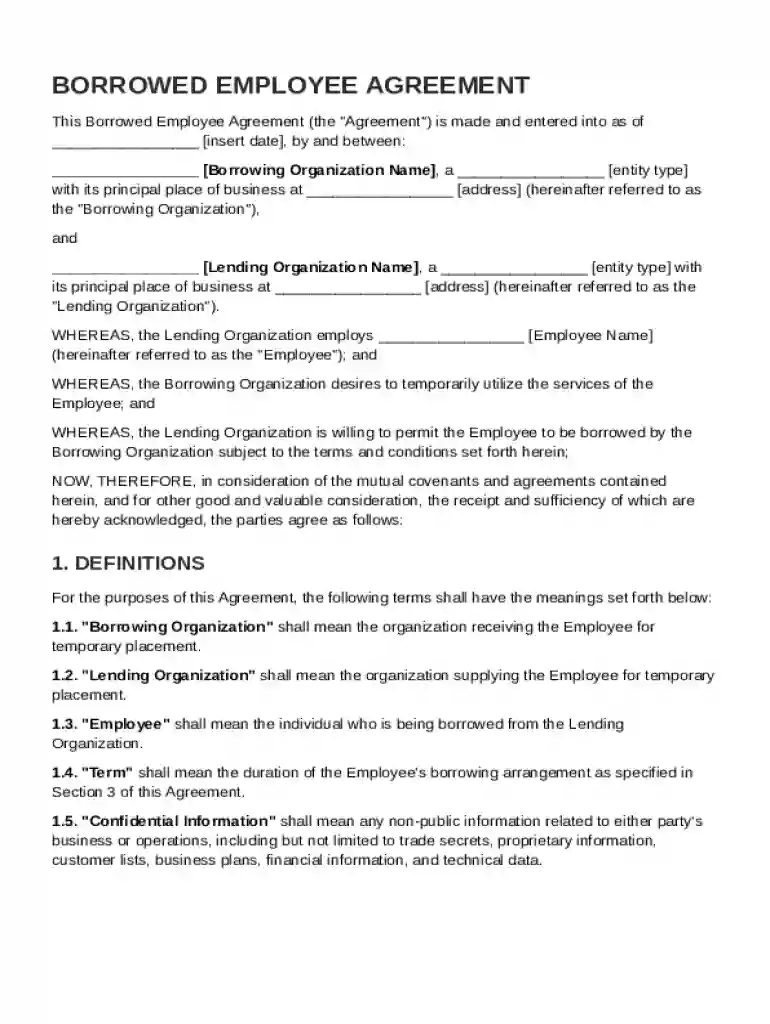
The Borrowed Employee Agreement Template is a formal document outlining the arrangement where an employee temporarily provides their services to an organization other than their primary employer. This agreement specifies the roles, responsibilities, and expectations for all parties involved, including the lending and borrowing organizations, as well as the employee. It serves to clearly define supervision, compensation structures, confidentiality obligations, and liability concerns, ensuring that the temporary borrowing of an employee does not lead to misunderstandings or legal issues.
Key Elements of the Borrowed Employee Agreement Template
Employee Roles and Responsibilities
- Defines the specific duties the borrowed employee will perform.
- Lists any training or special tasks required during the borrowing period.
Compensation and Benefits
- Outlines how the employee will be compensated and whether any additional benefits apply.
- Specifies responsibility for salary payments and any bonuses or commissions.
Confidentiality and Non-Disclosure
- Highlights requirements for handling sensitive information shared during the borrowing period.
- Includes clauses for protecting trade secrets and proprietary data.
Liability and Indemnification
- Details how liability is divided between the lending and borrowing organizations.
- Provides guidelines for resolving any disputes related to work performed by the borrowed employee.
Termination and Duration
- Specifies the duration of the borrowing arrangement.
- Includes clauses detailing conditions for early termination or extension.
How to Use the Borrowed Employee Agreement Template
- Review Template Sections: Familiarize yourself with all sections of the template, ensuring it meets the specific needs of your borrowing arrangement.
- Customizing Details: Tailor the template by filling in organization-specific details and any unique terms agreed upon by the parties involved.
- Legal Review: Consult with a legal advisor to ensure the terms comply with applicable employment laws and regulations.
- Sign and Implement: Once all parties have reviewed and agreed to the terms, proceed with obtaining necessary signatures to formalize the agreement.
Legal Use of the Borrowed Employee Agreement Template
- Ensures compliance with U.S. federal and state labor laws.
- Serves to protect both the lender and borrower from potential legal disputes by clearly outlining each party's obligations.
Compliance Considerations
- Follow legal standards, such as the Fair Labor Standards Act (FLSA) regarding overtime pay.
- Check state-specific employment laws to ensure all terms adhere to local regulations.
Important Terms Related to Borrowed Employee Agreement Template
Supervision
- The process by which the borrowing organization manages and oversees the borrowed employee's work.
Confidential Information
- Any sensitive information the employee may access while working with the borrowing organization, requiring strict confidentiality.
Indemnification
- A legal clause ensuring one party holds harmless the other for specific liabilities or losses incurred.
Human Resources Departments
- Utilize the template to manage temporary staffing needs efficiently.
Legal Teams
- Employ the template to draft compliance-based contracts that protect their organization from legal risks.
Businesses with Temporary Staffing Needs
- Companies facing seasonal demand or project-specific workloads often rely on temporary employee arrangements to meet staffing requirements.
Steps to Complete the Borrowed Employee Agreement Template
- Identify Participating Parties: Clearly list the lending and borrowing organizations, along with the borrowed employee's details.
- Define Employment Terms: Specify the temporary role, reporting structure, and work location.
- Finalize Compensation Structure: Detail salary, payment schedules, and possible bonuses.
- Set Confidentiality Conditions: Include clauses protecting sensitive information shared during the borrowing period.
- Obtain Necessary Signatures: Ensure all parties, including the employee and organizational representatives, sign the agreement.
State-Specific Rules for the Borrowed Employee Agreement Template
Variations in Employment Laws
- Be aware that employment terms may need adjustments to comply with specific state regulations regarding worker classification and benefits.
Regional Confidentiality Requirements
- Some states have unique laws governing the protection of employer information, which should be reflected in the agreement.
By following these guidelines and utilizing the Borrowed Employee Agreement Template, organizations can effectively manage temporary staffing arrangements while maintaining legal compliance and protecting all parties involved.