






Definition and Meaning
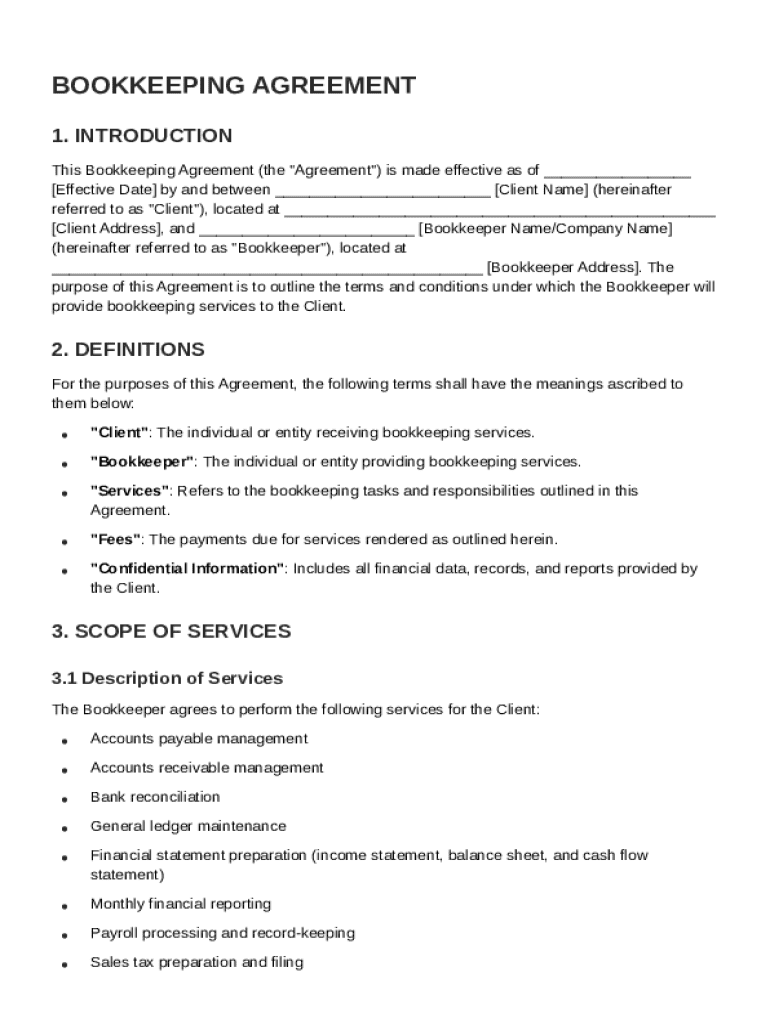
A Bookkeeping Agreement Template is a formal document that delineates the terms under which a Bookkeeper provides services to a Client. This essential document outlines critical aspects of the business relationship, including the scope of services to be performed, the compensation structure, and confidentiality obligations. It also addresses contingencies and responsibilities through indemnification clauses and establishes the independent contractor status of the Bookkeeper, distinguishing them from employees. By setting clear expectations, the agreement aims to forge a mutual understanding and facilitate a smooth professional relationship between both parties involved.
Key Elements of the Bookkeeping Agreement Template
The template incorporates several crucial components that define and frame the working relationship:
- Scope of Services: Clearly describes the specific bookkeeping tasks the Bookkeeper will undertake, such as maintaining financial records, preparing bank reconciliations, or handling payroll.
- Compensation and Payment Terms: Details how the Bookkeeper will be compensated—whether hourly or on a fixed fee—and specifies payment terms, such as invoicing schedules and due dates.
- Confidentiality Clause: Ensures that sensitive financial information remains protected, imposing restrictions on how data can be shared or disclosed without explicit consent.
- Independent Contractor Status: Affirmation that the Bookkeeper is an independent contractor, responsible for their taxes, insurance, and operational expenses.
- Indemnification: Protects the Client from losses that may be incurred due to the Bookkeeper’s actions, establishing financial liability or remedial actions required in such circumstances.
Steps to Complete the Bookkeeping Agreement Template
- Begin with Contact Information: Fill out the names and contact details of both the Bookkeeper and the Client.
- Define the Scope of Services: Enumerate all bookkeeping services to be provided, ensuring clarity and comprehensiveness.
- Determine Payment Details: Clearly state the agreed-upon rate, invoicing frequency, and payment method.
- Include Confidentiality Terms: Articulate the obligations surrounding the protection of client information.
- Outline Termination Conditions: Specify conditions under which the agreement may be terminated by either party.
- Signature and Date: Conclude by having both parties sign and date the agreement to formalize its terms.
Important Terms Related to Bookkeeping Agreement Template
Grasping the prevalent terminology within the template is crucial for both Bookkeepers and Clients to avoid misinterpretation:
- Accounts Receivable/Payable: The tracking of money owed to or by the company.
- Trial Balance: A listing of all ledger accounts to ensure that total debits equal total credits.
- Variance Analysis: Assessing differences between planned and actual financial performance.
- Ledgers: Categorical financial records, which are pivotal in maintaining organized bookkeeping documentation.
Who Typically Uses the Bookkeeping Agreement Template
This template is predominantly utilized by small business owners, freelancers, independent contractors, and accounting firms. Small enterprises, in particular, may not have the resources for a full-time bookkeeping staff and hence engage external bookkeepers to manage their financial records efficiently. Additionally, companies looking to hire freelance bookkeeping professionals or expand their finance team temporarily can also heavily rely on such templates to ensure clarity in agreements.

Legal Use of the Bookkeeping Agreement Template
Legally, the Bookkeeping Agreement Template is instrumental in ensuring all parties have a clear, enforceable contract. It adheres to the ESIGN Act for electronic signature legality, enabling both simple implementation and secure online transactions. These legal frameworks support the enforceability of electronically signed agreements, solidifying them as binding documents in court. Thus, maintaining a written record of agreements is not only practical but also a protective measure against potential disputes and legal complications.
State-Specific Rules for the Bookkeeping Agreement Template
While the general format of the Bookkeeping Agreement Template may be applicable across states, there can be variations in terms of:
- Taxation Requirements: Each state may have unique tax obligations affecting payment structures within bookkeeping agreements.
- Privacy Regulations: Compliance with state-specific data protection laws, such as the California Consumer Privacy Act (CCPA), can influence confidentiality clauses.
- Worker Classification Laws: States like California have stringent criteria differentiating employees from independent contractors, affecting how the Bookkeeper's status is classified legally.
Software Compatibility
Integrating the Bookkeeping Agreement Template with management software like QuickBooks or Xero ensures enhanced efficiency and workflow automation. This compatibility allows Bookkeepers and Clients to import agreement specifications directly into financial tracking systems, facilitating streamlined billing, easier monitoring of service deliverables, and seamless updates to any changes in agreement terms. Software solutions offer additional benefits like automation of recurring payments and real-time financial insights, promoting an organized and proactive approach to bookkeeping.