
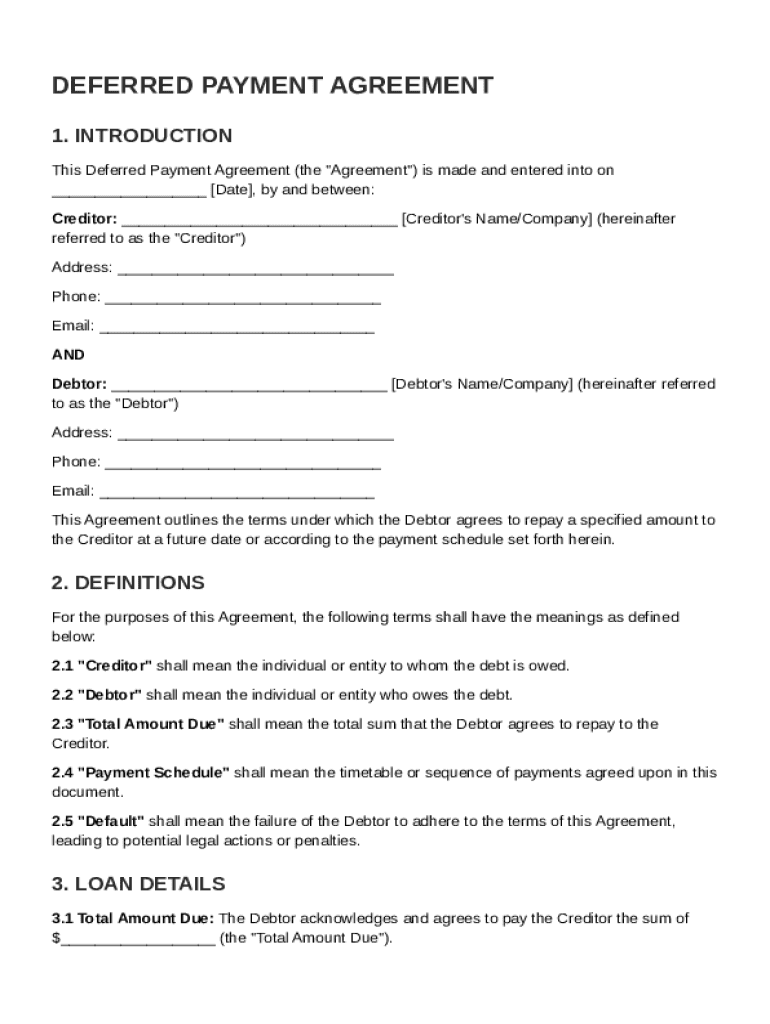







Definition & Purpose of the Deferred Payment Agreement Template
The Deferred Payment Agreement Template is a detailed legal document used between a creditor and a debtor. It outlines the terms under which a specific amount will be repaid by the debtor at a future date. This agreement is essential for establishing clear and legally binding conditions for repayment, protecting both parties' interests. It is used to document the amount borrowed, payment terms, interest rates, and the schedule for repayment. This template provides a structured approach to manage and formalize deferred payment arrangements, ensuring all parties understand their obligations and rights.
Core Components of the Agreement
- Loan Amount: Specifies the total amount lent to the debtor.
- Payment Schedule: Details the timeline for payments, including start date, frequency, and due dates.
- Interest Rate: Defines the rate at which interest will be calculated on the outstanding balance.
- Amendments and Notices: Provisions allowing for changes to the agreement terms and conditions under which notices must be issued.
Importance in Legal Context
This agreement is legally binding, providing a clear framework to prevent misunderstandings and disputes. Creditor and debtor responsibilities are explicitly defined, making compliance easier and safeguarding against potential legal conflicts.
Key Elements of the Deferred Payment Agreement Template
To create an effective Deferred Payment Agreement, several critical elements must be included. This ensures the document is comprehensive and addresses all points that might arise during the agreement term.
Essential Clauses
- Parties Involved: Clearly identifying and listing the creditor and debtor.
- Repayment Terms: Establishing the timeframe and methods for repayment.
- Defaults and Remedies: Outlining what constitutes a default and the remedies available.
- Security and Collateral: If applicable, noting any collateral offered to secure the debt.
Practical Examples
- A business taking a loan to expand operations may use this agreement to manage repayments without immediate financial strain.
- Individuals may defer large medical bill payments with this agreement to maintain cash flow and meet other expenses.
How to Use the Deferred Payment Agreement Template
Using the Deferred Payment Agreement Template effectively requires understanding its components and how they relate to the specific needs of the parties involved.
Step-by-Step Process
- Download Template: Obtain a suitable template that aligns with your state’s legal requirements.
- Customize Content: Fill in information relevant to both parties, the loan, and specific terms.
- Review Terms: Ensure all elements are precisely described, especially payment and interest terms.
- Execute the Agreement: Both parties must sign to formalize the agreement, making it legally binding.
Tailoring for Specific Needs
Ensure that the agreement reflects the unique circumstances of the loan. For example, adjust the payment schedule based on the debtor’s income flow. Include any additional clauses that might be specific to the creditor’s security preferences or debtor’s repayment abilities.
State-Specific Rules and Considerations
Different states may have unique regulations affecting deferred payment agreements. These may influence the terms or enforcement of the agreement, requiring modifications to the template.
Variations by State
- Interest Cap Laws: Some states limit the maximum interest that can be charged.
- Documentation Requirements: States may dictate specific notarization or registration processes.
- Remedies for Non-Compliance: Legal recourses available in case of default can vary significantly.
Example Scenarios
In California, for instance, interest rates are tightly regulated, requiring compliance with state-imposed limits to ensure enforceability.
Legal Use and Compliance
The authority to enforce the terms of a deferred payment agreement hinges upon its compliance with applicable laws and regulations. Drafting the agreement in accordance with these principles is crucial for its validity.
Structuring Legal Compliance
- Consult Legal Expertise: It is advisable to seek guidance from a legal professional familiar with state laws regarding debt agreements.
- Document Integrity: Maintain a clean and correctly filled-out template to avoid disputes and ensure enforceability.
- Periodic Review: Regular legal reviews may be necessary to update the agreement with changing laws or circumstances.
Consequences of Non-Compliance
Failure to comply with the legal requirements can render the agreement null and void, exposing parties to unanticipated liabilities and financial risks.
Examples of Using the Deferred Payment Agreement Template
Real-world application of this template spans various contexts, providing structured solutions for different financial arrangements.
Business Applications
- Startups: Securing vendor agreements for deferred payments while preserving capital for growth.
- Retailers: Handling large-scale inventory purchases where payment is deferred until product sales occur.
Individual Use Cases
- Educational Expenses: Students deferring tuition payments until after course completion.
- Healthcare Costs: Patients creating finance plans for eliminating immediate out-of-pocket expenses.
Case Study Insights
An education service provider utilized a Deferred Payment Agreement Template to allow students to defer payments until the completion of their studies, helping increase enrollment while managing financial risk.
Steps to Complete the Deferred Payment Agreement Template
Completing this template accurately is paramount to maintaining its legal standing and ensuring both parties understand their responsibilities.
Comprehensive Instructions
- Gather Information: Collect all financial details and personal information relevant to the agreement.
- Fill Out the Template: Enter the specific terms agreed upon, ensuring clarity and detail in each section.
- Verify Accuracy: Double-check data entries and conformity with legal standards.
- Sign and Date: Both parties must sign to validate the agreement, with optional notarization to enhance authenticity.
Common Errors to Avoid
Neglecting to specify payment schedules or omitting essential clauses like default terms can compromise the agreement’s enforceability.
Important Terms Related to the Deferred Payment Agreement Template
Understanding the terminology associated with deferred payment agreements enhances clarity and ensures that parties are on the same page.
Key Definitions
- Creditor: The entity providing the loan or service.
- Debtor: The individual or business receiving funds or services on credit.
- Amortization Schedule: The breakdown of how repayments are structured over the term of the loan.
Contextual Examples
Recognizing these terms in context ensures both parties appreciate what they imply. For instance, an amortization schedule helps depict how the debt will reduce over time, providing the debtor with a clear understanding of future obligations.




