







Definition & Meaning
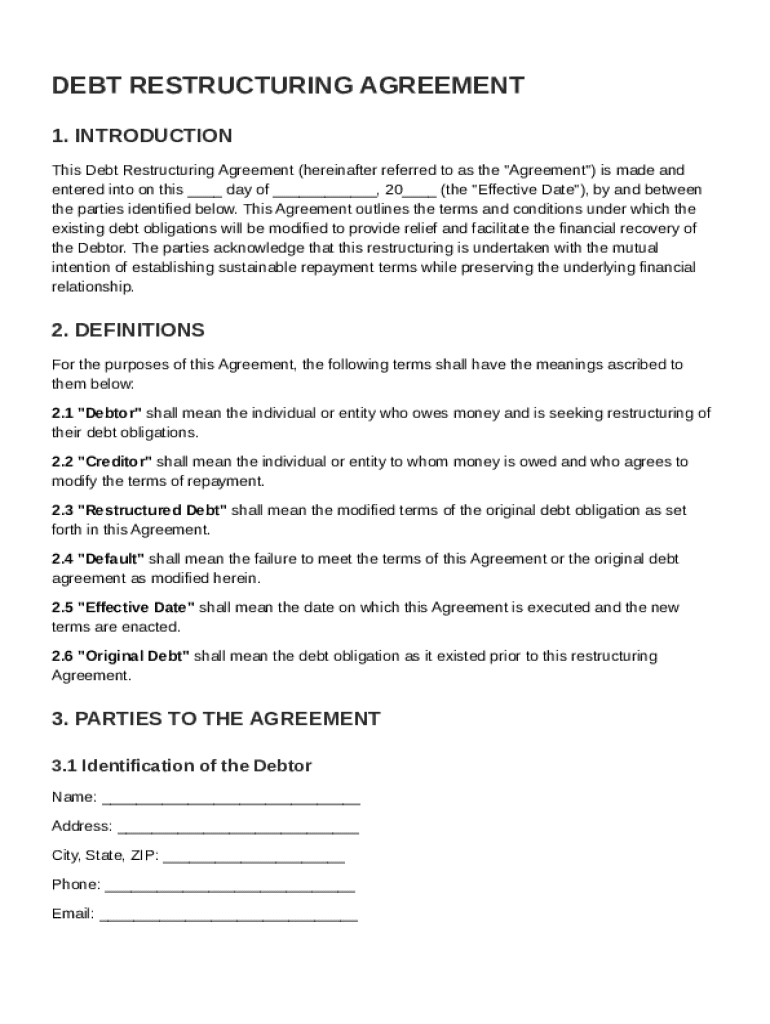
A Debt Restructuring Agreement Template serves as a structured framework for amending the terms of an existing debt obligation between a debtor and creditor. The purpose of this template is to facilitate financial recovery for the debtor while ensuring the creditor receives a portion or complete repayment over a modified timeline. The agreement outlines essential facets such as parties involved, payment schedules, original versus new debt terms, and specific conditions attached to the agreement. It also includes covenants, default conditions, and dispute resolution mechanisms to ensure clear communication and mutual understanding.
Key Components
- Parties Involved: Clearly identifies the debtor and the creditor.
- Original vs. Restructured Terms: Distinguishes between the initial terms and the new conditions agreed upon.
- Payment Schedule: Details the timeline and method for repayments.
- Default Conditions: Establishes conditions under which the agreement can be terminated or renegotiated.
Key Elements of the Debt Restructuring Agreement Template
When utilizing a Debt Restructuring Agreement Template, several critical elements must be included to ensure all parties have a comprehensive understanding of the terms involved. It's crucial to address these elements accurately to avoid future disputes or misunderstandings.
Essential Clauses
- Modification of Debt: Outlines the renegotiated terms, including any changes in interest rates or principal amounts.
- Covenants: Specific conditions and assurances made by the debtor to comply with the new arrangements.
- Remedies: Specifies actions the creditor can take if the debtor breaches the agreement.
Additional Considerations
- Confidentiality: Ensures that the details of the restructuring are not disclosed to third parties.
- Termination Provisions: Circumstances under which the agreement may be ended before fulfillment.
Steps to Complete the Debt Restructuring Agreement Template
Completing the Debt Restructuring Agreement Template involves a detailed process that ensures both parties are aligned with the restructured terms. Following these steps can lead to a smooth and efficient agreement execution.
- Identify Parties and Debt Details: Clearly state the names of the debtor and creditor and list the original loan or debt details.
- Outline Restructured Terms: Modify existing terms to reflect the new agreement for repayment, including any changes to the interest rate and payment period.
- Draft Covenants and Conditions: Establish any new covenants to be followed during the period of restructuring.
- Include Default Provisions: Define conditions that constitute a default and remedies available to the creditor.
- Finalize with Signatures: Both parties must read, agree, and sign the restructuring agreement, ensuring legality and commitment.
Importance of the Debt Restructuring Agreement Template
The Debt Restructuring Agreement Template is pivotal for both creditors and debtors aiming to redefine the terms of an outstanding debt. This template assists in maintaining transparency and avoiding disputes by clearly stipulating new terms and conditions.
Benefits
- Financial Recovery: Offers the debtor a structured opportunity to regain financial stability.
- Secured Repayment: Provides creditors with a potential recovery route for their loaned amounts.
- Legally Binding Terms: Ensures that both debtor and creditor are legally committed to the restructured terms.
Who Typically Uses the Debt Restructuring Agreement Template
Debt Restructuring Agreement Templates are typically used by businesses, individual borrowers, or even financial institutions that are involved in the process of renegotiating debt terms. Understanding who commonly engages in this process can enhance the utility of the template.


Common Users
- Small Businesses: Often utilize these agreements to maintain operations during economic downturns by renegotiating loan terms.
- Individuals: May use restructuring agreements to adjust personal loans or credit card debt.
- Financial Institutions: Lenders may offer these agreements to borrowers experiencing temporary financial hardships, protecting their investments.

Legal Use of the Debt Restructuring Agreement Template
Using the Debt Restructuring Agreement Template within a legal framework ensures that all aspects of the agreement are enforceable and that the changes made to the original contract adhere to applicable laws.
Legal Considerations
- Compliance with Laws: Ensure that the terms comply with federal and state regulations.
- Binding Nature: Once signed, the document serves as a legally binding agreement enforceable in a court of law.
- Dispute Resolution: Legal mechanisms should be in place to handle potential disputes arising from the restructured terms.
State-Specific Rules for the Debt Restructuring Agreement Template
Different states may impose varying rules and regulations on debt restructuring agreements. Understanding these state-specific guidelines can ensure the agreement's validity across different jurisdictions.
Regional Variations
- Interest Rate Caps: Some states have limitations on the interest rates that can be applied within restructuring agreements.
- Disclosure Requirements: Varying expectations on the level of detail required in agreements across states.
- Legal Procedures: States may differ in their required procedures for executing and enforcing these agreements.
Understanding state-specific rules helps in customizing the Debt Restructuring Agreement Template to fit regional regulations, avoiding legal pitfalls.
This comprehensive overview provides insights into the essential components, preparation processes, and legal requirements of a Debt Restructuring Agreement Template, offering utility to individuals and organizations seeking to renegotiate their debt obligations effectively.




