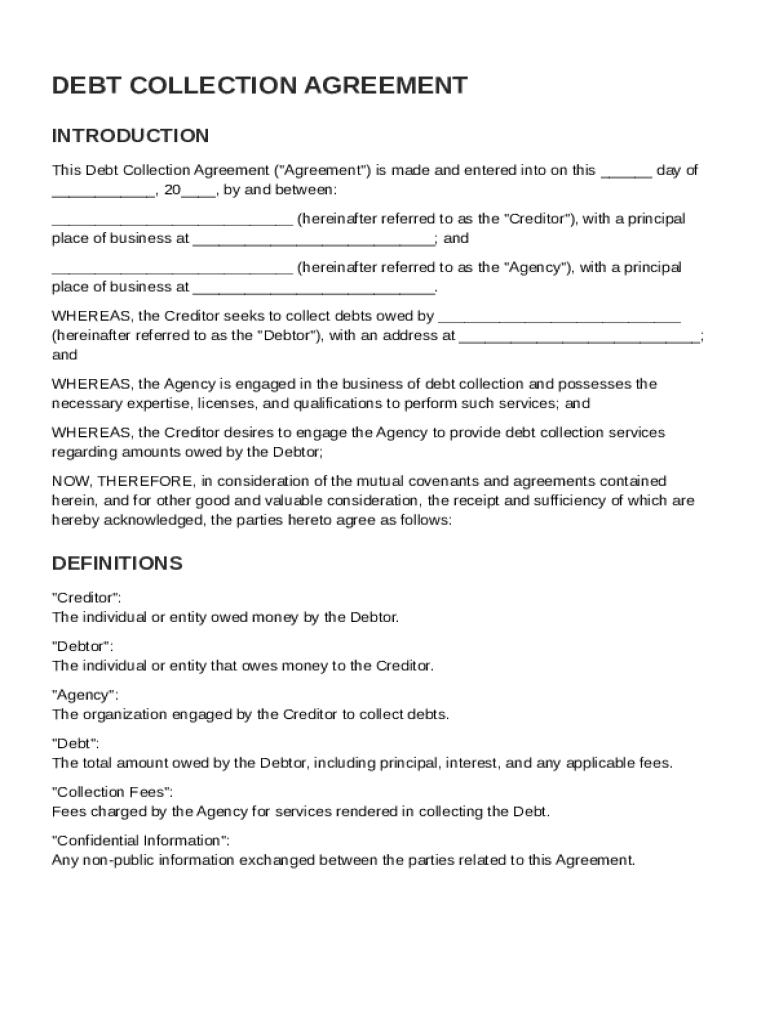







Definition & Meaning
A Debt Collection Agreement is a legally binding document that outlines the terms under which a creditor hires an agency to collect overdue debts from a debtor. This agreement delineates the specific roles and responsibilities of both the creditor and the collection agency, ensuring compliance with relevant laws and setting clear expectations for how the debt recovery process will be conducted. It serves as a framework to prevent misunderstandings and disputes by defining the methods of collection, compensation structures, confidentiality clauses, and procedures in case of disputes.
Key Elements
Key elements of the agreement typically include:
- Identification of key parties involved, such as the creditor, debtor, and collection agency.
- Detailed description of the debts to be collected, including amounts and due dates.
- Agencies stipulated methods for debt collection and communication.
- Compensation plans for the agency, including any commission or fee structures.
- Obligations concerning confidentiality and data protection.
- Clauses regarding the resolution of disputes and termination of the contract.
How to Use the Debt Collection Agreement Template
Using a Debt Collection Agreement Template streamlines the process of drafting a comprehensive and legally sound agreement tailored to specific needs. Users should start by familiarizing themselves with the template structure and key sections to ensure that all relevant information is included. Each template section should be carefully reviewed and filled out, including all fields relevant to the specific debt recovery case.
Steps for Customization
- Review Pre-filled Sections: Examine any pre-filled sections for relevance and accuracy.
- Enter Specific Details: Input details specific to the agreement, such as names, addresses, and terms of the agreement.
- Add Legal Requirements: Ensure any jurisdiction-specific legal requirements are included.
- Proofread the Document: Verify for completeness and accuracy before finalizing.
By using this template, users can avoid common pitfalls associated with drafting complex agreements from scratch.
Steps to Complete the Debt Collection Agreement Template
Completing a Debt Collection Agreement Template involves several key steps to ensure that the document is both accurate and complete.
- Gather Necessary Information: Collect all information about the involved parties, debts owed, and terms of engagement.
- Fill Template Sections: Enter all details into the appropriate sections of the template, paying attention to legal and financial terms.
- Customize for Specific Needs: Modify sections as necessary to fit the specific needs of the agreement, including any special conditions or terms.
- Review and Revise: Carefully review each section for completeness and accuracy, ensuring no critical information is omitted.
- Signatures and Witnesses: Ensure all parties sign the completed document and, if needed, notarize it to strengthen its enforceability.
Legal Use of the Debt Collection Agreement Template
A Debt Collection Agreement must adhere to both federal and state laws in the United States to be legally enforceable. This involves compliance with regulations such as the Fair Debt Collection Practices Act (FDCPA), which governs the behavior of collection agencies and sets out rules for consumer protection.
Legal Requirements
- Compliance with FDCPA: The agreement must incorporate practices outlined in the FDCPA to ensure ethical debt collection.
- Governing Law Clause: Clearly state which state's laws will govern the agreement.
- Data Protection: Include clauses that comply with data protection regulations to safeguard personal information.
By incorporating these elements, the agreement ensures legal standing and reduces the risk of litigation.
Examples of Using the Debt Collection Agreement Template
Debt Collection Agreement Templates can be used in various scenarios to formalize the relationship between creditors and collection agencies.
Real-world Scenarios
- Small Business Owners: A small business may hire a collection agency to recover overdue invoices.
- Financial Institutions: Banks or credit unions may employ an agency to manage delinquent loan repayments.
- Medical Providers: Healthcare providers often utilize collection services to recover unpaid patient bills.
Each scenario illustrates how different industries rely on such agreements to improve cash flow and minimize losses from unpaid debts.
Important Terms Related to Debt Collection Agreement Template
Understanding the terminology used within a Debt Collection Agreement is vital for all parties involved.
- Creditor: The entity to which the debt is owed.
- Debtor: The individual or organization obligated to repay the debt.
- Collection Agency: The intermediary hired to recover the debt on behalf of the creditor.
- Debt: The amount of money owed by the debtor.
- Commission: A fee or percentage paid to the agency for successfully collecting the debt.
A clear understanding of these terms ensures that both creditors and agencies can effectively fulfill their responsibilities.
State-by-State Differences
Debt collection agreements may need to be customized to comply with specific state regulations within the U.S.
Variations by State
- Licensing Requirements: Some states require collection agencies to be licensed.
- Interest Rates: Varying limits on interest rates that can be applied to outstanding debts.
- Consumer Rights: Differences in how consumers can challenge or dispute debts.
Recognizing these variations is crucial to drafting compliant agreements that are also enforceable across different jurisdictions.
Who Typically Uses the Debt Collection Agreement Template
The template serves a diverse range of users, each requiring a structured approach to debt collection.


Typical Users
- Financial institutions: Banks, credit card companies, and other lenders.
- Service Providers: Firms providing regular services, often with unpaid invoices.
- Utility Companies: Vendors supplying essential services like water, electricity, or gas.
- Healthcare Providers: Hospitals and doctors recovering medical bills.
These users depend on standardized agreements to systematically manage and recover outstanding debts, enforcing terms effectively and reducing operational risks.