
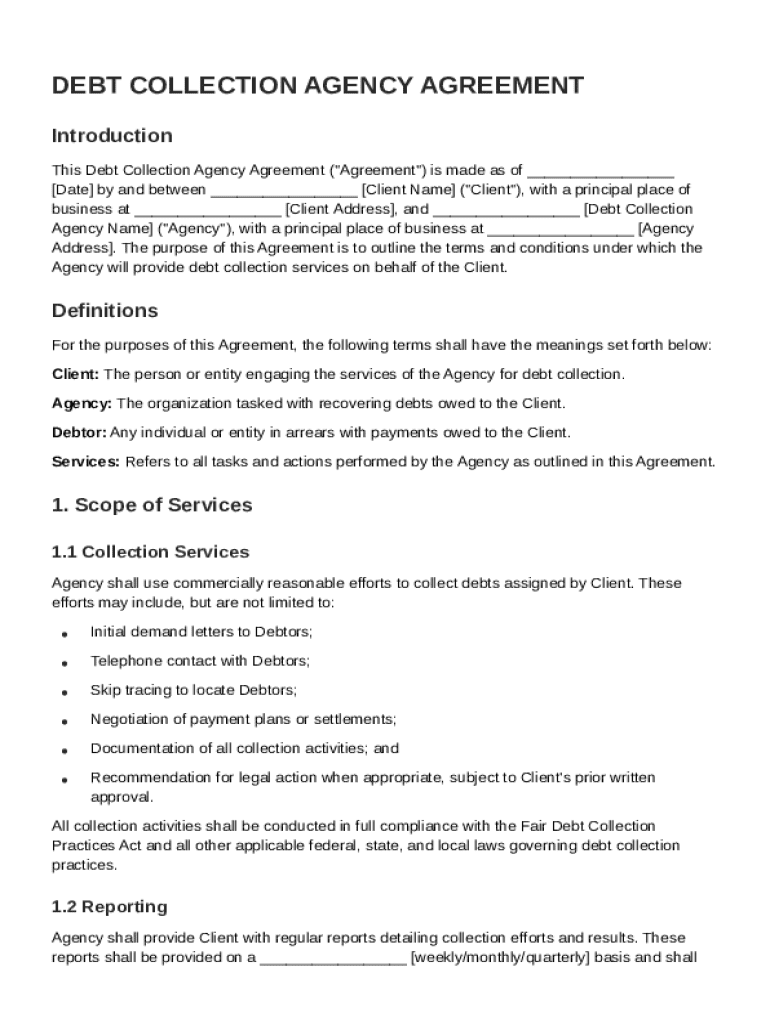







Definition and Purpose
The "Debt Collection Agency Agreement Template" serves as a formal contract between a client and a debt collection agency, detailing the terms under which the agency will operate. This template clarifies the relationships and responsibilities of key parties such as the client, agency, and debtor. It provides a comprehensive framework for debt collection activities, ensuring all parties are aware of their obligations and the expectations set forth. This document often includes sections on the scope of services, confidentiality, payment terms, and dispute resolution, making it an essential tool for managing legal and operational complexities in debt collection.
How to Use the Template
To effectively use the "Debt Collection Agency Agreement Template," start by reviewing each section carefully to understand its implications. Make any necessary modifications to tailor the agreement to your specific needs and the legal requirements of your jurisdiction. It is crucial to fill in all relevant details, such as party names, service descriptions, and fee structures. Ensure that all participants review and agree to the terms before signing. Utilizing DocHub's features, you can easily customize, annotate, and electronically sign the document. Always consider consulting with a legal professional to verify that the agreement complies with applicable laws before execution.
Key Elements of the Agreement
The template comprises several critical components that ensure clarity and enforceability. These elements include:
- Parties Involved: Identification of the client, agency, and any other parties.
- Scope of Services: Detailed description of the services the agency will provide.
- Fee Structure: Explanation of how fees are calculated, including any success-based contingency arrangements.
- Confidentiality Obligations: Provisions to protect sensitive information from unauthorized disclosure.
- Indemnification and Liability: Clauses that outline the responsibilities for potential legal liabilities.
- Governing Law: Specification of the legal jurisdiction that will govern the agreement.
- Dispute Resolution: Procedures for resolving any disputes that arise from the agreement.
Step-by-Step Completion Process
Completing the "Debt Collection Agency Agreement Template" involves several methodical steps:
- Information Gathering: Collect accurate details about the parties involved and the scope of services.
- Template Customization: Modify the template to reflect specific terms and conditions relevant to your agreement.
- Review: Check for any inconsistencies or omissions and amend as necessary.
- Legal Consultation: Seek advice from a legal expert to ensure compliance with applicable laws.
- Finalization: Confirm that all details are correct and agreed upon by parties.
- Signature Collection: Use DocHub to collect legally binding electronic signatures from all parties.
Legal Context and Compliance
Using the "Debt Collection Agency Agreement Template" within a legal framework requires awareness of federal and state regulations governing debt collection practices, such as the Fair Debt Collection Practices Act (FDCPA). The template should be adjusted to include provisions necessary for compliance with these regulations, maintaining the rights of both debtors and creditors. Legal consultation can help ensure that the agreement adheres to all pertinent legal standards, reducing the risk of non-compliance penalties.
Important Terms and Their Relevance
This agreement contains several important terms:
- Client: The party hiring the collection agency.
- Agency: The debt collection entity providing the service.
- Debtor: The individual or entity from whom the debt is being collected.
- Contingency Fee: A fee paid upon successful collection of the debt.
- Default: Failure of the debtor to meet financial obligations.
- Mitigation: Steps taken to minimize impact or losses.
Understanding these terms is crucial for the accurate interpretation and execution of the agreement.
State-Specific Considerations
Debt collection laws can vary significantly from one state to another. For instance, some states may have more stringent requirements for licensing debt collection agencies or unique provisions regarding debtor communication. When completing the agreement, ensure that any state-specific laws are addressed, and the document is adjusted accordingly. It may be prudent to consult legal resources or professionals familiar with the laws in the specific state where the debt collection activities will occur.
Examples and Practical Scenarios
Consider a scenario where a small business hires a debt collection agency to recover overdue payments from clients. The "Debt Collection Agency Agreement Template" outlines the services the agency will provide, how fees based on recovered amounts are structured, and maintains confidentiality of the business's customer information. By clearly defining roles and expectations, both parties understand their obligations, minimizing potential disputes and facilitating an efficient debt recovery process. Scenarios like this highlight the template's role in standardizing and simplifying complex transactions.




