
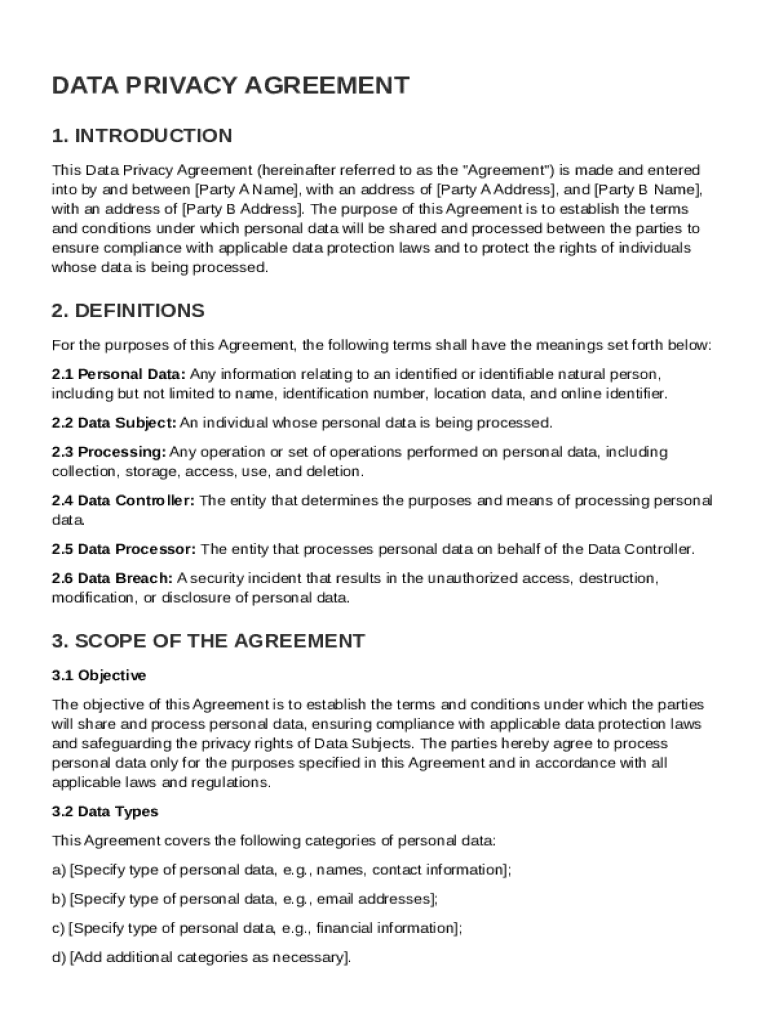







Definition & Meaning
The Data Privacy Agreement Template is a critical document designed to protect personal data and ensure compliance with data protection laws. It serves as a formal agreement between parties who wish to share and process personal data, delineating the responsibilities of both the Data Controller and Data Processor. By outlining the terms and conditions for data handling, the agreement aims to safeguard individual rights and ensure transparency in data processing practices.
- Personal Data: Any information related to an identified or identifiable individual, such as names, addresses, emails, or identification numbers.
- Data Subject: The individual whose personal data is being processed.
- Processing: Any operation performed on personal data, including collection, storage, and dissemination.
How to Use the Data Privacy Agreement Template
To use the Data Privacy Agreement Template effectively, follow these general steps:
- Review the Template: Begin by thoroughly reviewing the provided template to understand its structure and contents. Identify sections that require customization based on your specific data processing activities.
- Customize the Agreement: Tailor the template to suit your organization’s needs by filling in specific details such as company names, roles, and processing purposes. Ensure all relevant parties are clearly identified.
- Define Data Flows: Clearly outline how data will be collected, processed, and shared. Specify the types of data involved and the security measures in place to protect it.
- Include Legal Obligations: Incorporate any legal requirements specific to the jurisdictions involved, such as U.S. data protection laws.
- Review and Update Regularly: Regularly review and update the agreement to reflect any changes in data processing activities or legal requirements.
Additional Considerations
- Collaborative Input: Involve legal counsel or data protection officers in drafting and reviewing the agreement.
- Stakeholder Engagement: Engage with all stakeholders to ensure that the agreement reflects their requirements and obligations accurately.
Steps to Complete the Data Privacy Agreement Template
Completing the Data Privacy Agreement Template requires careful attention to detail and legal compliance. Follow these steps for thorough completion:
- Identify Parties Involved: Clearly specify the Data Controller and Data Processor, including their business details and contact information.
- Define Data Types & Processing Activities: List all types of personal data to be processed and the specific activities to be performed on the data.
- Outline Rights & Obligations: Clearly define the rights of data subjects and the obligations of both parties under the agreement.
- Set Security Measures: Detail the technical and organizational measures in place to protect personal data from unauthorized access or disclosure.
- Consult Legal Expertise: Ensure compliance by consulting with legal experts familiar with data privacy laws.
Example Scenarios
- Cloud Service Provider: When a company uses a cloud service provider to store customer data, the template outlines the data processing terms to maintain security and compliance.
- Third-Party Vendors: Companies working with third-party vendors for data analytics can use the template to regulate data sharing and processing terms.
Key Elements of the Data Privacy Agreement Template
Several key elements must be included in a Data Privacy Agreement Template to ensure it is comprehensive and legally binding:
- Data Processing Details: Precise definitions of data types and processing purposes.
- Security Measures: Specific provisions detailing encryption, access controls, and data breach response plans.
- Data Subject Rights: Clauses ensuring compliance with data subject rights, such as access and correction requests.
- Amendment Clauses: Terms governing how changes to the agreement will be managed.
- Governing Law: Specification of the legal jurisdiction applicable to the agreement.
Practical Considerations
- Regular Audits: Include terms for conducting regular audits to verify compliance with agreed security measures.
- International Data Transfers: Address conditions for transferring data to jurisdictions outside the United States.
Important Terms Related to the Data Privacy Agreement Template
Understanding key terms related to the Data Privacy Agreement Template is essential for effective implementation:
- Data Controller: The entity that determines the purposes and means of processing personal data.
- Data Processor: The entity that processes personal data on behalf of the Data Controller.
- Encryption: The process of converting data into a secure format to prevent unauthorized access.
- Consent: The data subject’s informed agreement allowing data processing.
- Breach Notification: Obligations to inform affected parties and regulatory authorities in the event of a data breach.
Legal Use of the Data Privacy Agreement Template
Ensuring that the Data Privacy Agreement Template is legally compliant involves several steps:
- Compliance with Laws: The template should reflect compliance with relevant data protection laws such as the ESIGN Act and other U.S. regulations.
- Penalties for Breach: Include clauses outlining penalties for breaches of terms by either party.
- Binding Obligations: Clearly articulate the legally binding nature of the agreement to ensure enforceability.
Regulatory Guidelines
Adherence to regulatory guidelines is crucial. This includes observing directives from bodies like the Federal Trade Commission (FTC) and aligning with frameworks such as the California Consumer Privacy Act (CCPA).
Variations or Alternatives to the Data Privacy Agreement Template
Exploring variations or alternatives to the Data Privacy Agreement Template can offer flexibility:
- Sector-Specific Templates: Tailored versions for specific sectors like healthcare or finance, which may have additional regulations.
- Simplified Agreements: Simpler variants for smaller businesses or limited data processing activities.
- Comprehensive Templates: Expanded agreements covering more extensive data processing operations and multiple jurisdictions.
Example Variations
- Multinational Corporations: Templates incorporating provisions for cross-border data transfers and international compliance.
- Startup Enterprises: Focused on essential compliance needs for early-stage companies with growth potential in data processing.
Business Types That Benefit Most from the Data Privacy Agreement Template
While all businesses handling personal data can benefit from a Data Privacy Agreement Template, certain types are particularly advantaged:
- Technology Firms: Companies offering digital services and platforms that involve extensive data handling.
- Marketing Agencies: Businesses involved in data-driven marketing strategies and customer segmentation.
- Healthcare Providers: Organizations managing sensitive patient data require rigorous data protection measures.
- Financial Services: Institutions processing personal financial information and transaction data.
Industry Examples
- E-commerce Sites: These platforms regularly process large volumes of customer data for transactions and targeted marketing.
- Consulting Firms: Engage with clients' data for analysis and insights, necessitating strong data protection agreements.




