
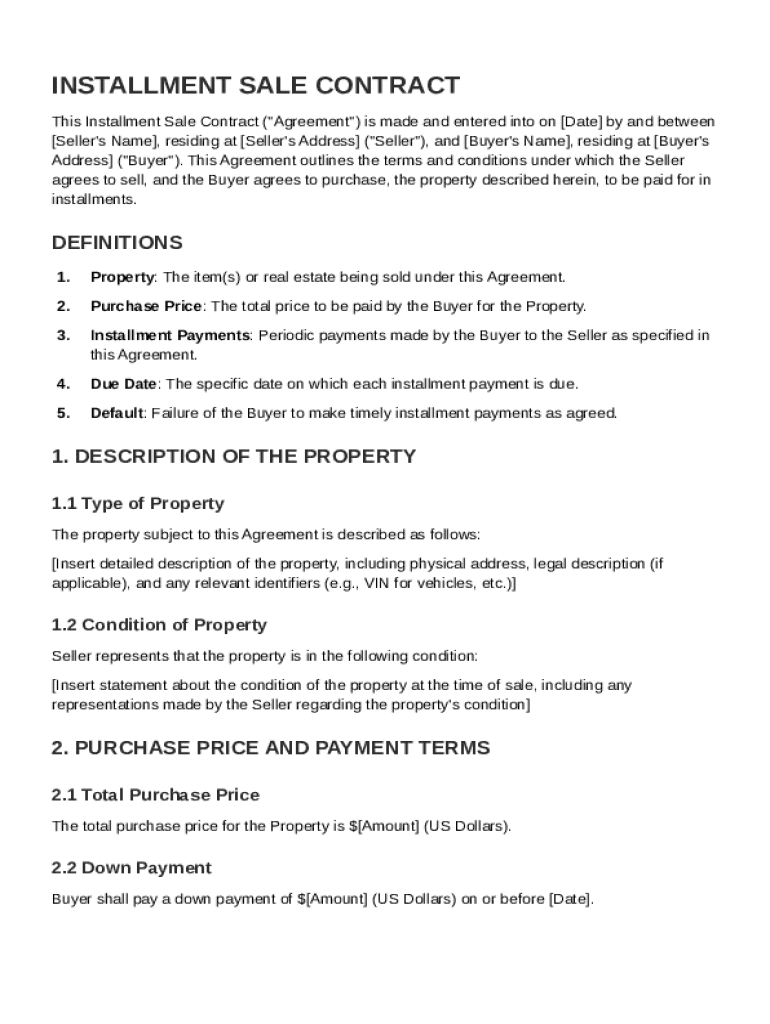







Understanding the Installment Sale Contract Template
An Installment Sale Contract Template is a legal document that outlines the agreement between a seller and a buyer for the sale of property to be paid in installments. Typically used for real estate transactions, this contract specifies terms such as the total purchase price, down payment, and installment schedule. The template ensures both parties clearly understand their obligations and rights, thereby reducing potential disputes.
Key Components of the Installment Sale Contract Template
The template includes several critical elements:
- Definitions and Terms: Clearly stated definitions of key terms, including the seller, buyer, and property involved in the transaction.
- Property Description: A detailed description of the property being sold, ensuring both parties have a mutual understanding of what is included in the sale.
- Payment Terms: Specific details on the total purchase price, the down payment amount, the interest rate, payment schedule, and any penalties related to late payments.
- Duties and Responsibilities: Obligations of both parties concerning property maintenance, warranties, insurance, and payment.
Why Use an Installment Sale Contract Template
This template is beneficial for several reasons:
- Clarity and Structure: Provides a structured framework that reduces ambiguities and sets clear expectations.
- Legal Protection: Serves as evidence of the terms agreed upon by both parties, which can protect them in the event of legal disputes.
- Flexibility: Allows the buyer to manage payments over time, making property purchases more accessible.
Steps to Complete the Installment Sale Contract Template
- Gather Required Information: Collect all necessary details, including personal information of both parties, property specifics, and financial terms.
- Review Definitions and Terms: Ensure both parties understand all definitions and terms used within the contract.
- Fill in Payment Details: Specify the total purchase price, down payment, installment amounts, and schedule.
- Outline Responsibilities: Clearly define the duties regarding maintenance and other obligations.
- Sign the Contract: Once both parties agree on the terms, they should sign the contract to make it legally binding.
Who Typically Uses the Installment Sale Contract Template
This template is commonly used by:
- Real Estate Agents: To facilitate property transactions involving installment payments.
- Individual Buyers and Sellers: For personal property sales where payment over time is agreed upon.
- Legal Professionals: Assisting clients in drafting or reviewing the terms of the sale agreement.


Important Terms Related to the Installment Sale Contract
- Principal: The original sum of money borrowed or invested, excluding interest or additional fees.
- Interest Rate: The proportion of a loan charged as interest to the borrower.
- Amortization Schedule: A table detailing each periodic payment on a loan, separating principal and interest amounts.
- Default: Failure to fulfill the contractual payment obligations.
State-Specific Rules for the Installment Sale Contract
Laws governing installment sale contracts can vary by state. While the federal government provides overarching guidelines, each state may have additional requirements such as registration of the contract or specific consumer protection laws. It is essential for users to consult local laws or a legal professional to ensure compliance.
Creating Legally Binding Electronic Signatures
Using a platform like DocHub, parties can create legally binding electronic signatures for their Installment Sale Contract. This functionality complies with the ESIGN Act, allowing users to digitally sign documents using typed fonts, drawn signatures, or uploaded images of handwritten signatures, making the transaction efficient and accessible.
Software Compatibility and Integration
This template is compatible with various software systems, enabling integration with tools like QuickBooks or other accounting software. Users can import the contract into these platforms for financial tracking and record-keeping. Moreover, platforms like DocHub offer seamless integration with Google Workspace, allowing for direct edits from Google Drive and Gmail.




