






Definition & Meaning
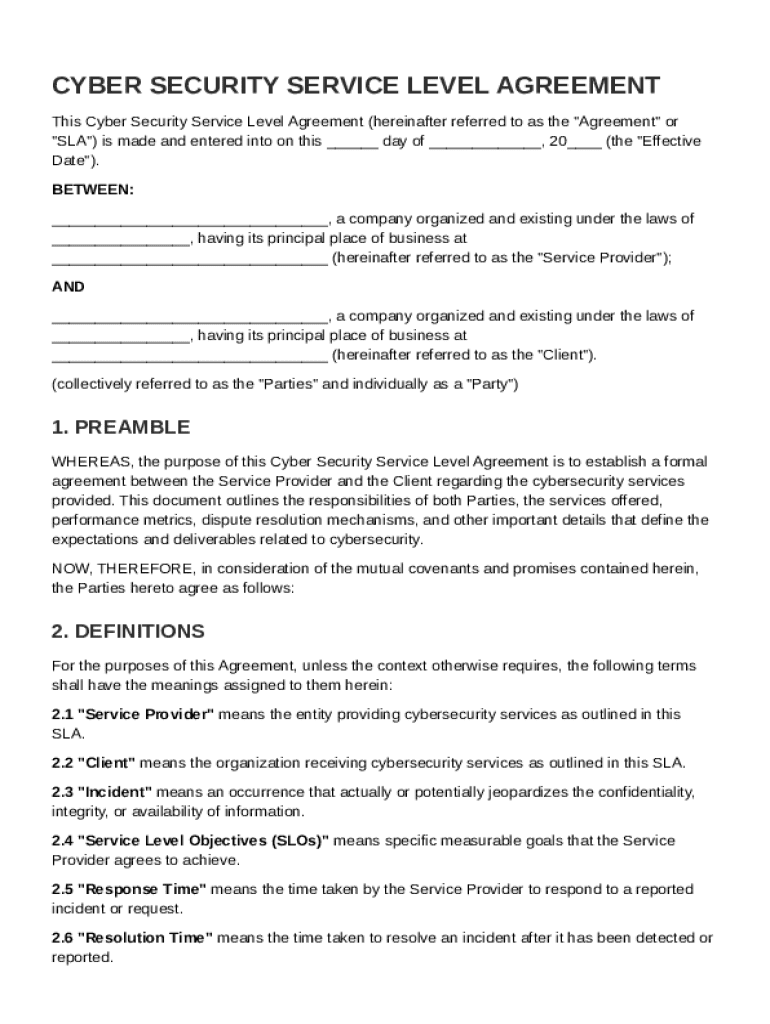
The Cyber Security Service Level Agreement (SLA) Template is a pivotal document outlining the formal contract between a service provider and a client regarding cybersecurity services. It establishes clear expectations, responsibilities, and obligations for both parties concerning service descriptions, performance metrics, and compliance requirements. The SLA is designed to delineate key performance indicators (KPIs) and specify incident response times to ensure efficient and effective cybersecurity measures are in place.
Key Elements of the Cyber Security Service Level Agreement Template
The SLA template is detailed and comprehensive, including essential components that ensure a thorough understanding of cybersecurity service expectations. Key elements typically include:
- Service Description: A detailed outline of the cybersecurity services provided, including scope, coverage, and limits.
- Performance Metrics: Establishment of KPIs to measure service effectiveness.
- Incident Management: Defined procedures for incident detection, reporting, and response.
- Confidentiality Clauses: Guarantees for the protection of sensitive data and information.
- Compliance & Legal Obligations: Adherence to relevant legal and regulatory standards.
How to Use the Cyber Security Service Level Agreement Template
Effectively utilizing the SLA template involves several steps to ensure all necessary details are represented:
- Customization: Tailor the template to match specific organizational needs and cybersecurity requirements.
- Review: Carefully assess the terms and clauses to ensure understanding and compliance.
- Consultation: Engage legal or cybersecurity professionals to validate the agreement’s components.
- Agreement: Achieve mutual agreement between service provider and client on all outlined terms.
- Finalization: Sign and formalize the contract with electronic signatures if necessary.
Steps to Complete the Cyber Security Service Level Agreement Template
Completing the SLA template effectively requires:
- Data Gathering: Collect necessary information about both parties and service specifics.
- Drafting: Populate the template with collected data, customizing as needed.
- Review & Revision: Conduct thorough reviews, making revisions as necessary to align with both parties’ expectations.
- Approval: Obtain consensus from all involved parties.
- Signed Agreement: Use electronic signatures to finalize and make the agreement legally binding.
Important Terms Related to Cyber Security Service Level Agreement Template
Understanding the legal and technical jargon within an SLA template is crucial. Common terms include:
- Uptime: Denotes the operational reliability and availability of service.
- Downtime: The period when a system is non-operational.
- Escalation Procedures: Steps to increase the severity of an unresolved issue.
- Confidentiality: Obligations related to protecting sensitive information.
- Indemnification: Compensating for harm or loss under the SLA.
Legal Use of the Cyber Security Service Level Agreement Template
The legal framework surrounding SLAs is crucial for both enforceability and compliance. Legal use involves:
- Contractual Obligations: Ensuring all parties understand and adhere to obligations.
- Regulatory Compliance: Aligning with national and local cybersecurity regulations and standards.
- Dispute Resolution: Specified mechanisms for resolving disagreements.
- Termination Conditions: Specific grounds for SLA termination.
Examples of Using the Cyber Security Service Level Agreement Template
Real-world applications of the SLA template vary. For example:
- Tech Firms: Establishing parameters for cybersecurity monitoring services.
- Healthcare: Protecting sensitive patient information through specific SLAs.
- Financial Institutions: Defining cybersecurity expectations to comply with stringent regulatory requirements.
Business Types that Benefit Most from Cyber Security Service Level Agreement Template
Organizations across various industries can leverage SLAs to enhance their cybersecurity posture:
- Large Corporations: Require comprehensive security measures across multiple locations.
- SMEs: Benefit from predefined cybersecurity protocols without extensive internal frameworks.
- Government Agencies: Develop robust SLAs to meet public sector standards.