







Definition & Meaning
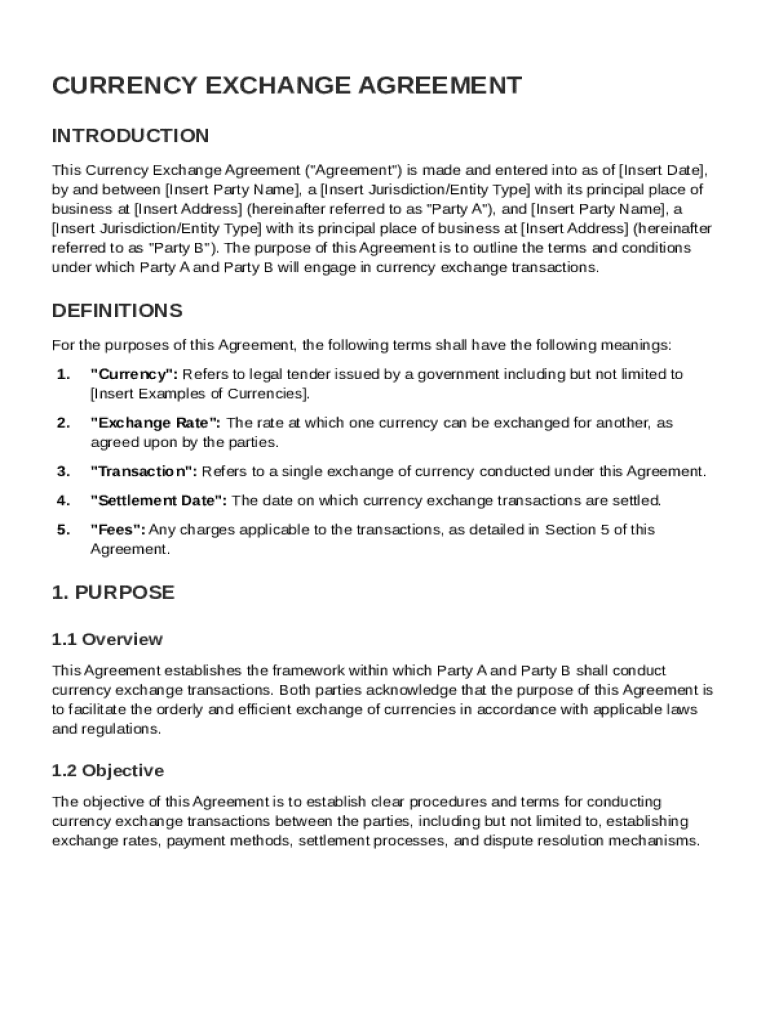
The Currency Exchange Agreement Template is a foundational document used in financial transactions involving the exchange of different currencies between two parties, usually referred to as Party A and Party B. This template typically outlines the agreed terms and conditions for exchanging currency, including critical definitions such as 'Currency', 'Exchange Rate', and 'Transaction'. By standardizing these elements, the template provides a clear framework that helps avoid misunderstandings or disputes between parties. For example, a company looking to secure a foreign currency loan might use this template to detail the terms of exchange with a lender, ensuring both parties have a mutual understanding of the rate and currency type involved.
Key Elements of the Currency Exchange Agreement Template
A typical Currency Exchange Agreement Template contains several crucial components to ensure that all necessary aspects of the transaction are thoroughly addressed. The primary elements include:
- Exchange Rate: Specifies the rate at which the currencies will be swapped. Both a fixed rate and a floating rate are possible, each with its own implications.
- Transaction Procedures: Details the steps for initiating, confirming, and settling the transactions, from initial agreement to final settlement.
- Responsibilities: Outlines the obligations of each party, ensuring clarity on roles and expectations. This could include one party ensuring the availability of currency by a specific date.
- Fee Structures: Lists any fees applicable for the currency exchange process, clarifying who is responsible for paying these charges.
- Confidentiality Obligations: Sets terms to protect sensitive financial information, a common requirement in international business transactions.
- Termination Conditions: Specifies how either party can terminate the agreement, providing security for cases of breach or other issues.
How to Use the Currency Exchange Agreement Template
To effectively use the Currency Exchange Agreement Template, both parties should collaborate closely to fill in the necessary sections. Here are steps to follow:
- Download the Template: Begin by downloading the template from a reputable platform, such as DocHub, ensuring it's in a compatible format for your editing tools.
- Customize Template Fields: Edit the document to reflect the specific details of your transaction—this includes entering the agreed currency types, exchange rates, and any applicable fees.
- Fill Out Responsibilities: Clearly define the responsibilities for both parties, detailing any obligations or actions each must complete.
- Review and Edit the Document: Both parties should carefully review the document to confirm accuracy and legal compliance.
- Obtain Necessary Signatures: Utilize DocHub’s electronic signature features to securely capture signatures from all involved parties, making the agreement legally binding.
By following these steps, you can ensure a smooth, efficient process while establishing clear conditions to govern your currency exchange transactions.
Who Typically Uses the Currency Exchange Agreement Template
The Currency Exchange Agreement Template is particularly valuable to businesses and financial institutions engaged in international trade and investments. Common users include:
- Multinational Corporations: Companies operating in multiple countries often exchange currencies to manage operations across different regions.
- Banks and Financial Institutions: Provide currency exchange services and need standardized agreements to outline terms.
- Exporters and Importers: Engage in currency exchanges to handle transactions across borders efficiently.
- Investment Firms: May use these templates when dealing with international investors or partners to clarify the terms of currency transactions.


Important Terms Related to the Currency Exchange Agreement Template
Understanding the terminology within the Currency Exchange Agreement Template is essential for effective use. Some critical terms include:
- Spot Rate: The current exchange rate at which a currency can be bought or sold for immediate delivery.
- Forward Rate: A predetermined exchange rate for a transaction that will occur at a future date.
- Bid-Ask Spread: The difference between the buying and selling price in the currency exchange market.
- Currency Pair: Represented as XXX/YYY, where XXX is the base currency and YYY is the quote currency.
Each term plays a crucial role in the agreement's structure, ensuring that both parties have a mutual understanding of the transaction dynamics.
Legal Use of the Currency Exchange Agreement Template
The Currency Exchange Agreement Template serves as a legally binding document once all parties have signed. This agreement is governed by the legal standards applicable in the jurisdiction specified within the document. It typically follows the general contractual laws within the United States, including adherence to the Uniform Commercial Code (UCC) for financial transactions. This legal framework helps protect both parties’ interests and provides remedies in the case of disputes.
State-Specific Rules for the Currency Exchange Agreement Template
While the Currency Exchange Agreement Template is generally governed by federal law, particular states may have additional regulations or requirements:
- Licensing Requirements: Some states require currency exchange businesses to obtain specific licenses or permits.
- Disclosure Obligations: States might mandate additional disclosures related to exchange rate computation or associated fees.
- Consumer Protections: Certain states provide enhanced consumer protection laws to guard against unfair exchange practices.
These rules can impact how the agreement is structured and enforced, so it's important to review the state-specific requirements applicable to all parties involved.
Creation and Management of Fillable Forms Related to Currency Exchange
Using platforms like DocHub, fillable forms can be created and managed efficiently within a currency exchange context. Here's how:
- Build from Scratch or Convert Existing Documents: Customize your forms to include essential fields such as transaction date, currency type, and exchange rate information.
- Insert Field Types: Use text boxes for numerical or descriptive information, dropdown menus for currency selection, and signature fields to capture electronic consents.
- Assign Fields to Specific Parties: If multiple parties are involved, assign specific sections to different individuals or entities to ensure accurate and complete data submission.
These forms streamline the currency exchange process and facilitate easier management and tracking of transaction-related data.




