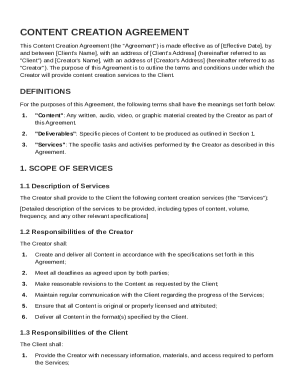
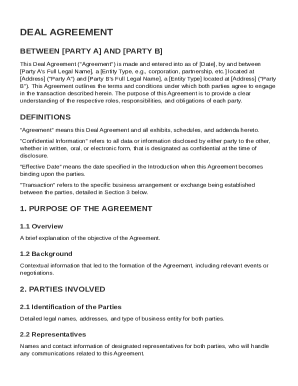
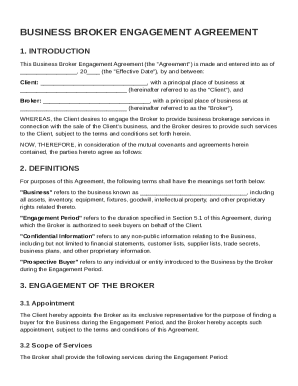
01. Edit your form online
Type text, add images, blackout confidential details, add comments, highlights and more.

Type text, add images, blackout confidential details, add comments, highlights and more.

Draw your signature, type it, upload its image, or use your mobile device as a signature pad.

Send it via email, link, or fax. You can also download it, export it or print it out.
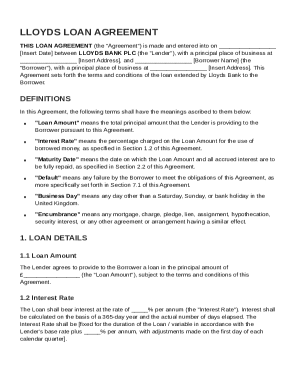
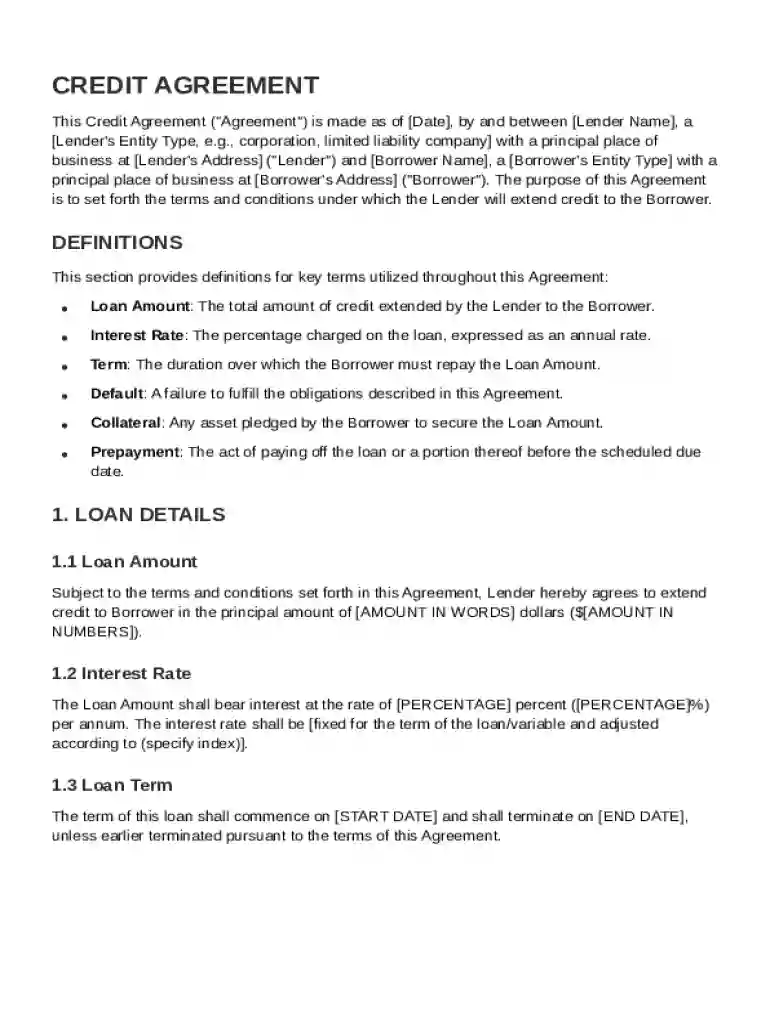
A Credit Agreement Template is a structured document used to outline the terms and conditions of a loan between a Lender and a Borrower. This legal form includes essential components such as the loan amount, interest rate, and repayment schedule, alongside representations from both parties. By clearly defining the contractual obligations, the template serves to protect both parties’ interests and provides a legal foundation in case of disputes. It is a binding document governed by the laws of a specific state and represents the entire agreement between the involved parties.
The Credit Agreement Template encompasses several vital elements that detail the relationship between the Lender and the Borrower:
Loan Amount: Specifies the total sum of money being loaned to the Borrower.
Interest Rate: Outlines the rate at which interest will accrue on the unpaid balance.
Payment Schedule: Establishes the timeline and frequency of payments required from the Borrower.
Representations and Warranties: Includes assertions by both parties regarding their authority and ability to enter into the agreement.
Conditions for Disbursement: Details the circumstances under which funds will be transferred to the Borrower.
Covenants: Describes ongoing obligations the Borrower must adhere to during the term of the loan.
Events of Default: Lists scenarios that would trigger a default, providing the Lender with specific remedies.
Using the Credit Agreement Template requires a structured approach to ensure all relevant details are correctly incorporated:
Review the Template: Thoroughly read the template to ensure you understand each section.
Customize Loan Details: Fill in the finance-specific fields such as loan amount, interest rate, and repayment terms.
Add Legal Terms: Ensure state-specific laws are included for both compliance and enforceability.
Review Representations: Verify that the representations and warranties accurately reflect your understanding and capacities.
Obtain Legal Advice: Consider consulting with a legal professional to validate the agreement and mitigate potential risks.
The Credit Agreement Template must comply with federal and relevant state laws to serve its intended legal purpose effectively. This includes adherence to legal provisions outlined in the Uniform Commercial Code (UCC) and any applicable state lending laws. It typically requires:
Clear Terms: Ensuring terms are distinctly articulated and mutually agreed upon.
Capacity: Verifying both parties have the legal capacity to enter into the agreement.
Governing Law: Specifying the state laws that will govern the agreement.
Legally Binding Nature: Recognizing that the signed document is enforceable in court.
Completing the Credit Agreement Template involves several detailed steps to ensure the agreement is accurate and enforceable:
Input Basic Information: Enter details about both the Lender and the Borrower, including names and contact information.
Set Financial Terms: Define the loan amount, interest rate, and payment schedule clearly.
Outline Obligations: Specify any covenants or conditions the Borrower must maintain.
List Default Events: Clearly detail what constitutes a default and what remedies are available.
Review and Sign: Both parties should review the document carefully before signing, acknowledging their understanding and agreement to the terms.
Understanding key financial and legal terminology is crucial for both parties:
Principal Amount: The initial sum of money borrowed excluding interest.
Interest Rate: The percentage charged on the outstanding principal amount.
Amortization: The process of gradually paying off a debt over time through regular payments.
Collateral: An asset pledged as security for the loan.
Corporate Guarantor: A third party guaranteeing the Borrower's obligations.
Credit agreements are subject to state-specific regulations, which can affect interest rates, default procedures, and enforcement:
Usury Laws: Each state has maximum allowable interest rates that can be charged.
Contractual Provisions: Some states have specific statutes regarding borrower protections and lender obligations.
Default Procedures: States may have unique processes for handling defaults and recovering debts.
Understanding these differences is vital to ensure the agreement complies with local laws and is enforceable in each jurisdiction.
Real-world applications of a Credit Agreement Template vary widely, often tailored to the needs of individuals and businesses:
Small Business Loans: A small enterprise may use the template to secure funds for expansion, documenting terms between the business owner and a financial institution.
Personal Loans: Individuals borrowing from friends or family can use this template to detail the loan terms, preventing misunderstandings.
Commercial Transactions: Large corporate entities might enter into complex credit agreements as part of their operational financing strategies, involving multiple lenders and layered conditions.
Through these examples, the template provides a foundation for structured, legally sound lending arrangements across various contexts.
At DocHub, your data security is our priority. We follow HIPAA, SOC2, GDPR, and other standards, so you can work on your documents with confidence.