
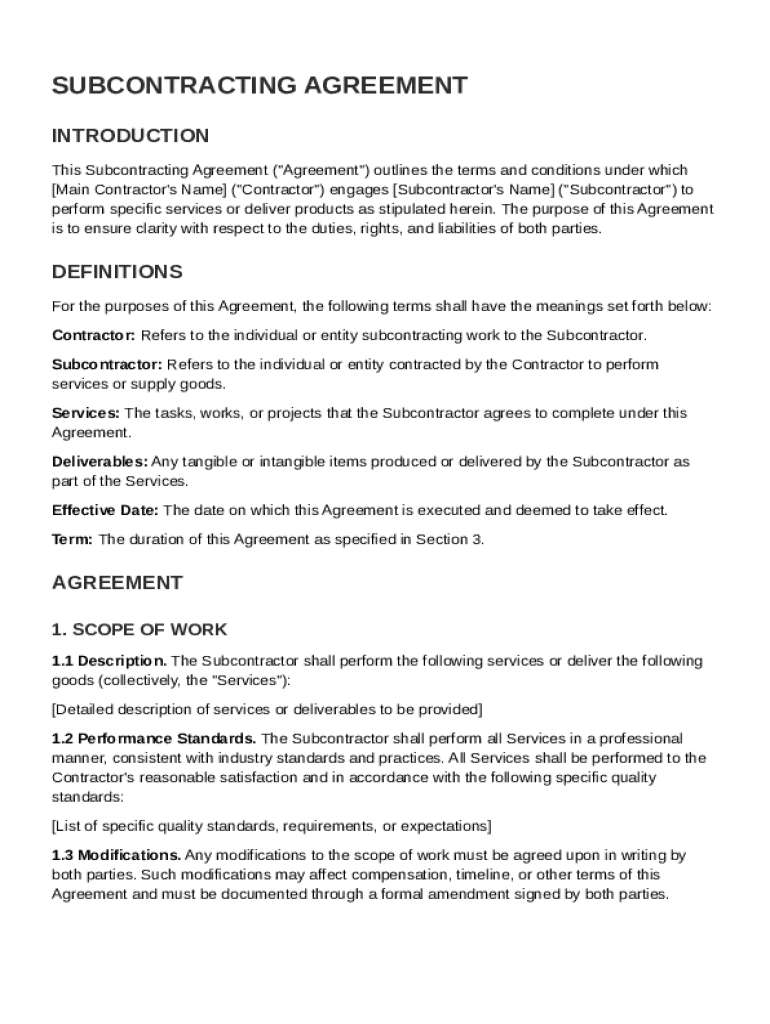







Definition and Meaning of a Subcontracting Agreement
A Subcontracting Agreement is a formal document that outlines the terms and conditions between a contractor and a subcontractor regarding a specific project or service delivery. This agreement delineates the responsibilities and expectations of both parties, thereby providing a structured framework for collaboration. Key areas covered often include scope of work, payment terms, deadlines, confidentiality obligations, and dispute resolution mechanisms. By setting clear guidelines, this agreement aims to prevent misunderstandings and conflicts during the execution of projects.
Key Elements of a Subcontracting Agreement
Understanding the core components of a subcontracting agreement is crucial for its effective utilization. Below are the primary elements:
- Scope of Work: Clearly defines the projects or tasks the subcontractor is responsible for, including deliverables and deadlines.
- Compensation Details: Specifies payment terms, methods, and schedules, ensuring mutual understanding of financial obligations.
- Duration: Sets the timeline for project initiation and completion, including any milestones if applicable.
- Confidentiality: Protects sensitive information exchanged during the partnership, preventing unauthorized disclosure.
- Indemnification and Liability: Outlines responsibilities for risks, ensuring that parties are aware of and agree to the liabilities involved in project undertakings.
- Governing Law: Dictates the legal jurisdiction under which the agreement is executed, crucial for legal compliance.
- Dispute Resolution: Provides a framework for resolving disagreements, potentially avoiding lengthy and costly litigation.
Each of these elements plays a pivotal role in ensuring a smooth working relationship between the contractor and the subcontractor.
How to Use the Subcontracting Agreement Template
Using the subcontracting agreement template involves several structured steps:
- Identify Parties: Clearly list the names, contact details, and roles of both the contractor and subcontractor.
- Define Scope: Accurately describe the project or services the subcontractor will provide, ensuring alignment with contractor objectives.
- Specify Terms: Outline all payment and compensation details, including rates, payment schedules, and methods.
- Establish Timeline: Agree on start and end dates, including any interim milestones for delivery.
- Include Legal Provisions: Insert clauses on confidentiality, dispute resolution, liability, and governing law.
- Review and Finalize: Both parties should carefully review the document to ensure clarity and mutual understanding before signing.
Using a template allows parties to efficiently draft comprehensive agreements that cover all essential points, supporting successful project collaboration.
Legal Use of the Subcontracting Agreement Template
The use of a subcontracting agreement is not only a best practice but often a legal requirement when entering into formal business arrangements. It ensures that both parties are bound by enforceable terms, covering everything from scope of work to dispute resolution. These agreements are particularly useful in the U.S., where state laws may require specific disclosures and terms to be explicitly stated.
State-Specific Rules for Subcontracting Agreements
Different states may have varying regulations concerning subcontracting agreements. For instance:
- California: Requires specific language regarding indemnification and insurance coverage.
- New York: May mandate clauses about minimum wage requirements for subcontractors.
Understanding and incorporating state-specific rules into the subcontracting agreement ensures legal compliance and reduces the risk of future legal disputes.
Steps to Complete the Subcontracting Agreement Template
Preparing the Agreement
- Gather Initial Information: Collect details of both parties involved, including names, contact information, and roles.
- Outline Project Goals: Clearly define what needs to be achieved to align both parties on objectives.
Drafting the Agreement
- Insert Core Clauses: Populate the document with necessary legal provisions, using precise language to avoid ambiguities.
- Define Roles and Responsibilities: Detail specific obligations of the contractor and subcontractor to avoid overlaps and ensure accountability.
Finalizing the Agreement
- Review and Revise: Both parties should meticulously review the document, ensuring all terms and conditions comply with expectations and legal standards.
- Sign and Date: Each party signs and dates the agreement, making it a binding legal document.
Who Typically Uses the Subcontracting Agreement Template
Subcontracting agreements are widely used across various industries and business sizes:


Industry Applications
- Construction: Frequently used to detail specific tasks assigned to specialized subcontractors, such as electricians or plumbers.
- Information Technology: Common for outsourcing specific technical components to subcontractors who possess niche expertise.
Business Types
- Large Corporations: Utilize subcontracting to delegate tasks while maintaining control over project standards and timelines.
- Small Businesses: Benefit from the specialized skills of subcontractors without the need for a full-time hire.
Individuals or entities acting as either a contractor or a subcontractor can significantly benefit from using these templates to formalize their business relationships.
Important Terms Related to a Subcontracting Agreement
Understanding the terminology associated with subcontracting agreements is crucial for effective implementation:
- Subcontractor: The party hired by the contractor to perform specified tasks or services.
- Contractor: The entity that engages the subcontractor to complete portions of a larger project or service contract.
- Deliverable: The tangible or intangible result produced as part of the subcontracting work.
- Termination Clause: Provisions concerning the conditions under which the agreement can be ended.
Familiarity with these terms ensures both parties have a clear understanding of their roles and responsibilities within the agreement framework.
Real-World Scenarios and Examples of Using a Subcontracting Agreement
Subcontracting agreements are indispensable tools in various scenarios:
Case Study Examples
- Example 1: In a large scale construction project, a general contractor might use multiple subcontractors for specialized work like plumbing, electrical, and roofing tasks, each requiring distinct agreements.
- Example 2: A software development company outsources client-specific requirements to subcontractors with specialized programming capabilities.
Practical Advantages
Using a formal subcontracting agreement aids in:
- Risk Management: Reduces potential legal conflicts by clearly documenting expectations and responsibilities.
- Better Project Management: Provides a structure for tracking deliverables and assessing the subcontractor's progress against agreed timelines.
By formalizing their working relationships through agreements, businesses can mitigate risks and ensure the successful delivery of services or products.
Importance and Benefits of Subcontracting Agreement Templates
Subcontracting agreement templates provide several important benefits:
- Consistency: Using a template ensures that all necessary provisions and legal requirements are consistently met across multiple agreements, which helps maintain legal compliance and standardization.
- Efficiency: A template streamlines the contract creation process, saving time and resources otherwise spent drafting agreements from scratch.
- Flexibility: Templates can be customized to fit the specific requirements of different projects or tasks, making them adaptable to various industry needs.
Incorporating subcontracting agreement templates into business operations enhances the project's overall efficiency and effectiveness in a structured and organized manner.




