






Definition and Meaning
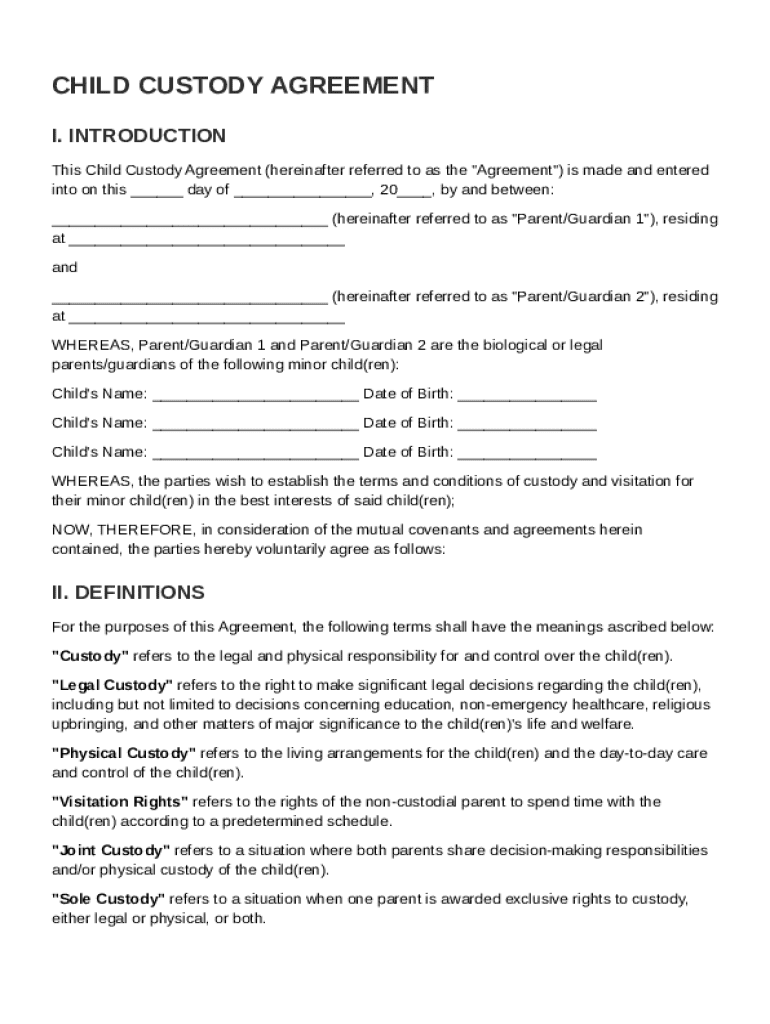
A Child Custody Agreement is a legal document that outlines the terms concerning the custody and visitation of minor children between two parents or guardians. It addresses both legal and physical custody, delineating responsibilities and rights related to decision-making and living arrangements. The agreement often includes a comprehensive communication plan, dispute resolution process, and terms for modifications. Its primary objective is to prioritize the child's best interests while providing a clear framework for co-parenting.
Key Elements of the Child Custody Agreement Template
A well-drafted Child Custody Agreement Template covers several crucial components to ensure it serves its purpose effectively:
- Legal and Physical Custody: Specifies who has the authority to make significant decisions regarding the child's welfare and where the child will reside.
- Visitation Rights: Outlines the schedule for the non-custodial parent or guardian, ensuring consistent and fair access to the child.
- Financial Responsibilities: Defines child support obligations and the division of other costs associated with raising the child.
- Communication Plan: Establishes guidelines for how parents will communicate regarding the child and any issues that may arise.
- Modifications: Includes terms that allow for changes to the agreement in response to evolving circumstances or needs.
Steps to Complete the Child Custody Agreement Template
Completing a Child Custody Agreement Template requires careful attention to detail to ensure all aspects of co-parenting are addressed:
- Gather Information: Collect all necessary details about both parents and the child or children involved.
- Define Custody Terms: Specify legal and physical custody arrangements, including living arrangements and decision-making responsibilities.
- Establish Visitation Schedule: Detail a regular schedule for visitation, including holidays and vacations.
- Outline Financial Arrangements: Clarify child support amounts and payment terms, and establish responsibilities for additional expenses like healthcare and education.
- Draft a Communication Plan: Develop a strategy for ongoing parental communication and problem-solving.
- Review and Revise: Go through the draft with legal counsel or mediator to ensure clarity and completeness.
- Finalize and Sign: After agreeing upon all terms, both parties should sign the document, making it legally binding.
Important Terms Related to the Child Custody Agreement Template
When dealing with a Child Custody Agreement, understanding key legal terms is essential:
- Joint Custody: When both parents share legal and/or physical custody of the child.
- Sole Custody: When one parent is granted exclusive legal or physical custody.
- Primary Custodial Parent: The parent with whom the child resides most of the time.
- Non-Custodial Parent: The parent who has visitation rights but does not have primary physical custody.
- Best Interests of the Child: A legal standard that prioritizes the child's health, safety, and welfare.
Legal Use of the Child Custody Agreement Template
The Child Custody Agreement Template can be legally binding if it aligns with state laws and follows proper legal protocols:
- It should be reviewed or drafted with the assistance of a qualified family law attorney to ensure compliance with state-specific regulations.
- The agreement must be signed by both parties and, in some cases, may require court approval to ensure enforceability.
- It's crucial to maintain an open line of communication and cooperation between parties to uphold the legal and personal agreements made.
State-by-State Differences
Custody laws and requirements can vary significantly from state to state in the United States:
- Jurisdictional Impact: Each state has specific statutes governing custody arrangements, including what factors judges consider in custody disputes.
- Modifications and Enforcement: Procedures for modifying custody arrangements or enforcing the terms can differ, requiring familiarity with local family court procedures.
- Documentation: Some states may require additional documents or affidavits when submitting a custody agreement to the court.
Examples of Using the Child Custody Agreement Template
Understanding how the Child Custody Agreement Template is practically applied can be beneficial:
- Standard Agreement: A case where divorced parents decide on joint custody and establish a detailed visitation and financial arrangement.
- Amendment of Terms: Adjusting the agreement when one parent relocates to a different state, necessitating changes in visitation logistics.
- Resolution of Disputes: Utilizing a conflict-resolution clause to address disagreements over educational decisions or holiday schedules.
Who Typically Uses the Child Custody Agreement Template
This template is applicable for various scenarios involving child custody disputes or agreements:
- Divorced or Separated Parents: These individuals often use it as a formal plan to outline custody and visitation conditions.
- Unmarried Parents: Parents who were never married but need a legal document to establish custody arrangements can benefit greatly from this template.
- Guardians or Other Family Members: In cases where someone other than the parent has custody, such as grandparents or other relatives.


How to Use the Child Custody Agreement Template
Using the Child Custody Agreement Template effectively involves several strategic steps:
- Download and Review: Obtain the template and go through each section to understand its requirements.
- Input Personal Information: Fill in specific details regarding the parents, child, and relevant custody considerations.
- Tailor to Specific Needs: Adjust terms and conditions within the agreement to suit unique circumstances while adhering to legal standards.
- Consult Legal Advice: Seek assistance from a family law professional to ensure the document is both legally sound and tailored to personal situations.