
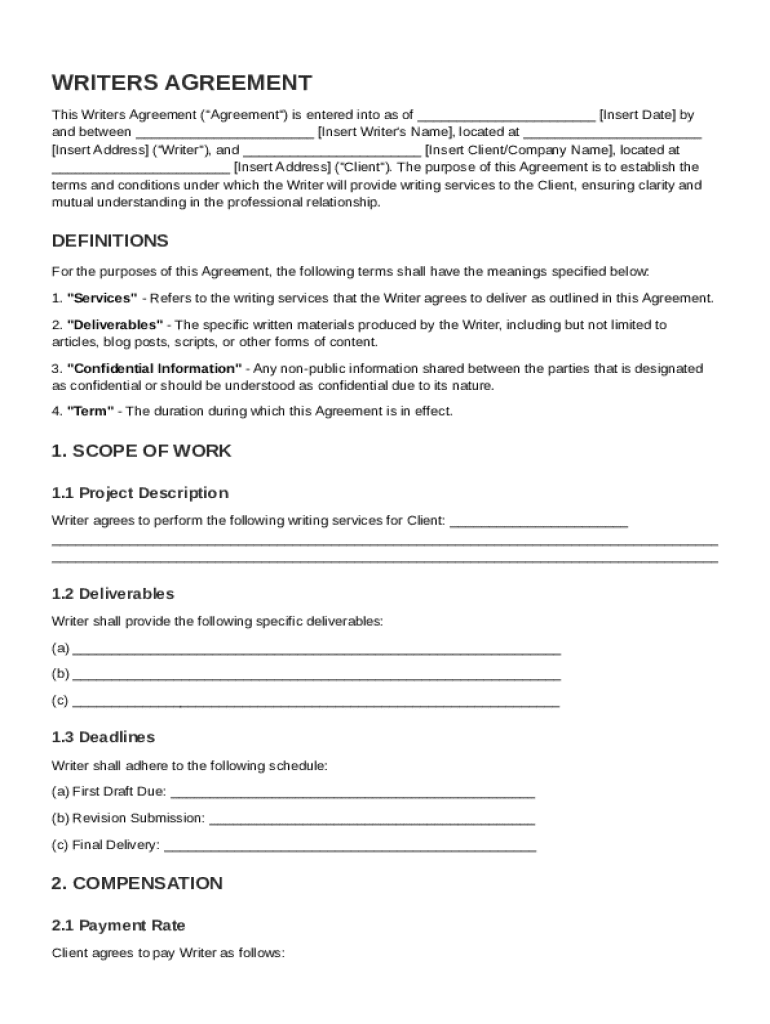







Definition and Meaning
A "Writers Agreement Template" serves as a foundational document outlining the terms and conditions between a Writer and a Client. It clearly defines the roles, responsibilities, and expectations of both parties in the provision of writing services. The template typically covers essential topics such as the scope of work, timelines, compensation, revision processes, and ownership rights. This agreement aims to establish a mutual understanding and helps prevent potential disputes by documenting every crucial aspect of the professional relationship.
Key Elements of a Writers Agreement
-
Scope of Work: Clearly outlines the type of writing work to be performed, including specific genres or subjects.
-
Compensation: Details payment terms, including the amount, payment schedule, and any conditions that might affect payment like the completion of certain milestones.
-
Deadlines: Specifies timelines within which the writing work should be completed and delivered.
-
Ownership Rights: States who owns the intellectual property resulting from the written content and under what terms it may be used or distributed.
-
Confidentiality: Addresses any requirements for keeping certain information private, ensuring that sensitive details remain secure.
-
Revisions and Modifications: Details the process for requesting changes to the work, including the number of allowed revisions and what constitutes a substantial revision.
-
Termination Clause: Outlines the conditions under which the agreement may be terminated by either party and any consequences that may result from early termination.
How to Use the Writers Agreement Template
Using a Writers Agreement Template involves a series of steps to customize the document to suit both parties involved. Here’s how you can effectively utilize the template:
-
Personalize the Template: Start by filling in the personal and business details of both the Writer and the Client. Ensure all relevant contact information is accurate.
-
Define the Scope: Clearly articulate the nature of the writing work to be undertaken, including genres, word counts, and any specific themes or subjects.
-
Negotiate and Fill in Terms: Discuss with the client the agreed-upon compensation, deadlines, and any necessary revisions, and input these specifics into the template.
-
Discuss Ownership and Confidentiality: Make sure both parties agree on who will retain rights to the written material and address any confidentiality concerns.
-
Finalize and Sign: After all details have been filled out and agreed upon, both parties should sign the document. This can often be done digitally using platforms like DocHub, which supports legally binding electronic signatures.
Key Elements of the Writers Agreement Template
A comprehensive Writers Agreement Template should include several key elements that ensure clarity and protect the interests of both parties:
Scope of Work
This section should be detailed, covering all the specific projects or pieces of writing the writer is tasked to complete. It should outline every aspect of writing to ensure that expectations are met.
Deadlines
Timeliness is crucial, and this section should specify exact deadlines for the submission of each piece of work. It may also include milestones for longer projects to keep everything on track.
Compensation
This section details how much the writer will be paid and when. It should specify whether payments will be made per word count, per completed piece, or on an hourly basis, including any conditions for payment.
Ownership and Intellectual Property
Define who will hold the rights to the written content after it is completed. This section often stipulates that the client owns the material upon payment.
Confidentiality Clauses
If sensitive information is exchanged during the project, a confidentiality clause is essential. This protects the client’s proprietary information and ensures that it is not disclosed without consent.
Revision and Feedback Process
This section outlines how feedback will be given and the process for making revisions. It often specifies how many revisions are included in the initial agreement.
Steps to Complete the Writers Agreement Template
Completing a Writers Agreement Template involves the following precise steps:
-
Initial Contact and Negotiation: Before filling in the template, the writer and client should discuss their expectations and negotiate terms.
-
Complete Personal Information: Start with detailed personal and business information for both parties.
-
Define Work Scope and Terms: Clearly outline the writing deliverables, deadlines, and specific terms like revisions and confidentiality.
-
Review Ownership and Legal Clauses: Ensure both parties understand the implications of the ownership terms and any legal provisions included.
-
Finalize the Document: After agreeing on all terms, both parties should review the document thoroughly.
-
Sign the Agreement: Utilize platforms such as DocHub to electronically sign the agreement, ensuring it is legally binding and secure.
Important Terms Related to Writers Agreement Template
Understanding the terminology within a Writers Agreement Template is crucial for effective use. Some important terms include:
-
Intellectual Property Rights: Legal rights that dictate the ownership and usage of the created content.
-
Non-Disclosure Agreement (NDA): A contract ensuring that any shared confidential information remains protected.
-
Revisions Clause: Specifies the number and scope of content changes included in the original agreement without additional charges.
-
Force Majeure: A common clause that frees both parties from liability or obligation when an extraordinary event or circumstance beyond their control occurs.
-
Indemnity Clause: Provision where the writer agrees to protect the client from any legal action resulting from the negligence or wrongful act of the writer in the course of performing their duties.
Why Use a Writers Agreement Template
Having a Writers Agreement Template in place offers several benefits, including but not limited to:
-
Clear Terms: Provides both parties with clear, written confirmation of the terms of the writing project.
-
Dispute Prevention: Helps prevent disputes by serving as a reference for the terms agreed upon at the start of the project.
-
Professionalism: Demonstrates professionalism and commitment, fostering trust between the writer and client.
-
Legal Protection: Offers a layer of legal protection for both parties by clearly defining roles and expectations.
-
Efficiency: Streamlines the process of setting up agreements, saving time and potential back-and-forth communication.
Examples of Using the Writers Agreement Template
Utilizing a Writers Agreement Template in various scenarios can offer reliable solutions for freelance writers or agencies:
-
Freelance Writing: A freelance writer engaging with multiple clients can use the template to ensure consistent terms across various projects.
-
Content Agencies: Agencies hiring writers can standardize their agreement process, ensuring all parties understand what is expected.
-
Publishing Industry: When collaborating with a writer on a one-time book deal or article, the agreement helps solidify terms of compensation and rights.
-
Corporate Content Creation: Companies hiring external writers for marketing content or white papers benefit by ensuring that all intellectual property rights are addressed in advance.




