






Definition and Purpose of the Contractor Non-Compete Agreement
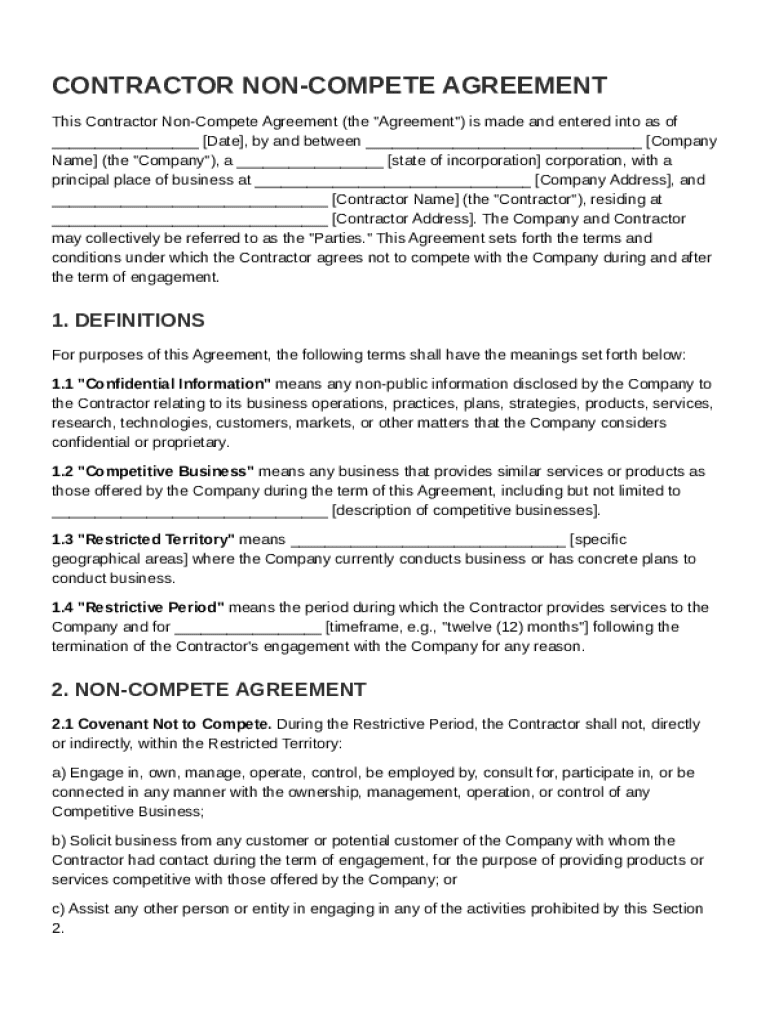
A Contractor Non-Compete Agreement is a legal document that outlines the terms under which a contractor agrees not to compete with a company during their engagement and for a specified period afterward. Key components of the agreement typically include definitions of 'Confidential Information,' 'Competitive Business,' and 'Restricted Territory.' The primary goal of this agreement is to protect a company's proprietary information and intellectual property by preventing the contractor from engaging in competitive activities. Additionally, it may include terms to prohibit the solicitation of customers or support of competing entities within a defined timeframe and geographic area.
Key Elements of the Contractor Non-Compete Agreement
The typical elements of a Contractor Non-Compete Agreement include:
- Parties Involved: Clearly specifies the contracting party and the contractor.
- Non-Compete Clause: Describes the activities that are considered competitive.
- Confidentiality Obligations: Outlines what information must remain confidential.
- Timeframe and Geographical Scope: Sets the duration and location restrictions.
- Governing Law: Identifies the legal jurisdiction overseeing the agreement.
Each element serves to protect the company's interests and provide a clear framework for enforcement.
How to Use the Contractor Non-Compete Agreement Template
To effectively utilize this template, follow these steps:
- Customize the Agreement: Input the specific names, roles, and details of the parties involved. Adjust clauses to fit the company's specific needs.
- Define Key Terms: Clearly define terms unique to your agreement, such as 'Competitive Business' or 'Trade Secrets.'
- Specify the Non-Compete Details: Clearly lay out what actions and businesses are restricted.
- Set the Duration and Territory: Decide on a reasonable time limit and geographical area that the contractor cannot engage in competitive activities.
- Review Legal Compliance: Ensure the agreement aligns with state-specific laws to maintain enforceability.
Important Terms Related to Contractor Non-Compete Agreements
Understanding the terminology within a non-compete agreement is crucial:
- Confidential Information: Includes trade secrets, client lists, and proprietary data.
- Competitive Business: Any business directly competing or intending to compete with the company's operations.
- Restricted Territory: Defines the geographical limits in which the contractor cannot engage in competitive activities.
- Solicitation: Refers to the contractor approaching clients or employees of the company with competing offers.
These terms ensure clarity and precision within the agreement.
Legal Use of the Contractor Non-Compete Agreement Template
The legal validity of a Contractor Non-Compete Agreement depends on several factors:
- Reasonableness: Courts typically assess the reasonableness of the scope, duration, and geographic restriction.
- Legitimate Business Interests: The agreement must protect a valid business interest, such as safeguarding sensitive information.
- State Compliance: The enforceability can vary significantly based on state laws, which may require careful tailoring.
Ensuring these factors are adequately addressed can enhance the agreement's legal strength.
State-Specific Rules for Contractor Non-Compete Agreements
The enforceability of non-compete agreements tends to vary by state:
- California: Generally does not enforce non-compete clauses.
- Texas: Requires a reasonable scope and legitimate business justification.
- New York: Focuses on protecting bona fide interests without undue restriction on the contractor.
Understanding the specific requirements and restrictions in different states is critical for drafting a legally enforceable agreement.
Examples of Using the Contractor Non-Compete Agreement
Here are practical scenarios illustrating the agreement's application:
- Protecting Intellectual Property: An IT company uses the agreement to prevent a contractor from disclosing software code to competitors.
- Retaining Clients: A marketing firm enforces the agreement to stop a consultant from approaching their clients after contract termination.
- Geographical Limitations: A regional business imposes territorial limits to protect its local market share.
These examples demonstrate how companies leverage non-compete agreements to secure their interests.
Versions or Alternatives to the Contractor Non-Compete Agreement Template
Different versions or alternatives to a Contractor Non-Compete Agreement may include:
- Non-Disclosure Agreements (NDAs): Focuses solely on maintaining confidentiality of information.
- Non-Solicitation Agreements: Prevents the contractor from soliciting the company's clients or employees.
- Garden Leave Clauses: Compensates a contractor for not engaging in business activities during a notice period.
Selecting the most suitable contract depends on the specific needs and goals of the business.
Who Typically Uses the Contractor Non-Compete Agreement Template
Various entities and individuals might find this agreement advantageous:
- Tech Companies: To safeguard product development and proprietary algorithms.
- Consulting Firms: To protect client relationships and strategic methodologies.
- Manufacturing Businesses: To prevent the sharing of production processes and trade secrets.
Using this agreement provides a legal framework to shield sensitive business facets across numerous industries.