Definition and Meaning of a Cover Page Contract Template
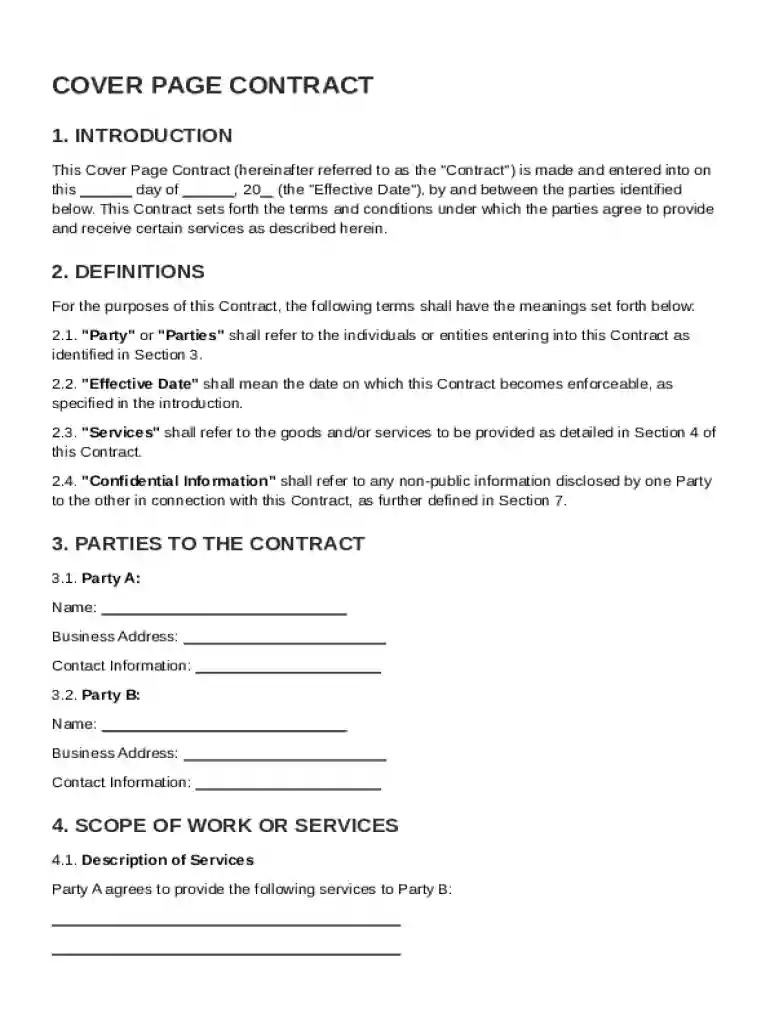
A Cover Page Contract Template is a structured document that outlines the essential terms and conditions between two parties engaging in a service agreement. The template typically includes key clauses such as scope of work, payment terms, confidentiality obligations, dispute resolution processes, and amendment protocols. It serves as a foundational document providing clarity and mutual understanding regarding the roles, responsibilities, and expectations of each party involved. By standardizing these elements, it reduces ambiguity and helps streamline the contract negotiation process.
Key Components of the Template
- Scope of Work: Defines the services to be provided, including detailed descriptions of tasks and deliverables.
- Compensation: Lays out the payment structure, encompassing method, frequency, and terms of payment.
- Confidentiality: Sets forth obligations to protect sensitive information exchanged between parties.
- Dispute Resolution: Provides a mechanism for resolving disagreements, often including mediation or arbitration clauses.
- Amendments: Specifies that any changes to the contract must be in writing and endorsed by both parties.
- General Provisions: Encompasses miscellaneous terms such as jurisdiction, severability, and assignment rights.
Usage Instructions for the Cover Page Contract Template
The Cover Page Contract Template is designed for easy customization, allowing users to tailor the document to fit specific agreements. To effectively use the template, follow these steps:
- Review the Template: Begin by thoroughly reading the entire document to understand its structure and content.
- Customize Sections: Input specific details regarding parties, services, and terms. Ensure the scope of work and compensation sections reflect the exact agreement.
- Integrate Additional Clauses: If necessary, add clauses unique to your industry or transaction type that are not covered in the standard template.
- Legal Review: Consider having the final draft reviewed by a legal professional to ensure compliance with relevant laws and regulations.
- Final Agreement: Once complete, both parties should review and execute the document through signatures.
Examples of Customization
- Industry-specific Terms: A technology consultancy may include clauses on intellectual property rights, while a construction company might add safety compliance terms.
- Variable Payment Terms: A freelance consultant might use milestone-based payments, whereas a monthly retainer might be suitable for ongoing services.
Obtaining the Cover Page Contract Template
Securing a Cover Page Contract Template can be achieved through various channels, ensuring accessibility for all types of users:
- Online Legal Services: Websites offering legal documents often provide customizable contract templates suitable for different industries and needs.
- Business Software: Document management platforms or business administration software suites may include templates as part of their offerings.
- Legal Consultations: Engaging with a law firm can provide a tailored template along with professional guidance.
Steps to Complete the Cover Page Contract Template
Follow these procedural steps to complete your Cover Page Contract Template efficiently:
- Input Party Information: Begin by entering the full legal names, addresses, and contact details of all parties involved.
- Define Services and Deliverables: Clearly articulate the specifics of the services to be rendered, including expected outcomes and deliverables.
- Detail Payment Terms: Outline how compensation will be managed, specifying amounts, invoicing procedures, and due dates.
- Address Confidentiality: Articulate which information is considered confidential and establish duties regarding its protection.
- Include Termination Conditions: State the scenarios under which the contract might be terminated and the resulting obligations for each party.
- Finalize Legal Provisions: Ensure all legal declarations, dispute resolution mechanisms, and governing laws are appropriately accounted for.
- Signatures: Procure signatures from all parties after conducting a comprehensive review for accuracy and clarity.
Important Terms Related to the Cover Page Contract Template
Understanding key terminologies associated with the Cover Page Contract Template fosters clearer communication and ensures that all parties are aligned:
- Effective Date: The date upon which the contract terms commence and become enforceable.
- Force Majeure: A clause that relieves parties from obligations due to events beyond their control, such as natural disasters.
- Indemnification: A provision requiring one party to compensate the other for any losses or damages incurred.
- Severability: A provision stating that if parts of the contract are found to be invalid, the remaining sections shall still apply.
Clarifying these terms at the onset can mitigate misunderstandings and reinforce a robust contractual relationship.
Legal Use of the Cover Page Contract Template
The legal enforceability of the Cover Page Contract Template hinges on several factors:
- Adherence to the Law: Contracts must comply with applicable federal and state laws to be considered valid.
- Mutuality: Both parties must agree to the terms laid out in the contract for it to be binding.
- Consideration: These are the benefits or detriments exchanged between parties, forming the essence of the contract.
- Capacity: Parties must have the legal ability to enter into a contract, meaning they are of sound mind and not a minor or explicitly restricted.
Understanding these elements ensures that the contract serves its intended legal function effectively.
Practical Legal Scenarios
- A startup wants to ensure its strategic partnership agreement includes a non-disclosure clause to protect its confidential business plans.
- A consultant offering services across state lines incorporates state-specific provisions to meet varied jurisdictional requirements.