
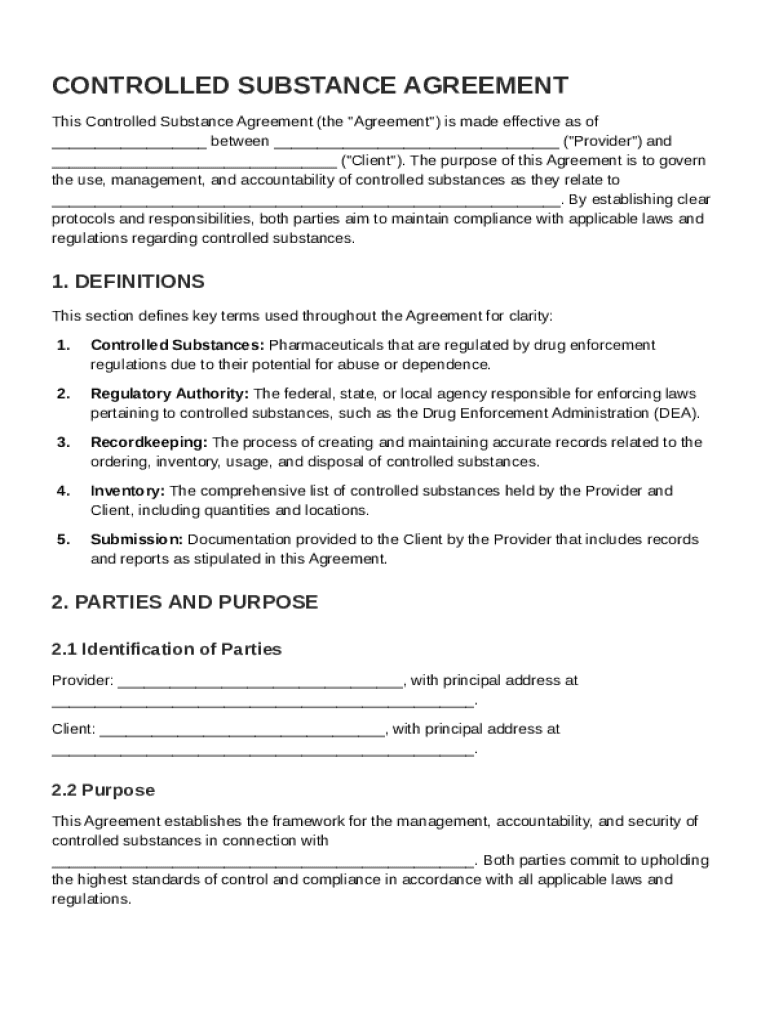







Definition & Meaning
The Controlled Substance Contract Template serves as a formal agreement between a healthcare provider and a patient, establishing guidelines for the prescription and use of controlled substances. Its primary purpose is to ensure that both parties comply with legal and medical standards regarding the safe and effective use of these substances. Typically used in pain management settings, the contract outlines obligations, expectations, and consequences for misuse. This agreement is essential for documenting mutual understanding and promoting accountability while minimizing the risks associated with controlled substance use.
Key Elements of the Controlled Substance Contract Template
A Controlled Substance Contract Template generally includes several critical components.
- Identification Information: Details about the provider and patient, including names, addresses, and contact information.
- Purpose & Scope: Explanation of the treatment plan, goals, and expected outcomes.
- Prescribing Guidelines: Clear terms on dosages, prescription refills, and protocol for medication changes.
- Monitoring and Compliance: Procedures for drug testing, pill counts, and appointment schedules to ensure ongoing compliance.
- Patient Responsibilities: Requirements for securely storing medication, prohibitions on sharing, and mandatory reporting of lost or stolen medications.
- Provider Responsibilities: Commitment to managing the patient's treatment plan responsibly, including regular monitoring and adjustments as needed.
- Consequences of Breach: Potential outcomes if terms are violated, including termination of treatment or notification of authorities.
Steps to Complete the Controlled Substance Contract Template
Completing the Controlled Substance Contract Template involves several steps to ensure accuracy and compliance:
- Gather Information: Collect essential details from both the provider and the patient, such as identification and contact information.
- Review Terms: Go through each section of the contract with the patient to ensure understanding of the terms, including prescribing practices and compliance responsibilities.
- Customize the Agreement: Tailor the contract to suit specific medical needs and legal requirements, incorporating any state-specific regulations.
- Signatures: Obtain signatures from both parties to confirm agreement and mutual understanding of the contract's terms.
- Provide Copies: Ensure both the provider and patient receive a signed copy of the contract for their records.
- Schedule Follow-up: Plan for regular reviews and updates as necessary to adapt to any changes in the patient's condition or treatment plan.
Legal Use of the Controlled Substance Contract Template
The Controlled Substance Contract Template must align with all applicable federal and state laws governing the prescription and use of controlled substances. Providers using this template should:
- Ensure it complies with state-specific regulations, which can vary in terms of documentation, monitoring, and reporting requirements.
- Adhere to the Controlled Substances Act (CSA) and other federal guidelines that govern prescription practices.
- Update the template regularly to reflect changes in laws and regulations to maintain its legal enforceability.
Who Typically Uses the Controlled Substance Contract Template
This template is primarily used by:
- Healthcare Providers: Physicians, nurse practitioners, and pain management specialists involved in prescribing controlled substances.
- Patients: Individuals undergoing long-term treatment that includes the management of pain or other conditions requiring controlled substances.
- Healthcare Facilities: Clinics and hospitals that provide structured treatment plans involving controlled substances to ensure standardized practices.


How to Use the Controlled Substance Contract Template
Using the Controlled Substance Contract Template effectively involves several strategic steps:
- Assessment and Planning: Before formalizing the contract, a thorough assessment of the patient's medical history and treatment needs should be conducted.
- Educational Briefing: Providers should educate patients about the risks and responsibilities associated with controlled substances, ensuring they fully understand their role.
- Regular Monitoring and Updates: Continuously monitor patient adherence to the agreement and update the contract as necessary to reflect any treatment changes or emerging concerns.
State-Specific Rules for the Controlled Substance Contract Template
Each state in the U.S. may have unique rules regarding controlled substances, which necessitate specific adaptations of the template:
- Documentation Requirements: Varying documentation obligations related to patient agreements and record-keeping.
- Monitoring Protocols: Different states may have distinct requirements for drug testing or prescription monitoring systems.
- Additional Clauses: States might require the inclusion of additional clauses to address specific local legislative requirements.
Examples of Using the Controlled Substance Contract Template
Real-world applications of the Controlled Substance Contract Template include:
- Pain Clinics: Utilizing the template to establish clear terms with patients managing chronic pain, ensuring compliance and reducing risks.
- Rehabilitation Centers: Applying the contract as part of a broader treatment strategy for patients overcoming substance misuse issues.
- Specialized Medical Groups: Implementing the template within specialized practices such as oncology or orthopedics, where long-term controlled substance use may be necessary.




