01. Edit your form online
Type text, add images, blackout confidential details, add comments, highlights and more.

Type text, add images, blackout confidential details, add comments, highlights and more.

Draw your signature, type it, upload its image, or use your mobile device as a signature pad.

Send it via email, link, or fax. You can also download it, export it or print it out.
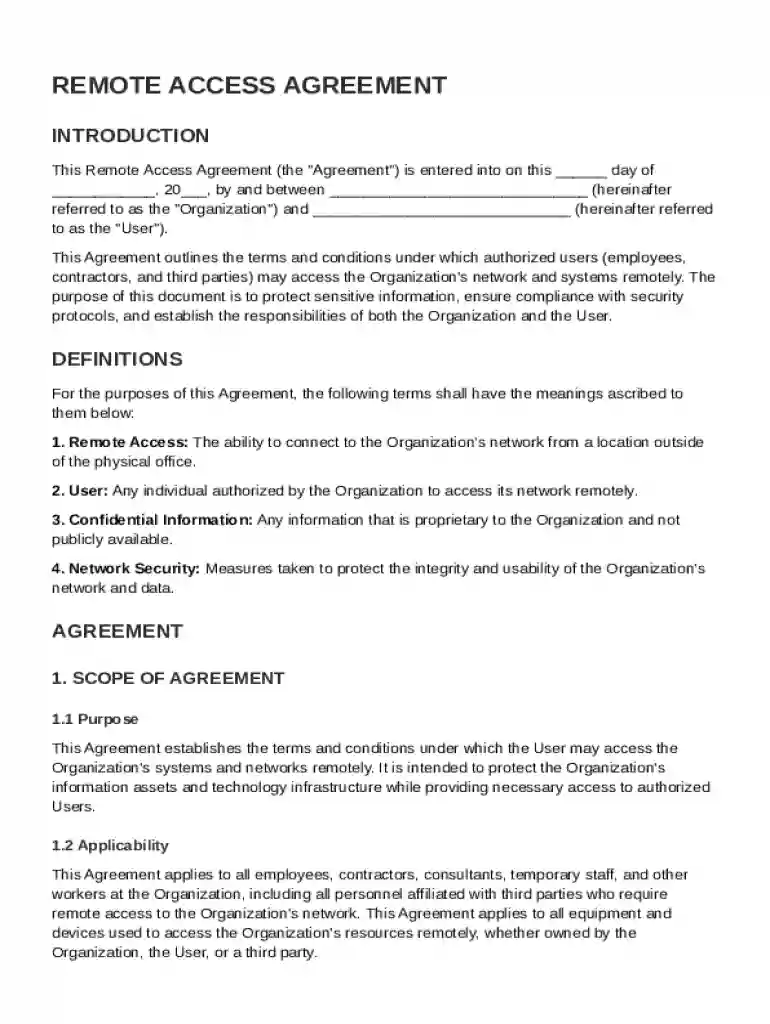
The Remote Access Agreement Template is an essential document that outlines the terms and conditions for authorized access to an organization's network from remote locations. This agreement serves to delineate responsibilities and expectations for both the organization and users. It comprehensively defines key terms and establishes protocols for ensuring network security, confidentiality, and compliance. By adhering to this agreement, organizations can control access to their sensitive information and maintain the integrity of their systems while allowing necessary remote connectivity.
Using the Remote Access Agreement Template requires careful consideration of various factors to tailor it to organizational needs. Begin by reviewing the default language and sections in the template, ensuring it aligns with your company's policies and requirements. Customize sections such as user roles, access level definitions, and specific security measures. Managers should collaborate with IT and legal teams to adapt the agreement accurately. Once customized, distribute it to relevant parties, ensuring all users comprehensively understand and agree to the outlined conditions before being granted access.
The template consists of several critical components that establish a framework for secure remote access. These elements include:
Completing the Remote Access Agreement Template involves several steps:
Organizations that permit employees and third-party contractors to access their networks remotely typically use this template. IT departments and HR personnel frequently handle the coordination and enforcement of this agreement. It serves businesses of various sizes and industries, particularly those with a mobile or remote workforce, such as tech firms, consultancies, and customer service centers.


Ensuring the legal integrity of the Remote Access Agreement Template is crucial. The document should comply with applicable U.S. federal and state regulations concerning data protection and cybersecurity. Organizations must ensure the agreement respects privacy legislation such as the General Data Protection Regulation (GDPR) if they operate internationally alongside U.S. laws like the Computer Fraud and Abuse Act (CFAA). Consulting legal counsel to confirm compliance is advisable.
Although the agreement primarily follows federal guidelines, some states may impose additional requirements or adjustments. For instance, states like California, with stringent data privacy laws, may necessitate additional clauses related to the California Consumer Privacy Act (CCPA). Ensure to verify specific state regulations to maintain compliance with local statutes and amend the agreement accordingly.
Understanding key terms within the agreement can aid clarity and comprehension:
At DocHub, your data security is our priority. We follow HIPAA, SOC2, GDPR, and other standards, so you can work on your documents with confidence.