






Definition and Meaning
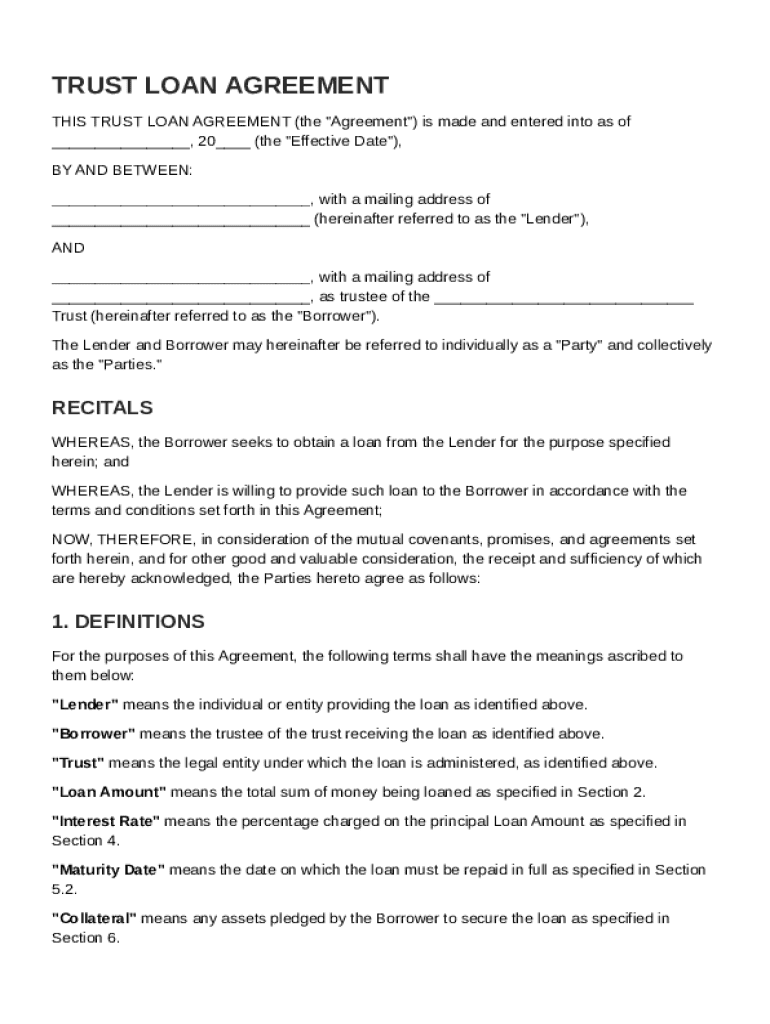
A Trust Loan Agreement Template serves as a foundational legal document outlining the specific terms and conditions under which a lender provides a loan to a borrower serving as a trustee for a specified trust. This form ensures that both parties have a clear understanding of their obligations and protections within the agreement. The template not only clarifies the roles but also details the functions of the lender, borrower, and the trust itself. By establishing a formal structure, it aids in avoiding potential misunderstandings between the parties involved.
The agreement typically contains various sections, including definitions of key terms, the loan amount, the interest rate, and the repayment schedule. It is designed to be adaptable, allowing parties to customize particular elements to match the specific needs of their trust arrangement. The ability to tailor this document makes it a valuable tool for accurately capturing the intentions of all stakeholders involved.
Key Elements of the Trust Loan Agreement Template
The Trust Loan Agreement Template contains several essential components that provide a comprehensive framework for the loan transaction. Key elements typically include:
- Loan Amount and Purpose: Clearly states the principal amount loaned and outlines the intended use of the funds within the trust context.
- Interest Rate and Repayment Schedule: Defines the interest rate applied to the loan and delineates the repayment terms. This ensures clarity on how and when payments are to be made.
- Collateral Requirements: Specifies any trust assets pledged as security for the loan, detailing conditions under which the collateral may be utilized.
- Representations and Warranties: Includes assurances from both the lender and borrower concerning their authority and capacity to enter into the agreement.
- Events of Default and Remedies: Identifies scenarios constituting a default and outlines the actions available to the lender in such events.
- Governing Law and Amendments: States which state’s laws govern the agreement and the process for making modifications.
Steps to Complete the Trust Loan Agreement Template
- Identify Parties Involved: Clearly identify the lender and the borrower acting as the trustee.
- Define the Trust: Describe the trust involved in the agreement, including relevant details about its purpose and operation.
- Detail Loan Terms: Enter the principal amount, interest rate, and repayment terms.
- Specify Collateral: List any assets put up as collateral for the loan.
- Add Representations and Warranties: Ensure both parties include statements about their legal capacity to engage in the agreement.
- Outline Default Conditions: Clearly define what constitutes a default and the potential remedies.
- Finalize Governing Laws: Specify the state laws applicable to the agreement and outline the amendment process.
Legal Use of the Trust Loan Agreement Template
The Trust Loan Agreement Template is a legally binding document once signed by the involved parties. Its primary legal function is to formalize the agreement between the trustee and lender, ensuring compliance with applicable state laws. It is crucially important that both parties fully understand the contents and implications of the template before signing. Legal counsel is often recommended to assist in tailoring the document to fit specific legal requirements and to ensure adherence to commitments outlined in the agreement.
Furthermore, this template incorporates provisions necessary to render any electronic signatures legally binding under the federal ESIGN Act, ensuring the document’s enforceability. As a result, it serves as a formal declaration of terms agreed upon by all parties.
Who Typically Uses the Trust Loan Agreement Template
Typically, the Trust Loan Agreement Template is used by individuals and entities acting as trustees, lenders offering loans to trusts, and legal professionals involved in the preparation and execution of trust-related agreements.
- Trustees: Looking to procure funds for the benefit of the trust.
- Lenders: Financial institutions or private investors seeking to formalize the conditions of loan disbursement to a trust.
- Legal Advisors: Assisting clients in ensuring structure, compliance, and due diligence inthe loan agreement process.


State-Specific Rules for the Trust Loan Agreement Template
A noteworthy aspect of the Trust Loan Agreement Template is that it must adhere to the laws governing the state in which the trust is established or operates. These laws can significantly influence various aspects of the agreement, including the enforcement of terms, collateral requirements, and default conditions.
It is essential to consider:
- Governing State Law: The agreement should explicitly state which state laws apply.
- Usury Laws: State-specific interest rate limitations must be complied with to prevent violations.
- Disclosure Requirements: These may vary by state and must be observed to ensure the agreement’s validity.
Consultation with a legal expert familiar with state-specific financial regulations is often recommended to navigate these complexities efficiently.
Examples of Using the Trust Loan Agreement Template
Real-world applications and case scenarios of the Trust Loan Agreement Template provide insight into its practical utility:
- Family Trusts: A parent loans money to a family trust to fund a child's education, outlining repayment terms to protect family equity.
- Land Trust Acquisitions: A trust borrows funds to purchase real estate, detailing how rental income will finance the repayment.
- Charitable Trusts: Philanthropic organizations receive loans to support community projects, specifying terms that ensure the sustainable allocation of resources.
Such examples highlight the template’s versatility and its critical role in creating legally sound financing arrangements for diverse trust types.
Required Documents for Completing the Trust Loan Agreement Template
To effectively deploy a Trust Loan Agreement Template, certain documents are generally required to ensure authenticity and accuracy:
- Trust Document: Provides details about the trust structure, including its purpose and beneficiaries.
- Identification: Legal identification for the trustee(s) and authorizing representatives from the lender.
- Collateral Documentation: Where applicable, documents supporting the pledged assets.
- Financial Statements: Relevant to the trust’s current financial status, aiding in establishing creditworthiness.
These documents not only support the completion of the form but also reinforce the integrity of the agreement.