






Definition and Meaning of Confidential Contract Template
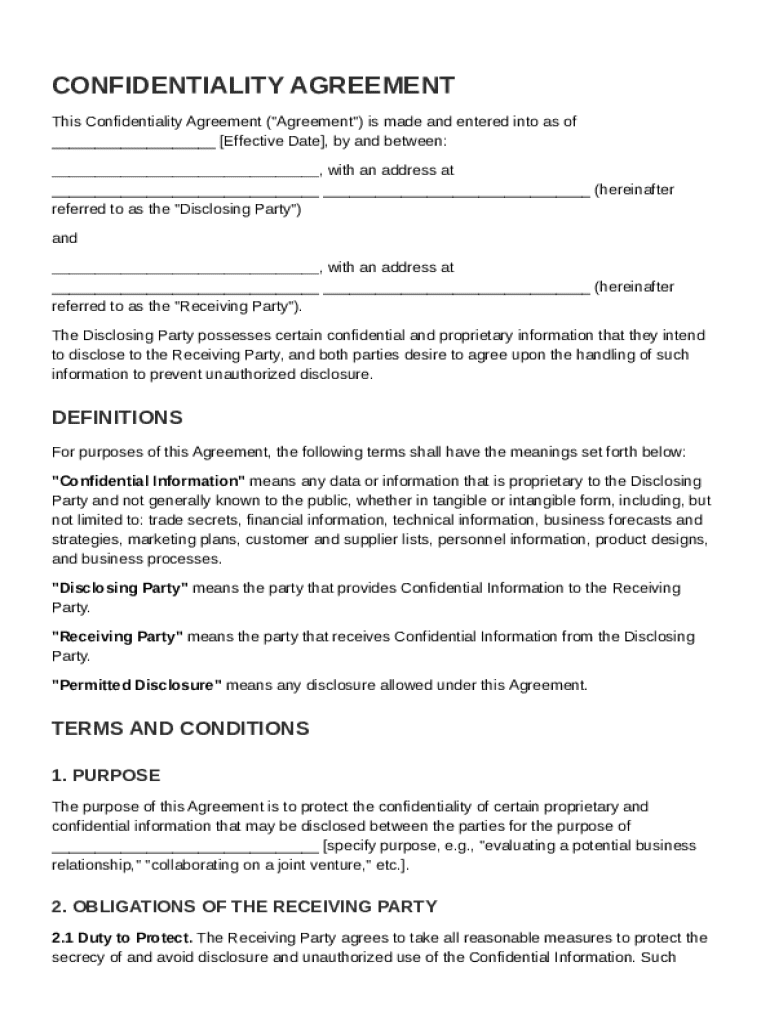
A Confidential Contract Template is a structured document designed to safeguard sensitive information shared between parties involved in a business relationship. This contract establishes clear definitions of 'Confidential Information,' which typically includes proprietary data, trade secrets, financial records, and other strategic insights that demand protection. The template serves as a foundational agreement setting forth legally binding obligations for each party to maintain the confidentiality of any shared information. By using a confidential contract, parties ensure that they are legally protected against unauthorized disclosure or use of their confidential information.
Key Components of the Definition
- Confidential Information: Clearly defined as any data or material deemed sensitive, proprietary, or otherwise restricted.
- Parties Involved: Typically includes the Disclosing Party, who owns the information, and the Receiving Party, who gains access to the data.
- Obligations: Legal responsibilities outlined for each party concerning the handling and protection of the information.
- Exclusions: Specific circumstances under which information may not be considered confidential (e.g., information already publicly available).
- Duration: Established timeframe during which the confidentiality obligations are in effect.
How to Use the Confidential Contract Template
Utilizing a Confidential Contract Template involves a systematic approach to ensuring that all critical elements are appropriately customized and executed. It is imperative for parties to understand and adapt specific sections of the template to align with their particular business context and requirements.
Customization Steps
- Identify the Parties: Clearly outline the Disclosing and Receiving Parties involved in the agreement.
- Define Confidential Information: Specify the type of information that needs protection within the business transaction.
- State the Purpose: Include the business purpose or context that necessitates sharing confidential data.
- Set Terms and Conditions: Establish clear terms covering use, disclosure, and protection mechanisms.
- Include Consequences of Breach: Detail penalties or remedies if confidentiality terms are violated.
Practical Application
- Example: In a scenario where a tech firm is sharing development insights with a marketing agency, the template would specify that product roadmaps and financial forecasts are confidential.
- Review Process: Legal experts or advisors should review the document to ensure compliance with local laws and regulations.
Steps to Complete the Confidential Contract Template
Completing the Confidential Contract Template involves collaborating with all parties to ensure mutual understanding and agreement. It is crucial that each section is diligently filled out with accurate information reflecting the intentions and expectations of the contract.
Completion Process
- Gather Information: Obtain all necessary details regarding the confidential data and parties involved.
- Review Template Sections: Carefully examine each part of the template to identify where tailor-made changes are needed.
- Fill Out Details: Accurately input each piece of information into the template, ensuring clarity and completeness.
- Consult with Legal Counsel: Engage a legal expert to evaluate the document for compliance and enforceability.
- Execute the Agreement: All involved parties should sign the document, formalizing their commitment to the confidentiality terms.
Specific Examples
- Business Acquisition: When two companies are negotiating a merger, filling out the template ensures that proprietary technologies and client lists remain secure during discussions.
- Collaboration Project: For joint ventures, the template outlines what technical data can be shared without posing a risk to either party.
Key Elements of the Confidential Contract Template
A standard Confidential Contract Template features essential clauses that secure the interests of the parties. These elements collectively guarantee a robust framework for confidentiality provisions.
Essential Clauses
- Definitions: Critical terminologies and their interpretations within the context of the agreement.
- Obligations of the Parties: Duties and responsibilities related to handling confidential information.
- Exclusions from Confidentiality: Circumstances where information is not bound by confidentiality rules.
- Return or Destruction of Information: Procedures post-contract for handling sensitive data.
- Governing Law: Legal jurisdiction governing the interpretation and enforcement of the contract.
Real-World Context
- Technology Transfer: In agreements involving the sharing of technical patents or know-how, the clauses provide a legal backdrop to prevent misuse of transferred data.
- Research and Development: Collaborations between scientific institutions use these templates to protect experimental data and proprietary methodologies.
Legal Use of the Confidential Contract Template
The legal enforceability of a Confidential Contract Template ensures that parties have a reliable means to protect intellectual property and proprietary information. These contracts form part of a strategic legal framework in business operations.
Legal Considerations
- Compliance with Laws: The contract must conform to federal and state laws enforcing confidentiality agreements.
- Remedies for Breach: Defines legal recourse available to the injured party in the event of a contract breach.
- Data Protection Regulations: Alignment with statutes such as the California Consumer Privacy Act (CCPA) for data protection.
Legal Scenarios
- Litigation Case Study: In an instance where a start-up sues for breach of confidentiality, the template serves as a pivotal document proving initial terms.
- Due Diligence Audits: During audits, these contracts authenticate the lawful exchange and protection of sensitive data.
Who Typically Uses the Confidential Contract Template
This template serves a broad spectrum of industries and professionals ranging from tech startups to legal and healthcare professionals. Certain sectors have a higher frequency of using these agreements due to the nature of their business activities.


Typical Users
- Technology Companies: To safeguard intellectual property during development cycles and partnerships.
- Legal Professionals: Lawyers and law firms utilize these to protect client-attorney communications.
- Health Care Organizations: For maintaining the privacy of patient records and proprietary medical methodologies.
User Scenarios
- Academic Collaborations: Research universities implementing joint studies with external partners.
- Corporate Alliances: Multinational corporations entering strategic partnerships prefer these contracts to protect sensitive information exchanges.
State-Specific Rules for the Confidential Contract Template
While confidentiality agreements are standard across the United States, certain states have specific regulations that affect how these contracts are drafted and enforced.
Regional Regulations
- California: Additional compliance may be necessary with unique regulations such as the California Consumer Privacy Act (CCPA).
- New York: Offers stringent guidelines on the scope and enforceability of confidentiality clauses.
Geographic Differences
- Texas vs. Massachusetts: Different jurisdictions may have varied interpretations, particularly concerning non-compete clauses often integrated into these agreements.
- Nevada: Certain state laws mandate disclosure of any third-party involvement in the handling of sensitive information.
Software Compatibility for Confidential Contract Template
The Confidential Contract Template is designed to be versatile and compatible with various software, ensuring that users can conveniently draft, edit, and distribute the document.
Supported Software Platforms
- DocHub: Facilitates seamless editing and collaboration directly online with robust security features.
- Microsoft Word: Widely used for creating and modifying templates, allowing easy access for most users.
- Google Docs: Offers cloud-based editing and sharing, simplifying remote collaborations.
Technical Integration
- PDF Conversion: Convert the template into a PDF for secure distribution and limited editing.
- Secure Storage: Use platforms like Google Drive for encrypted storage and sharing with relevant parties.
By addressing each of these crucial aspects, the Confidential Contract Template ensures comprehensive protection of confidential information, adapting to a wide array of business scenarios and legal environments.