






Definition and Meaning
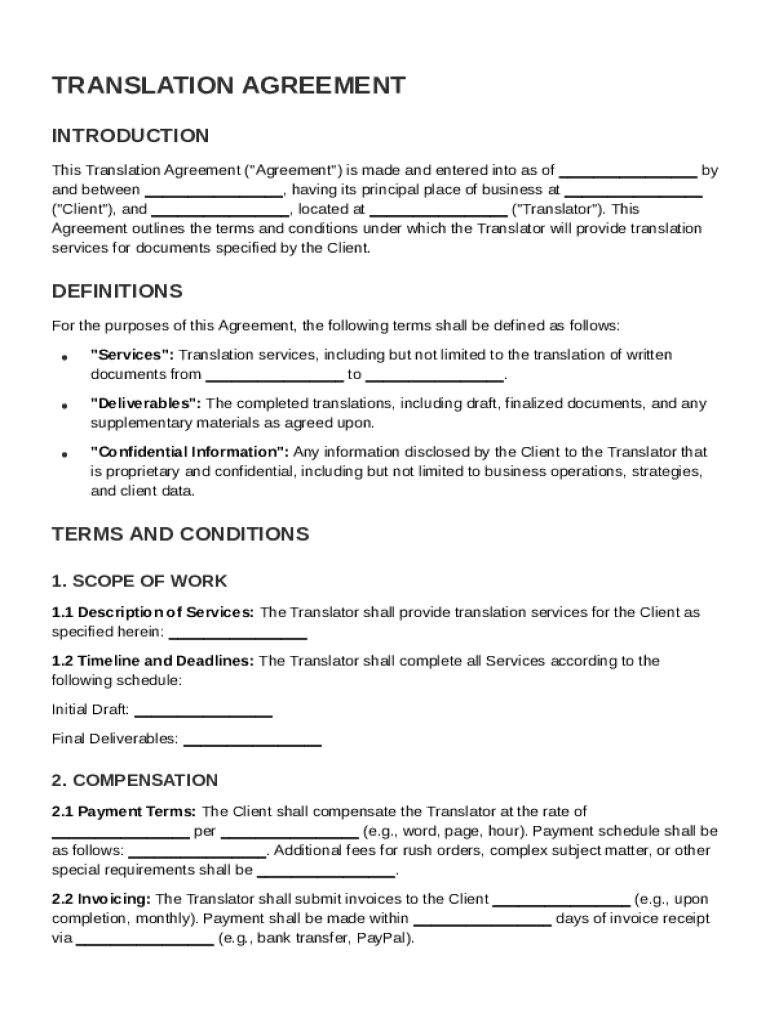
The Translation Agreement Template is a formal document used to establish a mutual understanding between a client and a translator regarding the provision of translation services. This template typically includes sections on the scope of work, payment terms, confidentiality clauses, and intellectual property rights. By clearly defining responsibilities and expectations, the agreement helps to mitigate potential disputes and ensures that both parties are aligned in their objectives and obligations.
Key Components
- Scope of Work: This section outlines the specific services to be provided, including the languages involved, the type of content to be translated, and any particular instructions or guidelines the translator should follow.
- Compensation and Payment Terms: This part details how much the translator will be paid, when payments will be made, and any contingencies or variations in payment based on work volume or quality.
- Confidentiality Obligations: To protect the privacy of the client and safeguard sensitive information, there are clauses that highlight the translator’s duty to maintain confidentiality.
- Intellectual Property Rights: This section specifies who retains ownership of the translated material, ensuring that rights are assigned correctly as per the agreement.
How to Use the Translation Agreement Template
Utilizing the Translation Agreement Template involves a series of straightforward steps that guide both parties through the drafting and finalization of their terms of engagement.
- Customize the Template: Begin by personalizing the document to fit your specific needs. This includes filling in the names of the involved parties, project details, and any special terms unique to the transaction.
- Define Responsibilities: Clearly document the tasks assigned to the translator, including deadlines, formats, and any pertinent instructions.
- Review Legal Clauses: Both parties should thoroughly read the legal jargon included in the document to understand implications, especially relating to liability, indemnity, and dispute resolution.
- Final Consent: Once all sections are properly filled out and agreed upon, both the client and the translator should sign the document to activate its legal standing.
Practical Tips
- Consult a Professional: Consider having a legal advisor review the agreement to ensure compliance with local regulations and accuracy.
- Record Keeping: Both parties should retain a copy of the signed agreement for future reference or in case of disputes.
Steps to Complete the Translation Agreement Template
Completing the Translation Agreement Template requires careful attention to detail, following a structured sequence to ensure accuracy and completeness.
- Basic Information Collection: Start by gathering all necessary information such as the names and contact details of both parties.
- Artwork Description: Clearly describe the written work or documents to be translated, which sets the stage for the assignment.
- Scope and Timeline Specification: Outline the specific work to be completed and agree on a timeline for delivery, defining milestones if applicable.
- Finalizing Terms and Signatures: Once the document is completed and reviewed, finalize the agreement with signatures from both parties to render it enforceable.
Important Considerations
- Ensure Clarity: Avoid ambiguity by using clear, concise language. Double-check for errors or omissions that could affect the agreement's enforceability.
- Real-time Adjustments: Use collaborative platforms like DocHub to make real-time changes and updates, streamlining the process before finalization.
Important Terms Related to Translation Agreement Template
Understanding the terminology associated with the Translation Agreement Template is essential for accurately interpreting its components and conditions.
Common Terms
- Client: The individual or organization requesting translation services.
- Translator: The professional responsible for converting the text from a source language to a target language.
- Source Material: The document or text submitted by the client for translation.
- Target Language: The language into which the source material is to be translated.
Legal Use of the Translation Agreement Template
The Translation Agreement Template serves a crucial legal purpose by establishing foundational legal protections for both the client and the translator.
Legal Benefits
- Liability Mitigation: Helps limit liability for both parties by clearly defining responsibilities and expectations.
- Dispute Resolution: Provides a framework for addressing disagreements, including mediation or arbitration processes.
- Compliance Assurance: Assists in ensuring that the translation services adhere to relevant laws and industry standards.
Regulatory Compliance
- Governing Law: Most agreements will specify the jurisdiction whose laws will govern the interpretation and enforcement of the contract.
- ESIGN Act Adherence: If used digitally, ensure the TAT complies with the requirements of the ESIGN Act for electronic signatures.
Key Elements of the Translation Agreement Template
Crucial elements within the Translation Agreement Template ensure a comprehensive and effective contract that safeguards interests and clarifies service delivery.
Critical Sections
- Revision Policies: Provisions for revising translated materials in cases where the client is dissatisfied with initial drafts.
- Termination Clauses: Details regarding the conditions under which either party may terminate the agreement without penalty.
- Governing Law: The specific legal framework under which the agreement will be interpreted and enforced.
Considerations for Inclusion
- Acknowledgment of Prior Work: Acknowledge previous works completed by the translator that may be relevant to the current job.
- Modification Protocols: Instructions on how amendments to the agreement should be handled.
State-Specific Rules for the Translation Agreement Template
State-specific requirements can vary, influencing how translation agreements are structured and implemented across different jurisdictions.
Regional Considerations
- Jurisdictional Variations: Some states may have unique rules regarding contract law that could influence agreement terms, such as the requirement for notarized signatures or specific legal disclaimers.
- Compliance Needs: Understanding local legal nuances can help avoid voiding the contract due to non-compliance with state-specific regulations.
Staying Updated
- Regular Revisions: Periodically review and update the agreement template to reflect any changes in state laws or industry standards.
- Legal Consultation: Seek advice from legal experts familiar with local requirements for document transactions.
Versions or Alternatives to the Translation Agreement Template
While the standard Translation Agreement Template addresses a wide array of common requirements, alternative or specialized versions may offer benefits in particular scenarios.
Alternative Templates
- Simplified Agreements: For small-scale tasks or one-time projects, a less comprehensive document might suffice, focusing on core essentials like work scope and compensation.
- Specialized Contracts: Industries like legal or medical fields may require agreements with specific clauses related to industry norms and sensitive content.
Choosing the Right Version
- Project Scale: For extensive projects involving numerous parties or complex subject matter, a detailed agreement is advisable.
- Customization Need: Select a template that offers the flexibility to add or remove sections to accommodate unique client or project requirements.