
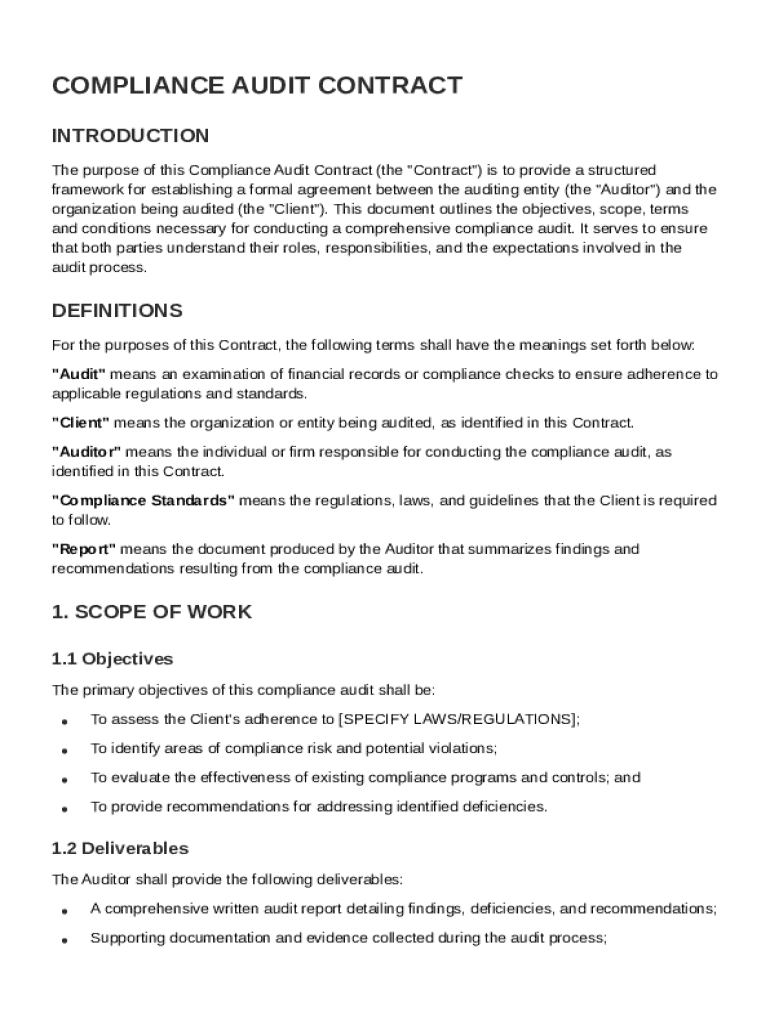







Definition and Purpose of a Compliance Audit Contract Template
A Compliance Audit Contract Template is a standardized document designed to formalize an agreement between an auditor and a client. It specifies critical elements such as the objectives, scope, and responsibilities of each party involved in the compliance audit process. This template serves as a foundation to ensure clarity and accountability, outlining payment terms, confidentiality obligations, and the conditions for termination. It also incorporates provisions for dispute resolution and indemnification, ensuring alignment with applicable laws. By using this template, both parties are better equipped to understand their roles, thereby facilitating a smoother audit process with minimized misunderstandings.
Key Elements of the Compliance Audit Contract Template
The comprehensive structure of a Compliance Audit Contract Template includes several essential elements:
- Objectives and Scope: Defines the purpose of the audit, including its extent and limitations.
- Responsibilities: Clarifies the roles and obligations of both the auditor and the client.
- Payment Terms: Details the financial arrangement, including fees, payment schedules, and any additional expenses.
- Confidentiality Obligations: Addresses the need to protect sensitive information, ensuring both parties adhere to privacy standards.
- Termination Conditions: Specifies the circumstances under which the contract can be ended by either party.
- Dispute Resolution: Outlines methods for addressing disagreements, such as mediation or arbitration.
- Indemnification Clauses: Protects both parties from potential liabilities arising from the audit process.
Each of these components is designed to safeguard the interests of both parties and ensure the audit process proceeds efficiently.
How to Use the Compliance Audit Contract Template
To effectively utilize the Compliance Audit Contract Template, follow these steps:
- Review the Template: Begin by thoroughly reading the entire document to understand its structure and content.
- Customize the Content: Modify sections as needed to reflect the specific details of the audit, including unique objectives, scope, and responsibilities.
- Consult Legal Advisors: It's advisable to have the draft reviewed by legal counsel to ensure it complies with applicable laws and fulfills your organization’s requirements.
- Finalize the Agreement: Once changes are made and approved, circulate the document to all relevant parties for final review and consent.
- Sign and File: After formal agreement, ensure that both parties sign the document. Keep a copy for records and reference.
By following these steps, you can ensure that the contract is tailored to your specific needs and legally sound.
Steps to Complete the Compliance Audit Contract Template
Completing a Compliance Audit Contract Template involves several key steps:
- Input Basic Information: Start by filling out identifying details such as the names of the auditor and client, contact information, and the date of the agreement.
- Detail the Audit Objectives: Clearly state the goals and intended outcomes of the audit.
- Define the Scope: Accurately describe the boundaries of the audit, including any exclusions or conditions.
- Outline Payment Terms: Specify the fees, payment schedules, and any additional costs that may arise.
- Address Confidentiality: Insert clauses that protect sensitive information and stipulate confidentiality obligations.
- Establish Termination Terms: Indicate the conditions under which the agreement can be terminated by either party.
- Include Dispute Resolution Processes: Provide clear pathways for resolving potential conflicts.
- Finalize and Review: Perform a comprehensive review for accuracy and completeness before obtaining signatures.
These steps ensure the contract is thorough, valid, and enforceable.
Legal Use of the Compliance Audit Contract Template
Legally, a Compliance Audit Contract Template functions as a binding agreement that must comply with relevant laws and regulations:
- Compliance with Laws: The contract must adhere to state and federal laws concerning contracts and audits.
- Legally Binding: Once signed, the agreement is enforceable, obligating both parties to adhere to its terms.
- Legal Review: To ensure legal validity, both parties should have their respective legal teams review the document before signing.
- Protection for Parties: By specifying terms like indemnification and dispute resolution, the contract legally protects both the auditor and the client from potential litigation or financial loss.
A well-drafted contract minimizes legal risks by ensuring clear communication and mutual understanding.
Who Typically Uses the Compliance Audit Contract Template
Various entities can benefit from using a Compliance Audit Contract Template:
- Corporations: Large businesses seeking to assure compliance with industry-specific regulations.
- Nonprofits: Organizations requiring audits for financial accountability or regulatory compliance.
- Government Agencies: Public sector entities conducting internal or external compliance assessments.
- Small Businesses: Enterprises aiming to maintain or improve regulatory adherence.
The template serves diverse users by providing a structured and formalized approach to compliance audits, ensuring all necessary details are captured and understood by all involved parties.


Examples of Using the Compliance Audit Contract Template
The Compliance Audit Contract Template can be applied in numerous scenarios:
- Environmental Compliance Audit: A manufacturing company uses the template to define the terms of an audit assessing adherence to environmental laws.
- Financial Compliance Review: A nonprofit organization engages an auditor to confirm compliance with financial reporting standards.
- Safety Regulation Compliance: A construction firm employs the template to support an audit on workplace safety compliance.
Each example demonstrates how the template provides a clear framework for various audit types, enabling effective communication and execution of the audit process.
State-Specific Rules for the Compliance Audit Contract Template
Compliance requirements can vary significantly from state to state. Here are some considerations:
- State Regulations: Each state may have its specific rules for audit practices and contract law, impacting how templates should be customized.
- Professional Standards: Auditors must adhere to state-specific professional standards which can affect contract terms, especially in industries like finance or healthcare.
- Legal Compliance: It’s crucial to ensure the contract satisfies all local, state, and federal legal requirements.
Familiarizing yourself with the relevant state-specific obligations can help prevent legal issues and ensure the compliance audit is conducted effectively.




