Definition & Meaning
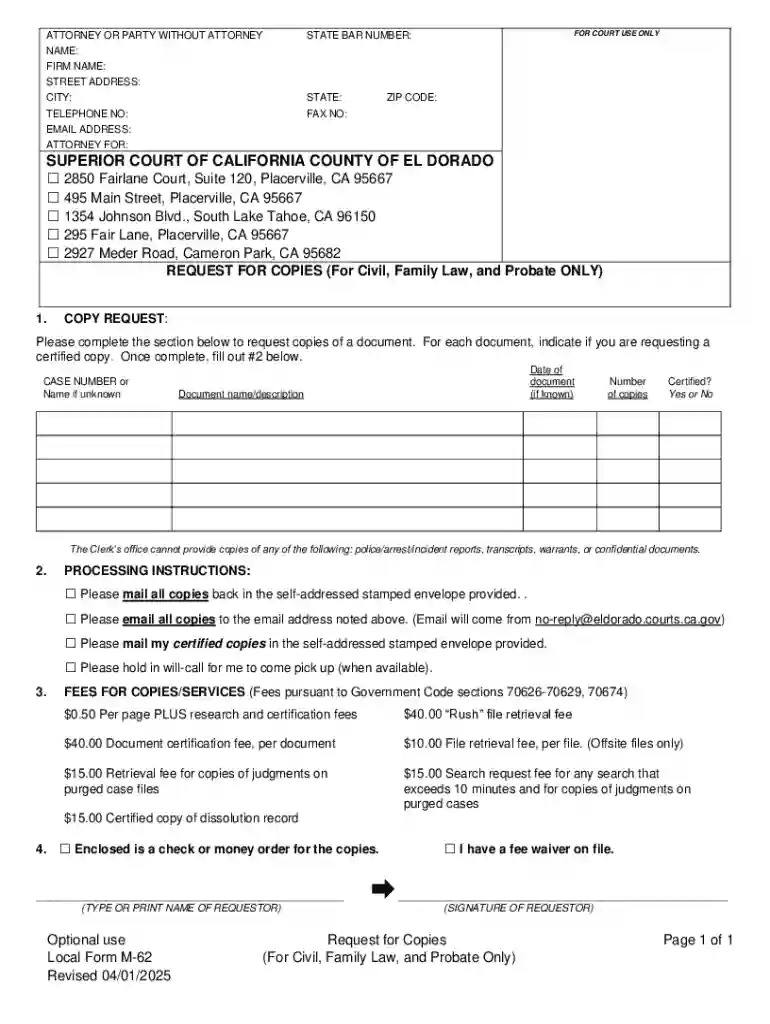
The "Request for Copies (For Civil, Family Law, and Probate ONLY)" is a legal document utilized to request copies of records related to civil, family law, and probate cases. This form is typically submitted to the Superior Court to obtain essential records for personal use or legal proceedings. It facilitates the organized dissemination of court documents and ensures that individuals have access to important legal records in a timely manner.
Core Components
- Civil Documents: Requests for documents related to civil cases such as lawsuits or civil disputes.
- Family Law Documents: Access to divorce decrees, child custody orders, and adoption papers.
- Probate Documents: Includes wills, estate settlements, and guardianship records.
Legal Context
- The form is intended for use within the United States, specifically aligning with California's legal system, and ensures compliance with state and federal regulations concerning public access to court records.
How to Use the Request for Copies (For Civil, Family Law, and Probate ONLY)
Understanding how to use the "Request for Copies" form is crucial for obtaining necessary legal documents effectively. It allows individuals to specify details about the documents they seek, including the type and number of copies.
Usage Steps
- Identify Document Type: Specify whether you need civil, family law, or probate documents.
- Detail Specific Documents: Clearly outline which specific records or case files are required.
- Specify Certified Copies: Indicate if certified copies are necessary for official purposes.
Processing Details
- Fees: Be aware that a fee is usually required to process the request, which varies based on the type and number of documents.
- Processing Time: Documents are typically processed within a specified timeframe, often dependent on court backlogs and the details of the specific request.
Steps to Complete the Request for Copies (For Civil, Family Law, and Probate ONLY)
Completing the form accurately is essential to ensure that your request is processed without delay or error. Each section requires specific attention to detail.
Step-by-Step Guide
- Contact Information: Accurately provide your full contact details.
- Document Request: Indicate precisely the documents you need, including specific case numbers.
- Certified Copies: Mark if you require certified copies and how many.
- Delivery Method: Select how you'd like to receive the copies—by mail, email, or pickup.
Common Pitfalls
- Incomplete sections can delay processing.
- Ensure all applicable fees are enclosed or arranged for prior to submission.
Important Terms Related to Request for Copies (For Civil, Family Law, and Probate ONLY)
A comprehensive understanding of the terms associated with the form can facilitate smoother processing and communication with court personnel.
Key Terminology
- Certified Copy: A certified copy is a reproduction of an original document that has been verified as true to the original by the issuer.
- Civil Case: Encompasses non-criminal legal disputes between parties.
- Probate: Legal process dealing with the distribution of a deceased person’s estate.
- Family Law: Legal matters related to family matters and relationships.
Contextual Importance
- Each term has implications for the type of documents requested and the legal standards they must meet.
Eligibility Details
- Parties Involved: Typically, parties directly involved in the case or their legal representatives are eligible.
- Legal Representatives: Must have valid authorization to access another party’s records.
- Public Interest: In some cases, documents may be requested in the interest of public transparency, subject to legal restrictions.
Exceptions
- Confidential cases or records sealed by the court may have restrictions on access.
Form Submission Methods (Online / Mail / In-Person)
Knowing the different submission methods enhances accessibility and convenience for users needing to request copies.
Submission Options
- Online: Some jurisdictions offer online submission through official court portals.
- Mail: Completed forms along with the necessary fees can be mailed to the appropriate court office.
- In-Person: Direct submissions at the court clerk’s office can provide immediate confirmation of receipt.
Benefits and Drawbacks
- Online submission is fast but may not be available everywhere.
- Mail offers a paper trail but can be slower due to postal delays.
- In-person submissions ensure accuracy through direct interaction.
Legal Use of the Request for Copies (For Civil, Family Law, and Probate ONLY)
Understanding the legal implications when requesting these copies ensures compliance with court regulations and facilitates their appropriate use.
Appropriate Uses
- Legal Proceedings: Useful in ongoing litigation or appeals where documentary evidence is required.
- Personal Records: Essential for personal verification or record-keeping purposes.
- Estate Management: Probate documents are crucial for settling estates and executing wills.
Restrictions and Conditions
- Documents are subject to privacy laws and court orders that limit their release.
- Misuse of documents can result in legal penalties.
State-Specific Rules for the Request for Copies (For Civil, Family Law, and Probate ONLY)
State-specific guidelines can affect the process and requirements for obtaining legal document copies.
California-Specific Rules
- The form aligns specifically with California regulations regarding court record access.
- Each county might have additional requirements or processing times.
Variations Across States
- Processing Fees: May differ significantly from one state to another.
- Accessibility: Some states provide digital access exclusively, while others rely on traditional methods.
Understanding these specific state rules helps ensure correct and efficient processing of document requests.