






Definition and Purpose of Transfer of Property Contract
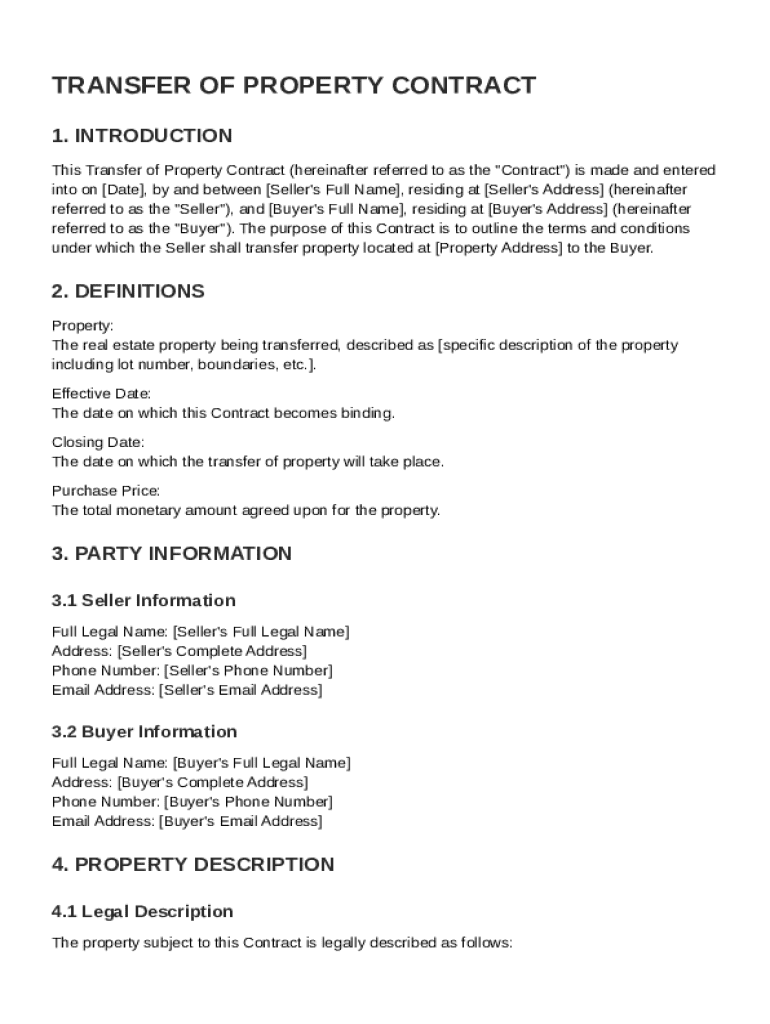
A Transfer of Property Contract is a legal document that outlines the process of transferring ownership of real estate from one party to another. The contract details the terms and conditions under which the property is transferred, including price, timelines, and responsibilities of each party involved. It serves as a safeguard to ensure that both the buyer and the seller clearly understand their obligations and rights, minimizing the chances of disputes and ensuring a smooth transfer process.
Key Components of the Contract
- Party Information: Identifies all parties involved, including full names and contact details.
- Property Description: Provides a comprehensive description, outlining boundaries, legal identifiers, and any encumbrances.
- Terms of Sale: Specifies the purchase price, payment method, and any adjustments or conditions such as repairs or inspections.
- Obligations of Each Party: Details responsibilities such as property maintenance by the seller until closing and financing acquisition by the buyer.
- Closing Process: Explains the settlement stage, including document signing, fund transfer, and deed exchange.
- Representations and Warranties: Clarifies assurances made by each party regarding property conditions and authority to sell.
- Contingencies and Provisions: Lists any conditions that may void the contract if unmet, such as obtaining financing or satisfactory inspections.
- Dispute Resolution: Outlines methods for addressing disputes, often through mediation or arbitration.
- Miscellaneous Provisions: Includes additional terms related to property usage restrictions or local laws.
How to Use the Transfer of Property Contract Template
Using a template for this contract involves populating it with specific data pertinent to the transaction in question. It requires a detailed understanding of the property, the terms agreed upon between the buyer and seller, and the applicable legal framework.
-
Personalize the Template:
- Input the parties’ full legal names and contact information.
- Include a detailed property description that matches official records.
-
Customize Sale Conditions:
- Adjust the pricing and payment terms according to negotiations.
- Amend sections on closing procedures to reflect agreed schedules.
-
Review Sections on Obligations and Contingencies:
- Clearly define any conditions precedent, such as home inspections.
- Ensure all obligations are legally sound and mutually agreeable.
Legal Implications and Use
The Transfer of Property Contract serves as a binding agreement that must comply with state and federal laws. Both parties should understand that signing this document signifies consent to its terms, making it enforceable in court. Hence, legal advice is often sought in drafting or reviewing to ensure compliance with regional property laws and practices. The contract is integral during the closing phase, as it provides the legal grounding for the transfer of title from seller to buyer.
Important Terms Related to Property Transfer Contracts
Understanding the terminology within the contract is crucial. Some key terms include:
- Deed: The legal document representing the transfer of property ownership.
- Escrow: A third-party arrangement where funds or documents are held until specific conditions are met.
- Liens: Claims against the property for unpaid debts, which must be cleared before transfer.
- Title Insurance: Protection for the buyer against potential defects in the title history.
Contextual Understanding of Terms
For instance, knowing the differences between "title" and "deed" is essential for understanding ownership versus a legal claim to the property. Liens should be examined closely, as unresolved claims can impede the transfer process.
State-Specific Rules and Variations
Property transfer rules can vary significantly across different states within the United States. For example:
- California: Imposes specific disclosures related to seismic activity risks.
- Texas: Requires a property survey to accompany the transaction.
- New York: Practices often involve attorney participation on behalf of both buyer and seller.
These state-specific regulations underscore the need for familiarity with local real estate practices and the importance of consulting legal professionals familiar with the respective state law.
Practical Scenarios Using the Template
In practice, this template can accommodate various types of real estate transactions:
- Residential Sales: Used during the sale and purchase of homes and condominiums.
- Commercial Property Transactions: Tailored for larger deals involving businesses or land intended for development.
- Transfer to Family Members: Simplifies transfers for estate planning or family realignments by formalizing rights and property succession.
Each scenario demands specific details be tailored within the contract to reflect the nature of the transaction and the parties' unique circumstances.