






Definition and Meaning of a Term Sheet Agreement Template
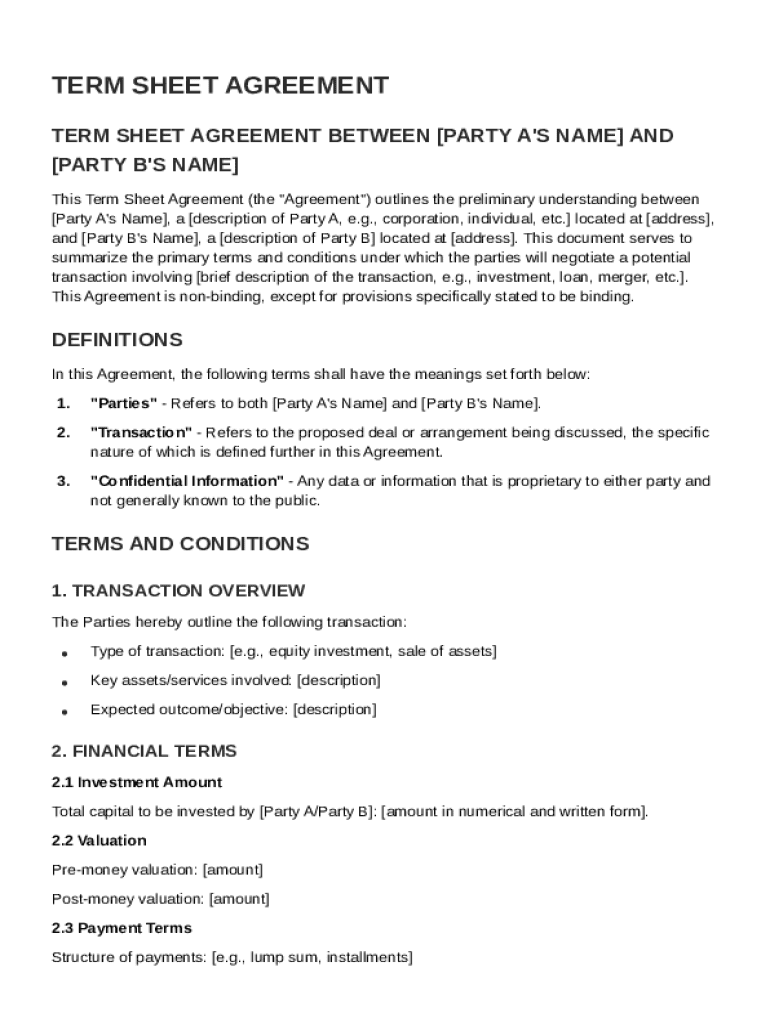
The Term Sheet Agreement Template serves as a preliminary document used in negotiations between two parties contemplating a potential transaction. It outlines the key terms and conditions agreed upon, providing the foundational framework for a formal agreement. The primary role of this document is to define initial commitments, including financial aspects, responsibilities, and provisions for confidentiality and exclusivity. It’s important to note that, generally, the Term Sheet is non-binding except for certain sections, which may include confidentiality obligations and exclusivity provisions.
Components and Features
- Financial Conditions: Details such as valuation, investment amounts, and equity distribution.
- Milestones: Descriptions of specific goals or deliverables that must be achieved within the transaction lifecycle.
- Confidentiality Obligations: Clauses that ensure proprietary information is kept secure.
- Exclusivity Provisions: Agreements that prevent parties from engaging in negotiations with others for a specified period.
Practical Examples
Consider a startup seeking investment. The term sheet will list the valuation, percentage of equity offered in exchange for funds, and any conditions for future investment rounds. Another example could include a business acquisition where the term sheet establishes purchase price parameters and transition terms.
How to Use the Term Sheet Agreement Template
Using a Term Sheet Agreement Template involves several clear steps. First, the involved parties should identify and agree on the critical elements that need to be included. Then, utilize the template to outline these elements systematically.
Steps to Follow
- Identify Key Terms: Determine what elements are essential for both parties —such as financial terms and expected deliverables.
- Select a Template: Choose a suitable template that aligns with the purpose of the transaction.
- Customize the Content: Adjust the template to reflect the specific terms and conditions applicable to your agreement.
- Review and Revise: Engage legal advisors to review the document for legal compliance and accuracy.
Scenarios for Use
- Mergers and Acquisitions: Structuring the preliminary terms of corporate combinations.
- Venture Capital Investments: Establishing conditions for investment in start-ups.
Steps to Complete the Term Sheet Agreement Template
Completion of the Term Sheet Agreement Template is a structured process that involves input from various stakeholders.
Completion Steps
- Draft Initial Terms: Collaborate to compile the agreed terms and conditions into the template.
- Incorporate Legal Provisions: Ensure that confidentiality and exclusivity clauses are appropriately incorporated.
- Internal Review: Have each party internally review the draft to confirm understanding and acceptance.
- Finalize the Agreement: Make necessary adjustments based on feedback, then have authorized representatives sign it.
Important Considerations
- Legal Consultation: Always seek advice from legal professionals to ensure compliance with relevant laws and regulations.
- Clarity and Precision: Ensure all terms are clearly defined to prevent misunderstandings.
Key Elements of the Term Sheet Agreement Template
Several key elements are invariably part of a comprehensive Term Sheet Agreement Template.
Important Elements
- Purpose and Scope: Outline the agreement's intention and what it covers.
- Parties Involved: Clearly identify all parties, including their roles and responsibilities.
- Signatures: Space for authorized signatures, ensuring commitment from both parties.
Detailed Examples
For financial terms, detail any contingencies such as performance-based milestones that might affect funding or investment valuations. Regarding confidentiality, describe what constitutes proprietary information and what measures are required to protect it.
Legal Use of the Term Sheet Agreement Template
Understanding legal aspects is critical when drafting or using a Term Sheet Agreement Template.
Compliance and Jurisdiction
- U.S. Law: Ensure templates are compliant with American legal standards and norms.
- Binding vs. Non-Binding Elements: Recognize which parts of the term sheet carry legal weight.
Legal Considerations
- Confidentiality Clauses: Legally enforceable under certain conditions, ensuring protection of sensitive information.
- Dispute Resolution: Include clauses detailing how disputes will be handled, potentially through arbitration or mediation.
Examples of Using the Term Sheet Agreement Template
Examples help illustrate the utility of the Term Sheet Agreement Template across different industries.
Transaction Scenarios
- Real Estate Transactions: Used to set preliminary terms for property sales or leases.
- Partnership Agreements: Define terms for strategic partnerships, including revenue-sharing models.
Case Studies
A tech startup might use a template to outline key investment terms, including board seat allocations and post-investment rights. Similarly, a retail company entering a joint venture could use it to agree on resource allocation and market responsibilities.
Who Typically Uses the Term Sheet Agreement Template
The template is used by a variety of entities and individuals involved in high-stakes negotiations.


Common Users
- Startups and Entrepreneurs: For structuring initial investment terms.
- Corporate Legal Teams: To draft acquisition or merger agreements.
- Venture Capitalists: When setting the framework for funding rounds.

Organizational Use
- Financial Institutions: Employ term sheets to define loan conditions and capital structures.
- Legal Advisors: Guide clients through the agreement process, ensuring compliance and accuracy.
Important Terms Related to the Term Sheet Agreement Template
Understanding critical terms ensures precise communication and agreement clarity.
Key Terms and Definitions
- Equity Stake: The percentage of ownership held by an investor in a company.
- Dilution: A reduction in existing shareholders' ownership percentage due to the issuance of new equity shares.
- Exit Strategy: A planned approach to divest an investment in a business venture through means such as an acquisition or IPO.
Contextual Clarifications
- Vesting Schedules: Define the timeline over which an employee earns stock options, crucial for terms involving equity.
- Due Diligence: The investigation or audit of a potential investment, ensuring the validity of financial and operational claims.
Each section builds a comprehensive understanding of the Term Sheet Agreement Template, including its uses, benefits, and legal context. The detailed and methodical content supports businesses and individuals in effectively utilizing such documents.