
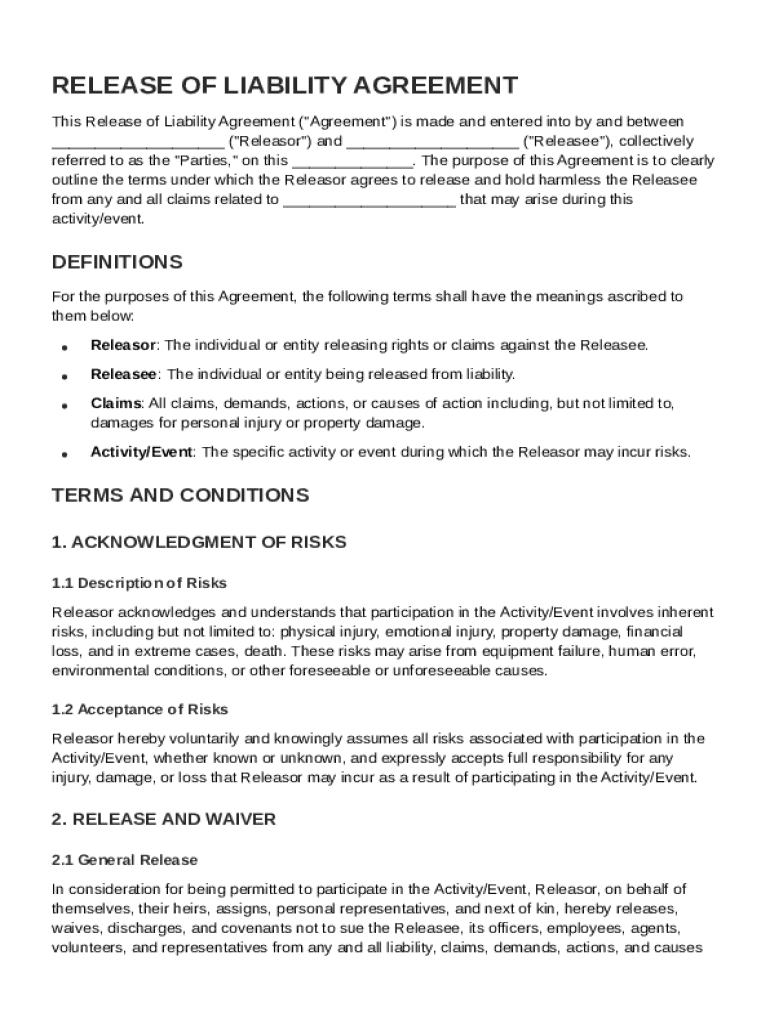







Definition & Meaning
A Release of Liability Contract Template, also known as a waiver, outlines the agreement in which the Releasor waives their right to sue the Releasee for any potential future claims or damages resulting from a specific activity or event. This legal document is crucial in mitigating liability risks associated with various situations. It typically includes important clauses such as acknowledgment of risks, a release and waiver of liability, indemnification provisions, and consent for medical treatment. Understanding each of these elements ensures both parties are aware of their rights and responsibilities.
Key Elements of the Release Of Liability Contract Template
When drafting a Release of Liability Contract, several critical elements must be included to ensure the document's effectiveness and enforceability:
-
Identification of Parties: Clearly identify the Releasor and the Releasee by including their full legal names and, if applicable, organizational affiliations.
-
Description of Activity or Event: Provide a detailed description of the specific activity or event to which the release applies. This ensures there is a mutual understanding regarding the circumstances under which liabilities are waived.
-
Acknowledgment of Risks: Include a section where the Releasor acknowledges understanding the risks involved and voluntarily chooses to undertake them.
-
Waiver Statements: The waiver clause should explicitly state that the Releasor waives their right to sue the Releasee for any claims related to the specified activity.
-
Indemnification Clause: This provision protects the Releasee by having the Releasor agree to indemnify and hold harmless the Releasee from any third-party claims arising from the Releasor's actions.
-
Governing Law: Specify which state’s laws will apply to the contract, providing clarity in terms of legal jurisdiction in the event of a dispute.
Legal Use of the Release Of Liability Contract Template
The legal use of a Release of Liability Contract varies based on context, but it generally serves to protect businesses and individuals from lawsuits. It's commonly used across multiple industries:
-
Sports and Recreation: Gyms, sports teams, and adventure companies often use liability waivers to protect against injuries sustained during activities.
-
Event Organizers: Organizers of concerts, festivals, and other public events use these contracts to safeguard against claims from attendees.
-
Service Providers: Businesses providing services that carry inherent risks, like auto shops or beauty spas, utilize these contracts to minimize liability.
-
Medical and Consent Scenarios: These waivers are also employed in situations where medical treatment might carry risks, requiring patient acknowledgment.
These contracts, when appropriately executed, can prevent lengthy and costly legal battles by ensuring all parties understand and assume the necessary risks.
Steps to Complete the Release Of Liability Contract Template
Completing a Release of Liability Contract requires careful attention to detail to ensure all necessary information is accurately captured. Follow these steps:
-
Identify the Parties: Fill in the names and contact information for both the Releasor and the Releasee.
-
Describe the Activity: Clearly specify the event or activity the waiver covers. Be as detailed as possible to avoid ambiguity.
-
Acknowledge Risks: Ensure the Releasor reads and understands the section outlining the potential risks involved.
-
Include Waiver Language: Add a clear statement that the Releasor waives their right to hold the Releasee liable for any injuries or damages incurred.
-
Signatures: Have both parties sign the document in the presence of a witness or notary, if necessary, to enhance the enforceability of the waiver.
-
Date the Document: Record the date of signing to establish a timeline for the contract’s validity.
Ensuring these steps are followed accurately helps in creating a legally sound document.
Who Typically Uses the Release Of Liability Contract Template
Release of Liability Contracts are ubiquitous across various sectors. Common users include:
-
Business Owners: Particularly those offering high-risk activities such as adventure parks, fitness centers, and recreational sports facilities.
-
Event Coordinators: Those managing public events or gatherings may need waivers to protect against liabilities.
-
Healthcare Providers: In scenarios involving experimental treatments or high-risk procedures, waivers help mitigate potential legal challenges.
-
Individuals: Sometimes used in personal arrangements, like a homeowner allowing friends to use recreational facilities on their property.
Understanding the varied users of these contracts helps highlight their importance in reducing the risk of litigations across different activities.


State-Specific Rules for the Release Of Liability Contract Template
While the basic structure of Release of Liability Contracts remains largely similar, state-specific rules can affect their enforceability:
-
Language Requirements: Some states may have specific language or formatting requirements for waivers to be considered valid.
-
Minors: In states like California, releases signed by minors may not be enforceable, necessitating a parent or guardian's signature.
-
Public Policy Considerations: Certain jurisdictions may not allow waivers that attempt to release intentional misconduct or gross negligence.
-
Notarization and Witnessing: While not universally required, some states may recommend or require witnessing or notarization for added validity.
Familiarity with these state-specific rules is essential for ensuring the contract's legality and effective implementation.
Important Terms Related to Release Of Liability Contract Template
Understanding the terminology used in Release of Liability Contracts is crucial for comprehension and effective application:
-
Releasor: The party who agrees to the waiver and gives up the right to sue.
-
Releasee: The party protected by the waiver from potential claims.
-
Indemnification: Agreement to compensate for harm or loss arising from a third-party claim related to the waiver.
-
Severability Clause: Ensures that if one part of the contract is invalid, the rest remains enforceable.
These terms form the backbone of the contract, and understanding them is vital to both drafting and executing a legally binding agreement.
Software Compatibility and Integration
For users employing digital solutions for document management, understanding software compatibility is important:
-
Document Formats: Ensure the Release of Liability Contract is compatible with common formats like PDF, DOC, and TXT for seamless integration with document management systems.
-
Editing Tools: Platforms like DocHub allow users to edit, annotate, and sign the form digitally, enhancing efficiency.
-
Cloud Integration: Integration with cloud services like Google Drive and Dropbox enables easy sharing and storage.
Leveraging technology through compatible software streamlines the document management process, making contracts like these more accessible and secure in a digital environment.




