







Definition & Meaning
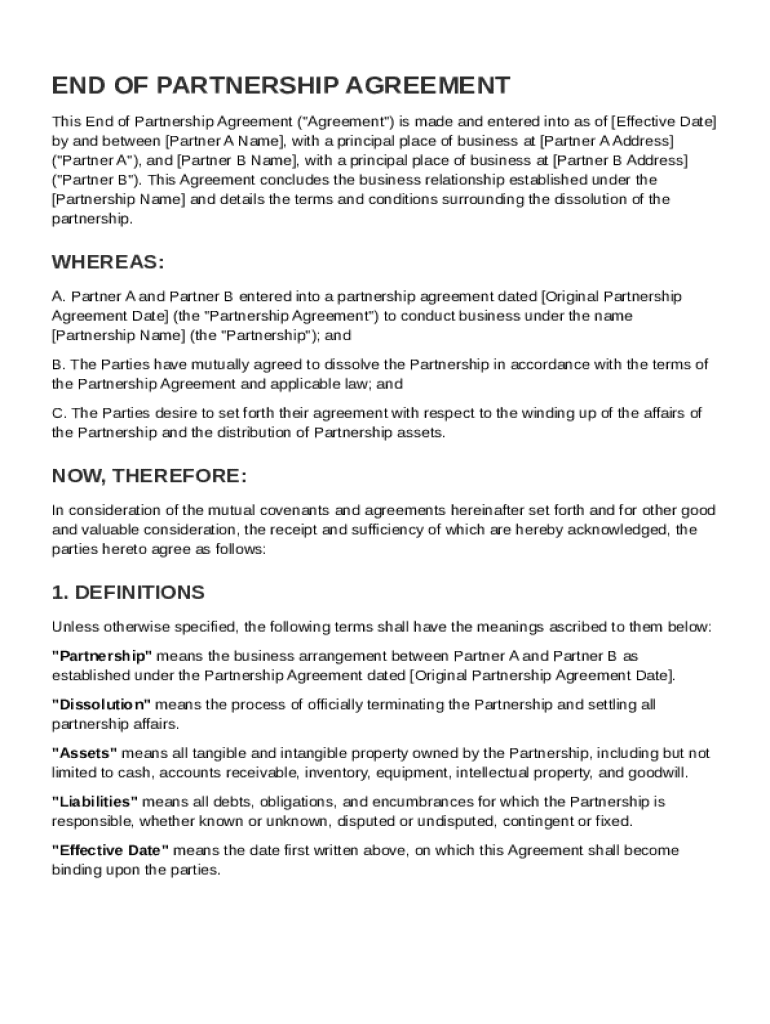
The End of Partnership Agreement Template is a legal document designed to formalize the dissolution of a business partnership. It specifies terms such as the process for winding up the partnership affairs, distributing assets, settling liabilities, and releasing claims between the partners involved. The template is crucial as it records mutual agreement on how to conclude business operations, ensuring that all parties understand their rights and obligations during the dissolution process. In essence, it establishes a straightforward framework to mitigate potential disputes or misunderstandings among partners as they conclude their business relationship.
Key Elements of the End of Partnership Agreement Template
A robust End of Partnership Agreement Template should include several key components to ensure comprehensive coverage and understanding between parties:
- Identification of Parties: Clearly list all partners involved, specifying their roles within the partnership.
- Dissolution Date: Officially state when the partnership will come to an end.
- Asset Distribution Plan: Outline how the partnership's assets will be allocated among the partners, detailing which partner is entitled to specific properties or monetary assets.
- Liability Settlements: Establish a method for paying off any debts or liabilities that the partnership may owe, detailing each partner's responsibility in settling these obligations.
- Release of Claims: Include a clause that each partner releases the others from any future claims regarding the partnership.
- Confidentiality and Indemnification: Provide terms safeguarding sensitive information from being disclosed post-dissolution and protecting partners from liabilities arising after the partnership ends.
Steps to Complete the End of Partnership Agreement Template
Using the End of Partnership Agreement Template involves a clear step-by-step process to ensure accuracy and comprehensiveness:
- Prepare Information: Gather necessary documents and data related to the partnership’s assets, liabilities, and overall financial standing.
- Fill Personal Details: Complete sections requiring personal and business information for each partner involved.
- Asset and Liability Recording: Document all assets and liabilities, ensuring accuracy and transparency.
- Negotiate Terms: Discuss and agree on terms for asset distribution and liability settlement among partners.
- Draft Agreement: Use the template to fill out agreed terms, ensuring every section is covered.
- Review & Finalize: Have each partner carefully review the draft to ensure mutual understanding.
- Legal Review: It is advisable to have a legal professional review the document for compliance with relevant laws.
- Sign Agreement: Once reviewed, ensure all partners sign the agreement for it to be legally binding.
Legal Use of the End of Partnership Agreement Template
The legal use of the End of Partnership Agreement Template involves ensuring that the document complies with federal and state laws governing partnership dissolutions. Each agreement should be reviewed within the jurisdiction where the partnership operates. Important legal considerations include:
- Adherence to State Laws: The template should comply with the specific partnership laws of the state where it is executed.
- Amendment Clauses: Include provisions that allow for modifications should they be required under mutual agreement.
- Severability: Ensure the agreement includes a severability clause, which means that if one part of the agreement is invalidated, the rest remains effective.
- Notarization Requirements: Verify if state laws require the agreement to be notarized to be enforceable.
State-Specific Rules for the End of Partnership Agreement Template
Different states may have unique requirements or variations in the rules governing partnership dissolutions. It is critical to understand these distinctions to ensure compliance:
- Variation in Voting Requirements: Some states may require specific voting thresholds for dissolution decisions.
- Non-compete Clauses: The enforceability of non-compete clauses can vary widely; certain states may have stricter regulations.
- Filing Obligations: There may be additional registration or filing requirements post-dissolution, such as business license cancellations or specific notices to be filed with state tax authorities.
Partnering with a legal expert familiar with state-specific partnership dissolution laws can ensure the agreement covers all necessary legal nuances.
Important Terms Related to End of Partnership Agreement Template
Clarifying important terms is essential for mutual understanding. Key terms in this agreement may include:
- Winding up: The process of closing down the partnership’s affairs, including paying debts and distributing assets.
- Dissolution: The formal conclusion of the partnership’s legal existence.
- Indemnity: A clause that protects partners from liability related to claims arising after the partnership has ended.
- Confidential Information: Information that must remain private even after the dissolution of the partnership.
Identifying and agreeing on these terms ensures all parties are on the same page concerning the agreement's roles and expectations.
Who Typically Uses the End of Partnership Agreement Template
The End of Partnership Agreement Template is utilized by various entities and individuals involved in business partnerships:
- Business Partners: Any individuals or entities co-owning a business looking to formalize the dissolution.
- Legal Professionals: Attorneys for ensuring that dissolution terms are legally binding and comply with regional laws.
- Accountants: They may use this document to assist clients in understanding financial responsibilities and the distribution of assets post-dissolution.
- Corporate Entities: Businesses that form partnerships to execute specific projects may also need this agreement to dissolve such relations once project objectives are achieved.


Examples of Using the End of Partnership Agreement Template
The End of Partnership Agreement Template is versatile and can be applied across various scenarios, such as:
- Voluntary Dissolution: When partners amicably decide to close the partnership due to personal choices or strategic shifts.
- Involuntary Dissolution: Triggered by specific events such as bankruptcy, legal disputes, or substantial losses leading to the impossibility of continuing business operations.
- Term-based Dissolution: Where the partnership is established for a specific period or project and naturally dissolves upon achieving its goals.
In each scenario, the template ensures that the closing terms are agreed upon and meets the legal requirements for an orderly wind-up of partnership affairs.





