Definition and Meaning
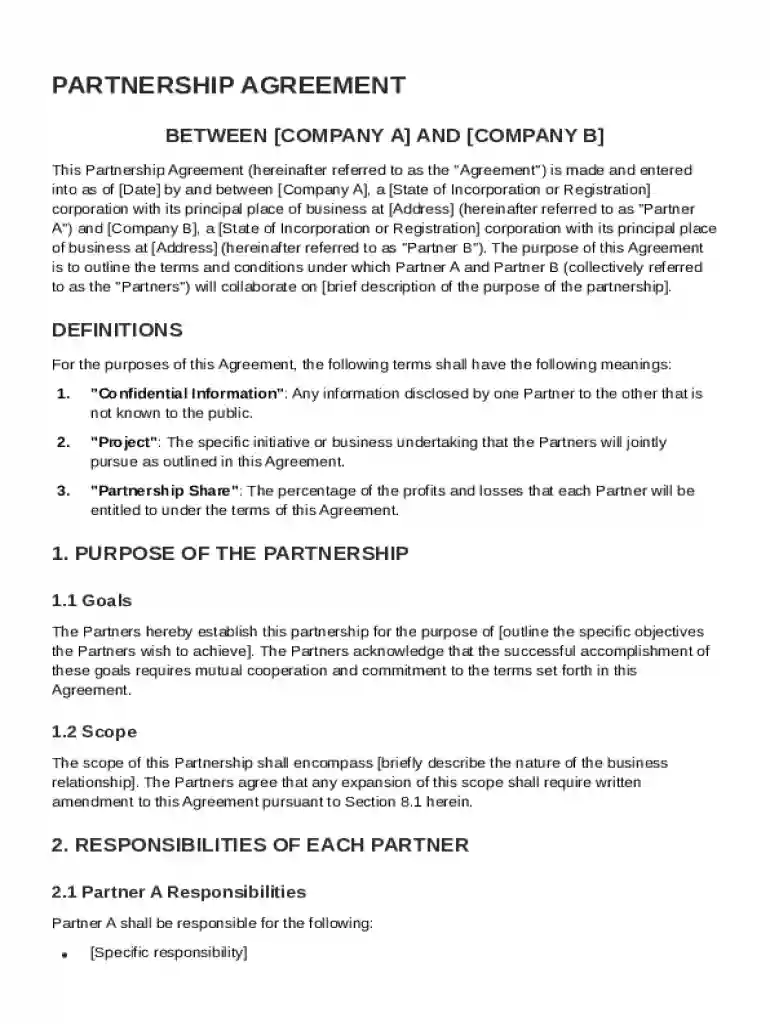
A Partnership Between Two Companies Agreement Template is a legal document that formalizes the collaborative arrangement between two business entities. This agreement outlines critical terms and conditions governing the partnership, including financial contributions, division of responsibilities, profit sharing, and decision-making processes. It serves as a vital framework to ensure clarity and mutual understanding, thereby mitigating potential conflicts.
Purpose of the Agreement
- Clarify Roles and Responsibilities: The template describes each company's duties, ensuring both parties understand their obligations.
- Define Financial Terms: It details how profits and losses will be shared, providing a transparent financial framework.
- Outline Governance Structure: Establishes how decisions will be made, often forming a board or committee for oversight.
- Set Confidentiality Obligations: Protects sensitive information both parties may encounter over the course of their collaboration.
- Resolve Disputes: Includes mechanisms for handling disagreements, often involving mediation or arbitration clauses.
Key Elements of the Partnership Agreement Template
The partnership agreement template typically comprises several crucial components that ensure a comprehensive understanding and execution of the partnership.
Basic Information
- Name and Contact Information: Details both companies involved in the agreement.
- Purpose of Partnership: Clearly outlines the objectives and goals the partnership aims to achieve.
Financial Contributions and Profit Sharing
- Initial Investments: Specifies what each company will contribute initially and over time.
- Distribution of Profits: Details the percentage of profits allocated to each company, often based on their respective contributions.
Responsibilities and Obligations
- Operational Roles: Describes the functional responsibilities of each company within the partnership.
- Management and Governance: Outlines the management structure, including roles like project lead or decision-maker, to ensure efficient operations.
How to Use the Partnership Between Two Companies Agreement Template
Utilizing the partnership agreement template effectively requires understanding its components and following systematic procedures.
Steps to Follow
- Download the Template: Obtain a copy from a reputable provider to ensure it is comprehensive and accurate.
- Customize the Details: Input specific company information, including names, contributions, and other relevant data.
- Consult Legal Expertise: It is advisable to have a legal professional review the agreement to ensure compliance with regulations and safeguard interests.
- Finalize and Sign: Once both parties agree on all terms, they should sign the document to make it legally binding.
Practical Scenarios
- Startup Collaboration: When two startups decide to pool resources for joint development of a new technology.
- Joint Marketing Initiatives: Large corporations may form partnerships to expand market reach and enhance product offerings.
Important Terms Related to Partnership Agreement
Understanding specific legal and technical terms within the agreement is crucial for all parties involved.
Key Terminology
- Equity Stake: Refers to the ownership interest one party may hold in the partnership.
- Liability: Defines the extent to which each party is responsible for debts and obligations.
- Arbitration Clause: A mutual agreement to resolve disputes outside the court, typically through a neutral third party.
Legal Use of the Partnership Agreement
The legal framework of the partnership agreement is critical to its enforceability and validity.
Ensuring Legal Compliance
- Adhere to State Laws: Ensure the partnership complies with state-specific regulations where the companies operate.
- Legally Binding: Once signed, the agreement becomes enforceable in a court of law, protecting the interests of both parties.
State-Specific Rules
- Jurisdictional Variations: Different states may have varying requirements for partnerships, such as filing with the local business authority.
Examples of Using the Partnership Agreement
Real-world examples provide insight into how such agreements function in practical situations.
Case Studies
- Technology Firms: Tech companies might use this agreement to jointly develop new software, where each party brings specific expertise.
- Retail Partnerships: Retailers may collaborate to launch a co-branded product line or open new stores in shared locations.
State-by-State Differences
While the partnership agreement provides a standardized template, specific rules and requirements can vary by state.
How States Affect Partnerships
- Filing Requirements: Some states necessitate specific filings or registrations for partnerships.
- Tax Implications: State taxes can impact how profits are shared and reported.
Business Types Benefiting from the Template
Not all businesses require a partnership agreement, but for those considering collaboration, this template offers invaluable guidance.
Ideal Business Types
- LLCs (Limited Liability Companies): Benefit from shared resources while limiting personal liability.
- Corporations: Can leverage combined expertise without merging corporate identities entirely.