






Definition & Meaning
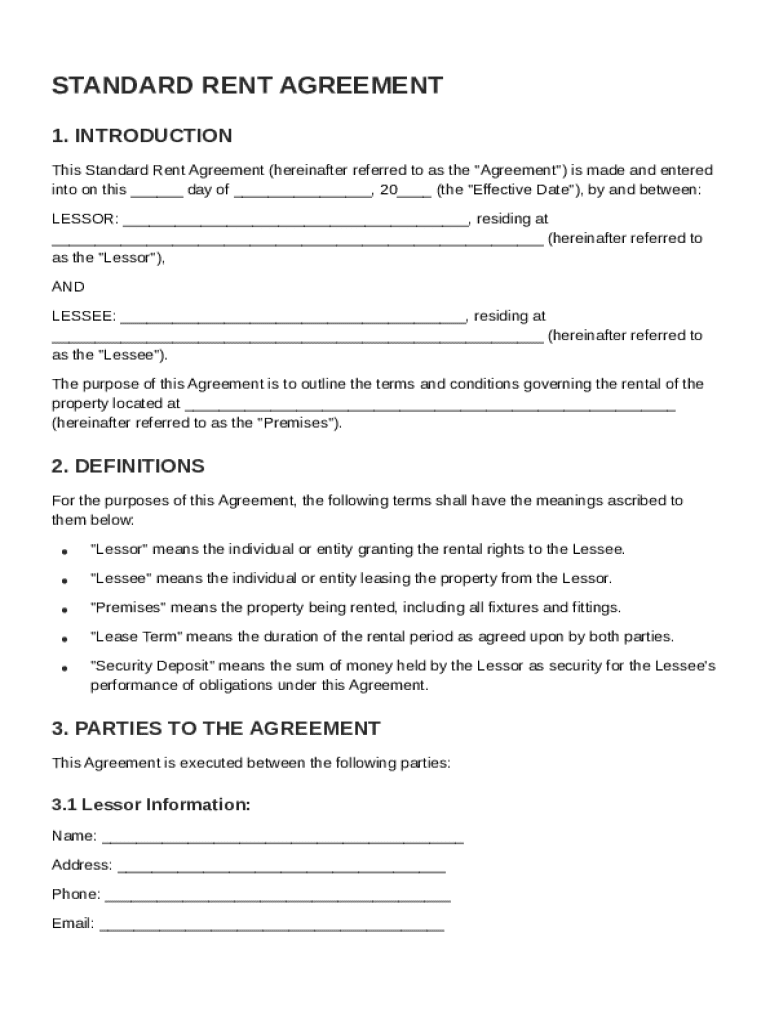
The Standard Rent Agreement Template serves as an essential legal document that outlines the rules and expectations between a landlord (lessor) and tenant (lessee) concerning the leasing of a property. It is designed to define the terms of the rental relationship clearly, establishing mutual obligations and rights. This document typically includes information about the rental property, the duration of the lease, payment terms, security deposits, maintenance requirements, and more. By using this agreement, both parties can protect themselves legally and ensure that each understands their responsibilities and privileges throughout the rental period.
Key Elements of the Standard Rent Agreement Template
Several critical components must be included in the Standard Rent Agreement Template to ensure its validity and effectiveness:
- Identification of Parties: Clearly names the landlord and tenant involved in the agreement.
- Property Description: Provides a detailed description of the rental property to prevent any future misunderstandings about what is included in the lease.
- Lease Term: Specifies the duration of the lease, including the start and end dates.
- Rent Payment Details: Outlines the monthly rent amount, payment method, and due date. It may also include late fees for overdue payments.
- Security Deposit Terms: Mentions the amount of security deposit required, its return conditions, and any deductions that may occur.
- Maintenance Responsibilities: Details the duties of both the landlord and tenant concerning property upkeep and repairs.
- Use of Premises: States permissible property uses and any restrictions on activities that might damage the property or disturb neighbors.
Steps to Complete the Standard Rent Agreement Template
- Gather Required Information: Record all relevant details for both the landlord and tenant, including contact information and identity verification.
- Insert Property Details: Provide a comprehensive description of the property being leased, ensuring there is a record of its current condition.
- Define Lease Terms: Clearly specify the lease duration, including any renewal options if applicable.
- Include Payment Terms: Clearly define rent amount, due dates, accepted payment methods, and any specifications regarding late payment fees.
- Security Deposit Specifications: Record details regarding the security deposit amount and conditions under which it may be held or returned.
- Finalize Maintenance and Use Restrictions: Clearly lay out the responsibilities for property maintenance and list permitted and prohibited activities.
- Review and Sign: Both parties must examine the agreement thoroughly before signing to ensure all aspects are clearly understood.
Legal Use of the Standard Rent Agreement Template
The Standard Rent Agreement Template functions as a binding contract that provides both legal protection and a framework for conflict resolution should disputes arise. In the U.S., these agreements must comply with federal, state, and local laws, which may influence terms regarding security deposits, discrimination, and lease termination. Utilizing a compliant template ensures that the agreement meets legal standards and safeguards both parties' interests. It's advisable for landlords and tenants to consult with legal professionals to tailor the template to their specific state's regulations and avoid potential pitfalls.
State-Specific Rules for the Standard Rent Agreement Template
Rental laws differ significantly between states, influencing the contents and execution of the agreement:
- Security Deposit Regulations: Some states limit the permissible amount a landlord can charge for security deposits.
- Disclosure Requirements: Certain states require landlords to disclose specific information, such as asbestos presence or shared utility meters.
- Eviction Procedures: Each state has distinct rules governing eviction notices and processes.
- Rent Control Areas: In some states, rent control laws limit how much and how often a landlord can increase rent.
It's crucial to adjust the standard template to align with these regulations to ensure enforceability.
Who Typically Uses the Standard Rent Agreement Template
The Standard Rent Agreement Template is utilized by various entities and individuals involved in property rental transactions:
- Private Landlords: Individuals who own residential or commercial properties and lease them out.
- Property Management Companies: Businesses responsible for handling rental properties on behalf of owners.
- Tenants: Any person or entity seeking to rent property for residential or commercial purposes.
- Real Estate Agents: Professionals who facilitate rental agreements between landlords and tenants.
Each party benefits from using a standardized template that offers predictability and thorough documentation of rental terms and conditions.


Digital vs. Paper Version
Both digital and paper versions of the Standard Rent Agreement Template have their unique benefits and considerations:
- Digital Version: Ensures easy access, editing, and distribution. Platforms such as DocHub enable real-time collaboration, electronic signatures, and integration with cloud storage services. This method is quick, secure, and environmentally friendly.
- Paper Version: Offers a tangible format for those who prefer physical documentation. It may be beneficial in face-to-face negotiations where digital access is limited. However, it lacks the immediacy and convenience of electronic handling.
When choosing between formats, consider the parties’ technical proficiencies and access to digital resources.
Software Compatibility
Using the Standard Rent Agreement Template digitally requires compatibility with document editing and sharing software:
- DocHub: Supports a range of file formats and offers tools for online collaboration and secure document sharing.
- Google Workspace: Seamlessly integrates with Google Drive to pull files directly into editable formats, saving edited documents back into cloud storage effortlessly.
- Dropbox, OneDrive: Enable the synchronization of the document across multiple devices, ensuring all changes are up to date in real-time.
Each software option provides unique advantages that enhance the efficiency and security of document management.