






Definition and Meaning of the Private Equity Agreement Template
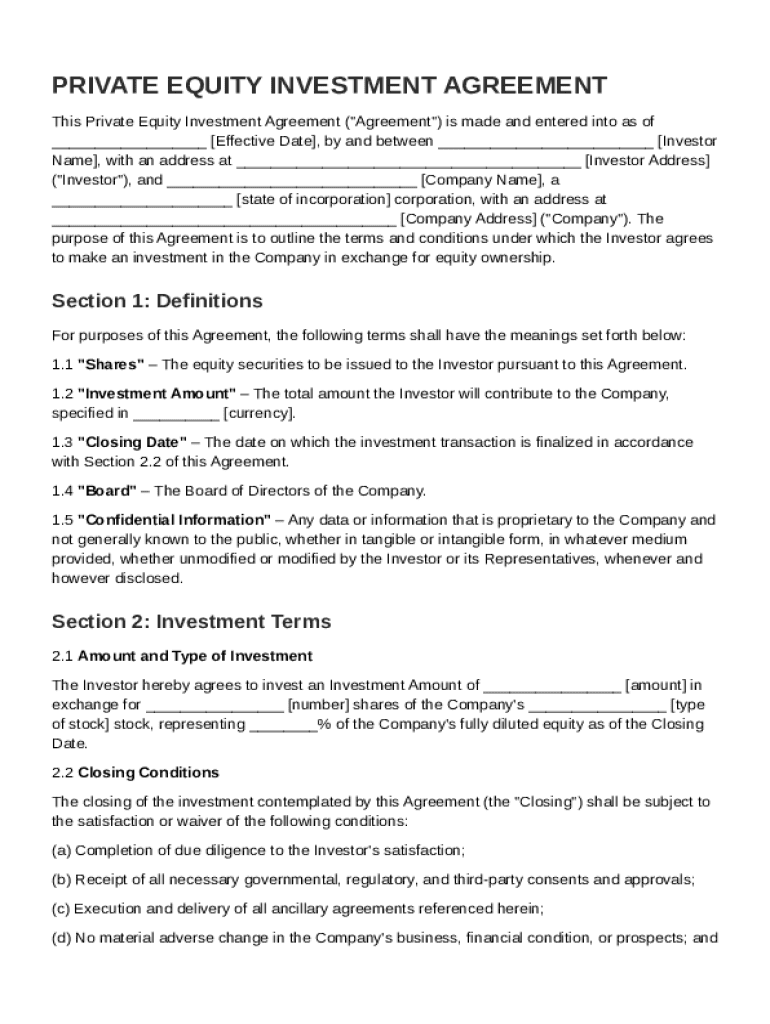
The Private Equity Agreement Template is a critical resource in the financial and corporate world, outlining the specific terms and conditions under which an investor agrees to invest in a company in exchange for equity. This legal document formalizes the transaction between an investor and a target company, ensuring clarity and protection for both parties involved. It typically includes essential elements such as definitions of terms, investment specifics, representations and warranties, governance rights, covenants, and indemnifications.
Essential Components
- Investment Terms: Details about the amount invested, the equity received in return, and payment schedules.
- Representations and Warranties: Sets out the assurances provided by both parties, concerning aspects like company financials and legal compliance.
- Governance Provisions: Covers investor rights in decision-making processes, board appointments, and voting rights.
- Exit Strategies: Plans for potential future sales or exits, such as public offerings or private sales.
How to Use the Private Equity Agreement Template
Utilizing the Private Equity Agreement Template effectively requires a strong understanding of its elements and customization to fit specific transaction needs. This document serves as a framework to guide negotiations and ensure all relevant aspects of the intended investment are addressed.
Step-by-Step Guide
- Review the Template: Familiarize yourself with the general structure and contents.
- Customize Sections: Adapt the terms to reflect the specific investment situation, including unique governance rights or information flow covenants.
- Consult with Legal Experts: Work with legal counsel to ensure compliance with jurisdictional laws and adaptations to specific deal structures.
- Negotiate Terms: Engage in discussions with the other party to align on terms reflected in the document.
- Finalize and Sign: Once all terms are agreed upon, the document is signed by both parties to commence the agreement legally.
Key Elements of the Private Equity Agreement Template
The core elements of a Private Equity Agreement provide a comprehensive structure to secure the interests of both the investor and the company.
Investment and Equity Details
- Amount and Valuation: Specifies how much capital the investor commits and the valuation of the firm.
- Equity Ownership: Describes the percentage of ownership or types of shares purchased with the investment.
Representations and Warranties
- Accuracy of Financial Statements: Ensures that the company presents an honest view of its financial health.
- Legal Compliance: Affirms adherence to all relevant laws and regulations.
Covenants and Governance Rights
- Affirmative Covenants: Actions the company agrees to take, such as maintaining insurance or submitting financial reports.
- Negative Covenants: Restrictions on company actions without investor approval, like taking additional loans.
Who Typically Uses the Private Equity Agreement Template
The Private Equity Agreement Template is used by a diverse range of individuals and entities in the investment and corporate sectors.


Typical Users
- Private Equity Firms: Utilize this template regularly for structuring investments in portfolio companies.
- Corporate Legal Teams: Draft and review these documents for ensuring compliance and strategic alignment.
- Venture Capitalists: Employ similar agreements when executing venture financing rounds.
- Business Owners and Entrepreneurs: Use the agreement when seeking investment for scaling operations.
Examples of Using the Private Equity Agreement Template
Various scenarios can illustrate how the template facilitates successful investments and partnerships.
Real-World Scenarios
- Startup Growth Funding: A tech startup seeking seed funding uses the agreement to secure capital from a private equity investor, laying out clear terms for equity exchange and involvement in management decisions.
- Expansion Investments: A mid-sized manufacturing company partners with an investor to expand its production capabilities, detailing exit strategies to align on future goals.
Important Terms Related to the Private Equity Agreement Template
A solid understanding of key terminologies within the Private Equity Agreement Template ensures all parties are aligned and informed.
Definitions
- Indemnification Clause: A provision that safeguards the investor by ensuring compensation for any losses incurred due to company misrepresentations.
- Governing Law: Specifies which state’s laws will govern the agreement, impacting how disputes are resolved.
Legal Use of the Private Equity Agreement Template
The legal foundation of the Private Equity Agreement Template is aligned with contractual practices and compliance requirements.
Compliance with Legal Standards
- ESIGN Act Compliance: When signed electronically, the agreement meets standards for digital signatures.
- Federal and State Laws: The template must be reviewed in the context of applicable federal and state laws, including securities regulations.
Versions or Alternatives to the Private Equity Agreement Template
Depending on the situation, alternative templates or previous formats of private equity agreements might be more applicable.
Alternatives
- Convertible Note Agreements: These might be more suitable when the investment involves debt that can be converted into equity.
- Simple Agreement for Future Equity (SAFE): Used primarily by startups, offering simpler terms.
Each alternative comes with different structures and levels of complexity, allowing flexibility in negotiations and execution of investment deals.