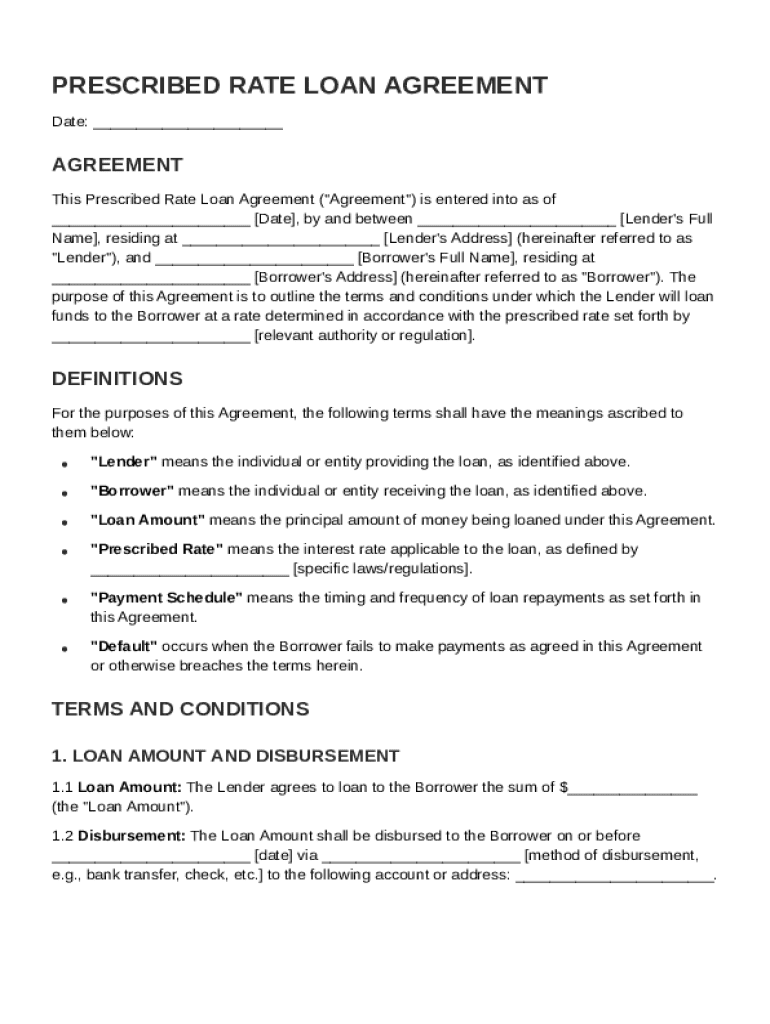







Definition & Meaning
The Prescribed Rate Loan Agreement Template is a legal document that outlines the specific terms and conditions under which a loan is issued by a lender to a borrower at an interest rate set by prevailing regulations. This agreement provides a clear framework for both parties, detailing the loan's duration, interest rates, repayment terms, and any conditions for prepayment. Key components of this document include definitions for terms like "lender," "borrower," "interest," and "loan amount," ensuring there is no ambiguity. By using this template, parties can have a structured approach to formalizing their financial arrangements, which is especially important for compliance and legal protection.
Key Elements of the Prescribed Rate Loan Agreement Template
When drafting or reviewing a Prescribed Rate Loan Agreement, several critical components must be included to ensure it is comprehensive and legally sound. Some of these elements are:
- Loan Amount: Specifies the principal amount that the borrower must repay.
- Interest Rate: The prescribed rate according to government or financial standards, crucial for tax and legal compliance.
- Repayment Terms: Detailed schedule and methods of repayment, including the frequency and amounts of payment.
- Default Provisions: Outline consequences and remedies if the borrower fails to meet the agreed terms.
- Governing Law: Indicates the legal jurisdiction under which any disputes will be resolved.
- Amendment Procedures: Stipulates how changes to terms can be made and require both parties' consent.
This structure provides clarity and security for all involved, minimizing potential disputes or misunderstandings.
How to Use the Prescribed Rate Loan Agreement Template
Using the Prescribed Rate Loan Agreement Template involves several methodical steps.
- Gathering Information: Start by collecting all necessary information from both the lender and borrower, such as legal names, addresses, and financial details.
- Customizing the Template: Input specific details into the template fields, including loan amounts, interest rates, and repayment schedules. Tailor any standard clauses to suit the specific agreement.
- Reviewing for Compliance: Ensure that the terms adhere to current prescribed interest rates and legal requirements.
- Final Review: Both parties should carefully review the agreement, ideally with legal counsel, to ensure clarity and understanding.
- Execution: Once all parties agree on the terms, the document should be signed and dated by both the lender and borrower.
By following these steps, the template can be effectively used to create a binding loan agreement.
Legal Use of the Prescribed Rate Loan Agreement Template
The legal application of the Prescribed Rate Loan Agreement Template involves adherence to specific regulatory standards and laws governing loans. This template acts as a formal contract that details the rights and obligations of both the lender and the borrower, ensuring compliance with federal, state, or local laws. The legally binding nature of this document demands that it includes essential provisions such as interest rates that align with governing regulations, responsibilities of the parties, and conditions for default. Any legal disputes arising from the agreement would typically be settled under the jurisdiction listed within the document. Legal advice is recommended to ensure the agreement's enforceability and compliance.
Important Terms Related to Prescribed Rate Loan Agreement Template
Understanding the vocabulary related to the Prescribed Rate Loan Agreement Template is critical for clarity and proper execution. Here are some key terms:
- Prescribed Rate: The interest rate set by financial authorities that apply to particular loans.
- Term: The duration over which the loan must be repaid.
- Collateral: Any asset offered by the borrower to secure the loan.
- Amortization: The process of spreading out loan payments over time.
- Principal: The original sum of money borrowed, separate from interest.
- Balloon Payment: A large payment due at the end of a loan term, applicable in some agreements.
Familiarity with these terms ensures comprehension of the agreement’s details and implications.
Examples of Using the Prescribed Rate Loan Agreement Template
The Prescribed Rate Loan Agreement Template can be applied in various scenarios. Here are a few examples:
- Family Loans: Parents providing a loan to a child for a home purchase can use this template to ensure terms are clear and legally compliant.
- Business Financing: Small business owners borrowing funds to expand their operations may formalize the transaction with this agreement to outline clear repayment schedules and conditions.
- Real Estate Investments: Investors can use this template to provide financing among partners to ensure equitable terms.
In each of these cases, the agreement safeguards against misunderstandings and ensures all parties have a clear understanding of their commitments.
Steps to Complete the Prescribed Rate Loan Agreement Template
Completing the Prescribed Rate Loan Agreement Template involves several key steps:
- Identify Parties: Clearly state the full legal names and addresses of the lender and borrower.
- Detail Loan Terms: Specify the loan amount, interest rate, term length, and repayment schedule.
- Include Default Provisions: Define what constitutes a default and the lender’s recourse.
- Specify Governing Law: Stipulate the applicable legal jurisdiction.
- Review Document: Both parties should thoroughly review the content for accuracy and completeness.
- Sign and Date: Have both the lender and borrower sign and date the agreement in the presence of a notary, if necessary.
These steps ensure the document is complete, accurate, and enforceable.
Who Typically Uses the Prescribed Rate Loan Agreement Template
The Prescribed Rate Loan Agreement Template is widely used by different entities, including:
- Individuals: Used for personal loans between family or friends to ensure compliance and understanding.
- Businesses: Entities seeking intra-company or shareholder loans might use this agreement to formalize terms.
- Investors: For handling investment loans between partners or stakeholders.
Each of these users benefits from formalized, detailed loan agreements that establish clear expectations and responsibilities.