



Definition & Meaning
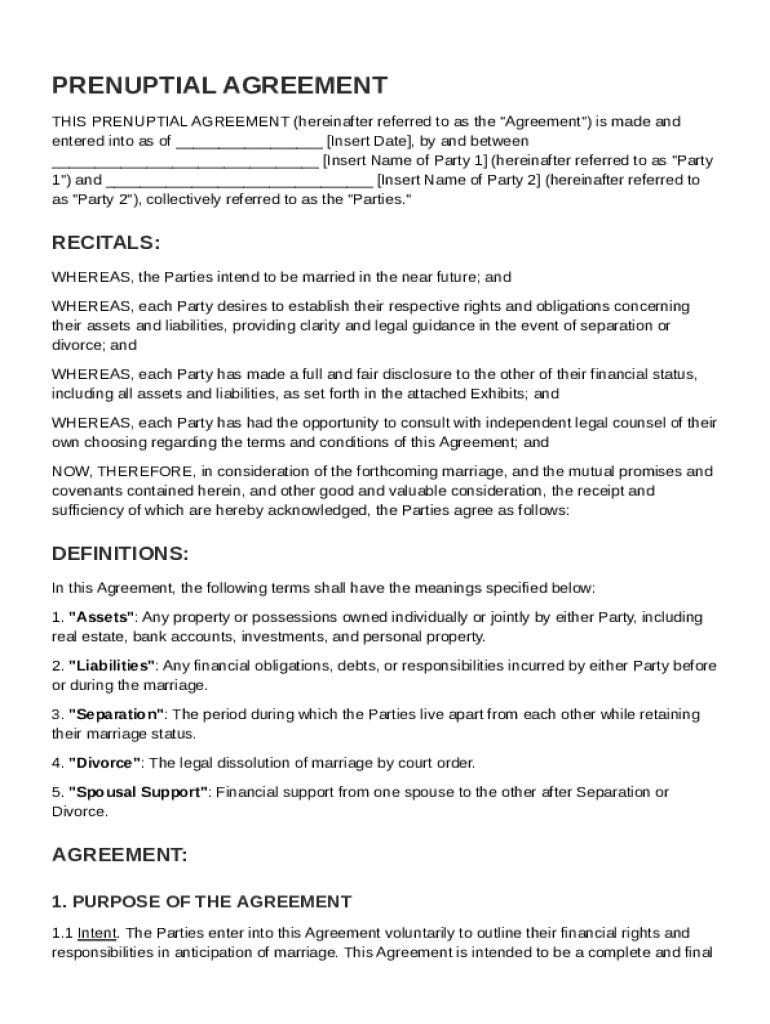
A prenuptial agreement is a legal document created between two individuals intending to marry. This agreement delineates each party's financial rights, defining ownership of assets and liabilities, property division, spousal support, and other pertinent financial matters in the event of a separation or divorce. Typically, it includes clauses that address inheritance rights and dispute resolution processes. Its primary purpose is to clearly outline the financial landscape of the marriage, ensuring both parties understand their positions should the marriage dissolve. It also requires full financial disclosure from both parties, strengthening the agreement's legitimacy and enforceability.
Key Elements of the Prenuptial Agreement Template
The prenuptial agreement template is structured to include several fundamental elements:
- Asset and Liability Disclosure: Both parties provide a complete and honest disclosure of their current financial status, ensuring transparency.
- Property Ownership: Defines which assets are individual property and which will be regarded as marital property.
- Spousal Support: Sets terms for alimony or support payments if the marriage ends, protecting each party's financial interests.
- Inheritance Rights: Clarifies each party's rights to inherit assets from the other, which can be critical if children from previous relationships are involved.
- Dispute Resolution: Outlines preferred methods for resolving disputes that may arise during the marriage or in the event of divorce, including mediation or arbitration.
Subsections
- Marital vs. Separate Property: Clear classification of what constitutes joint ownership versus individual ownership.
- Debt Responsibilities: Allocation of current and future debts, detailing individual accountability.
How to Use the Prenuptial Agreement Template
The prenuptial agreement template is designed to guide users through the creation of a complete and enforceable contract. Here’s how to effectively utilize this template:
- Initial Discussion: Partners should discuss and agree on the need for a prenuptial agreement, ensuring mutual consent and understanding.
- Template Customization: Modify the template to reflect both individual and joint financial circumstances, incorporating necessary clauses.
- Legal Consultation: Engage a legal professional to review the draft, verifying its compliance with state laws and ensuring all terms are clear and enforceable.
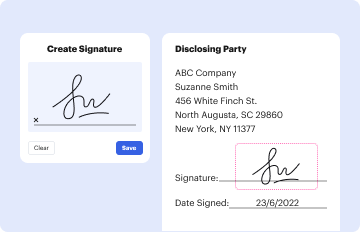
- Signing and Notarization: Both parties should sign the finalized document in the presence of a notary public, solidifying its legal standing.
Why Should You Use a Prenuptial Agreement Template?
Using a prenuptial agreement template streamlines the process of drafting this important legal document. It provides a structure that ensures:
- Comprehensive Coverage: The template encompasses all necessary elements, reducing the risk of omitting critical components.
- Time Efficiency: A standardized format accelerates the creation process, saving time compared to drafting from scratch.
- Legal Adequacy: Offers guidance on typical clauses and terms that align with legal requirements, fostering enforceability.
Steps to Complete the Prenuptial Agreement Template
Completing a prenuptial agreement template involves several key steps to ensure accuracy and completeness:
- Gather Financial Information: Compile detailed lists of assets, debts, income, and expenses for full disclosure.
- Identify Key Terms: Define the terms of property division, spousal support, and dispute resolution.
- Customize Clauses: Tailor sections of the template to reflect personal situations and agreements reached between parties.
- Review and Revise: Go over the draft with a legal advisor for adjustments and ensure both parties understand each clause.
- Finalize and Sign: Once satisfied, both parties should sign the document in front of a notary to make it official.
Legal Use of the Prenuptial Agreement Template
In the United States, prenuptial agreements are governed by state law, which means their enforceability can vary. Key legal considerations include:
- Full Disclosure: Each party must provide a complete and honest financial overview.
- Voluntary Agreement: There must be no evidence of coercion or duress—both parties should willingly enter into the agreement.
- Independent Legal Advice: It is often recommended that each party have separate legal counsel to ensure fairness and understanding of the document.
State-Specific Rules
- Community vs. Equitable Distribution States: Understand how state laws differentiate between marital property arrangements.
- Limitations on Spousal Support: Some states have specific restrictions or allowances regarding alimony clauses in prenuptial agreements.
Examples of Using the Prenuptial Agreement Template
For practical insights, here are scenarios where a prenuptial agreement template can be effectively used:
- Business Owners: When one party owns a business, the agreement can protect the business assets from division.
- Second Marriages: Where parties wish to ensure their individual children inherit specific assets.
- Unequal Wealth Situations: To protect the wealthier party’s financial interests while establishing fair terms for asset division in case of divorce.
Important Terms Related to Prenuptial Agreement Template
Understanding certain legal and financial terminology is crucial when dealing with prenuptial agreements:
- Alimony: Refers to spousal support payments agreed upon in the document.
- Community Property: Assets acquired during marriage, considered jointly owned in certain states.
- Equitable Distribution: A principle where assets are divided in a fair, though not always equal, manner during divorce.
These terms play a significant role in shaping the prenuptial agreement, and understanding them helps in drafting a more precise and meaningful document.